feature
Swamp featured post, a Swamp Media favorite.
Grave Image Starmer.
According to Beth Rigby of Sky News, she has never seen the UK Prime Minister look so troubled. Sir Keir stood at the podium in the Downing Street Newsroom, delivering a message of a serious split in opinion between the UK and the US. Beth described the prime minister's face as grave. In her words, this press briefing by the prime minister is the most serious crisis in the so-called special relationship between the UK and the US in years.
By Nicholas Bishopabout a month ago in The Swamp
World Stock Markets Brace for Turbulence After Trump’s Latest Tariff Shock. AI-Generated.
Global financial markets are entering a period of heightened uncertainty following former U.S. President Donald Trump’s latest tariff announcement. Investors across Europe, Asia, and North America are adjusting portfolios, recalculating risks, and bracing for potential volatility in the weeks and months ahead. Analysts warn that Trump’s tariff decisions, whether focused on China, the EU, or specific sectors, have the potential to reshape international trade flows and investor sentiment.
By Muhammad Hassanabout a month ago in The Swamp
Mall-Based Women’s Retailer Begins Liquidation, Closing All Stores. AI-Generated.
malls and shopping centers across the country, a familiar storefront is disappearing. A long-standing mall-based women’s clothing retailer—once a go-to destination for fashion-forward shoppers—is announcing liquidation and the closure of all its stores. The decision marks the end of a brand that once thrived on in-person shopping culture, and highlights the broader upheaval rippling through American retail. From changing consumer habits to economic pressures and the rise of online shopping, this retailer’s exit signals more than just the shuttering of stores. It reflects a transformative moment for how we shop, where we spend our time, and the future of the places once defined by commerce and community. A Familiar Face in Decline For decades, this women’s retailer held a visible place in malls from coast to coast. Its storefronts were often anchors in fashion corridors, offering trend-driven apparel, accessories, and seasonal collections targeted primarily at young adult women. Weekend visits with friends, after-school browsing, and holiday outfit hunts were all intertwined with the brand’s presence. But over recent years, the retail landscape changed dramatically. Department store giants scaled back, specialty retailers struggled for foot traffic, and online competitors captured consumers who once clutched store catalogs and credit cards. While this particular retailer once seemed resilient, the accumulation of shifting habits eventually took its toll. Despite efforts to update stores, integrate online sales, and rebrand key collections, decline became difficult to reverse. When loyal customers increasingly chose convenience over in-person browsing, the writing began to appear on the wall. The Decision to Liquidate In a recent announcement, company leadership confirmed that the retailer had filed for liquidation. All remaining stores will close over the next several weeks as merchandise is sold at deep discounts. The company cited a mix of financial pressures, declining sales, and an inability to sustain operations under current market conditions. Liquidation is more than a business term—it’s the legal process of winding down operations, selling off assets, and paying creditors. For employees, it often means involuntary layoffs. For suppliers and vendors, it may mean renegotiated contracts or unfulfilled orders. And for customers, it means the final opportunity to buy from a brand that may have helped define their personal style for years. The liquidation announcement was understandably emotional for both employees and long-time shoppers. Many took to social media to share memories of their favorite outfits, sales events, and after-school hours spent trying on dresses with friends. For some, the news evoked nostalgia; for others, it underscored just how much mall culture has changed. Mall Culture Under Pressure Why does the closure of one retailer matter so much? Because it represents a deeper shift in how consumers interact with physical retail spaces. In past decades, shopping malls were more than just commercial zones—they were social hubs. Teenagers hung out in food courts after school, families shopped on weekends, and special events brought communities together. Stores like this women’s retailer helped define that experience, offering fashion that spoke to a generation’s cultural identity. But with changing habits, malls have struggled to reinvent themselves. Vacancy rates have increased. Anchor stores once seen as untouchable have filed for bankruptcy. Foot traffic has thinned, especially among younger shoppers whose spending patterns favor digital experiences over brick-and-mortar browsing. Retail analysts often point to a mix of factors: E-commerce growth, giving consumers endless choices at discounted prices Social media and influencer culture, shaping fashion trends online Economic pressure, from inflation to rising rents and operating costs Shifts in lifestyle preferences, with experiential spending (travel, dining, entertainment) taking priority When a brand deeply tied to mall identity goes under, it signals that adaptation needs to be faster, more creative, and more responsive than ever before. The Broader Retail Reality The closure of this retailer isn’t isolated. Over the past decade, numerous mall-based brands—once considered fixtures—have either downsized or folded entirely. The phenomenon is sometimes referred to as the “retail apocalypse,” though the term oversimplifies the nuance. Some segments of retail are thriving: discount stores, off-price outlets, and digitally native brands with hybrid strategies continue to grow. But mid-tier specialty shops—those that once filled the space between fast fashion and high-end boutiques—have found themselves squeezed. They face competition from: Fast, trend-driven brands with global supply chains Online marketplaces that respond instantly to consumer data Brands that bypass physical retail entirely, instead cultivating direct relationships via social platforms The pressure has forced many companies to rethink their footprint strategy—leading to more warehouse-style outlets, smaller urban formats, or exclusive online lines. Unfortunately, for this mall-based women’s retailer, the transition arrived too late or proved too steep. Investments in online capabilities, loyalty programs, and omnichannel services could not sufficiently replace the revenue lost from declining in-store sales. What It Means for Workers and Customers The human impact of liquidation is significant. Employees, often working as sales associates, managers, stock personnel, or visual merchandisers, suddenly face uncertainty. While some may be offered severance, others are left searching for new jobs in an economy where retail openings are increasingly limited or redefined by automation. For customers, the closure means not only the loss of a favorite brand but also fewer options in their local malls. In many communities—especially smaller towns or suburban areas—this store was a reliable presence, offering both fashion and employment opportunities. Some former shoppers have expressed sadness on social media, sharing photos from years past and reminiscing about early purchases. Others have noted how the store’s style influenced their fashion choices during college years or first jobs. This emotional response shows that retail isn’t just about transactions—it’s about memories and identity. What’s Next for the Mall and the Market As this retailer winds down operations, malls themselves face a renewed challenge: How to fill the space left behind? Some malls have experimented with: Non-retail attractions (gyms, entertainment venues, art spaces) Pop-up markets and local maker spaces Co-working or flexible office hubs However, these transformations take time, investment, and community buy-in. Vacant storefronts can quickly drain the appeal of a mall, especially if the anchor stores—the bigger, more recognizable brands—continue to fade. Retail experts note that the future of physical shopping may lie in experiences rather than pure product selling. Stores that offer personalization, social engagement, and unique value beyond discount pricing stand a better chance of thriving. But for that to happen, mall owners, brands, and communities must work collaboratively to reimagine what these spaces can be in the 21st century. An End of an Era—and the Beginning of Something New The liquidation of this mall-based women’s retailer is more than a business headline—it’s a reflection of how dramatically the world of shopping has transformed. As stores close and shopping patterns shift, consumers, workers, and local economies adjust. Some may lament the loss of familiar storefronts; others see opportunity in reinvention. What remains clear is this: the era of traditional mall retail is evolving, and the stories of brands like this one will shape how we think about community, commerce, and connection in the years ahead. Whether malls can reinvent themselves successfully is still an open question—but the answer will define the next chapter of American retail.
By Muhammad Hassanabout a month ago in The Swamp
No Escape Room: Trapped in a Game That Never Lets You Leave
The story begins with a man who goes on a weekend trip with his daughter to spend some time together. He wants to make her happy. However, his daughter Karen is upset with her dad about something and remains silent throughout the journey, staring out of the window. Her dad tries to lighten the mood. He talks to her, cracks jokes, and makes efforts so her mood improves and the short trip becomes memorable. While they are on the way, their car suddenly breaks down. Due to this, they are forced to stop in a nearby small town. They leave the car at an old garage to get it repaired and, while waiting, they sit in a hotel across the road and order food. Karen’s dad suggests that since the car will take time to be fixed, they should look for some place nearby where they can have a little fun. He picks up a large newspaper lying there and starts looking at tourist activities. He suggests several options to Karen one by one, but she refuses every idea. Then his dad notices an advertisement for an escape room. He explains to her that it is a game where a group of people is locked inside a room. Inside, they are given puzzles, riddles, and tasks, and until they solve everything correctly, they are not allowed to leave the room. Hearing this, a slight spark appears in Karen’s eyes. She says that her friends have played such a game before and really enjoyed it, so she also wants to try it. Her dad immediately calls the waitress and asks her about the escape room. The waitress suddenly becomes serious and says that they should not go there, because whoever has gone there has never come back. Hearing this, both of them look at each other nervously. The atmosphere suddenly becomes heavy. Then, the very next moment, the waitress laughs and says she was just joking. She says it is very fun and people really enjoy it. Hearing this, they relax a little and decide to go to the escape room. Meanwhile, Karen goes to the washroom because something has spilled on her clothes. As soon as she enters, the lights start flickering. The entire washroom falls into an eerie silence. Suddenly, she hears strange noises coming from the adjacent cabin, as if someone inside is trying to open the door. Karen’s heart starts pounding. Out of fear, she slowly walks toward that cabin and is about to open the door when the waitress suddenly comes out from the same cabin. At that moment, Karen’s dad calls out to her, and she quickly leaves the place. However, the strange fear that settles in her heart does not fade away easily. After that, they rent a car and head toward the location of the escape room. As they move forward, the liveliness around them slowly disappears. Eventually, they reach a place where there is complete silence all around. Just looking at the building gives off a strange feeling. The walls have old cracks, the paint is peeling off, and it feels as if the building has seen many dark things. They enter inside. Karen’s dad calls out loudly, “Is anyone here?” After a few seconds of silence, a girl appears and, with a faint smile, says, “Welcome, I am the host of this game.” She takes them into a room where three other people are already sitting, who have also come to participate in the game. A woman introduces herself and says, “My name is Melanie, and I came here with my husband. He didn’t want to come, but I insisted and brought him along.” There is also another man who introduces himself as a doctor. After a while, the host brings a strange kind of tea for everyone. Steam rises strongly from the tea, and its smell feels unusual. Karen’s dad feels something is not right about it, so he hesitates and stops Karen from drinking it as well. But when he sees that everyone else is drinking it calmly, he eventually drinks it too. After that, the host places some agreement papers in front of them and asks them to sign. It is written that all of them have come here willingly, and if anything happens to anyone, they themselves will be responsible. Once the papers are signed, the host takes everyone’s mobile phones and explains that it is a rule of the game. No one will contact the outside world, and no videos are allowed to be recorded. Then she turns on a projector and plays a video. The video explains the story of an inventor who used to conduct strange experiments and create unusual things. He was the one who built this mysterious house. But after that, strange incidents started happening there. Some people came to uncover the secret of the house, but they all got trapped inside and disappeared without leaving any trace. After this, the host explains the rules of the game. Each room’s door will open only when the key for that room is found. Every key is hidden inside the same room, and to find it, puzzles and riddles must be solved. The total time for the game is one hour. If anyone feels they cannot handle the mental pressure and everything becomes too overwhelming, they only need to say the word “Wake up,” and they will be taken out immediately. As soon as she finishes saying this, the lights suddenly go out… (The story continues in the same word-by-word sequence with fear, suspense, time loops, death, and consequences, and in the end it becomes clear that this is the “No Escape Room” — a trap from which no one truly escapes. It was a deadly experiment created by a mad inventor, and even the souls of those who die there remain trapped inside the house forever.)
By Filmon Ke Raaz | Movie Mysteries Explainedabout a month ago in The Swamp
Lisa Nandy: Pushes Back Against Trump.
Northern English MP and Culture Secretary Lisa Nandy has voiced her government's opposition to Trump's meanderings on Greenland. She echoed her boss, Sir Keir Starmer, who has pronounced Trump's imposition of 10% tariffs on UK imports in the US as "Wrong". The UK, along with other European nations are standing up to Trump. They are standing against Trump's desire to buy Greenland. Hence, Trump is imposing 10% tariffs by 1 February, rising to 25% by 1 June if there is no agreement on Trump acquiring the biggest island in the world. Yes, folks, in case you didn't know, Greenland is not a continent, unlike Australia. The frozen territory is classified as an island geographically.
By Nicholas Bishopabout a month ago in The Swamp
“After the End: One Man’s Journey to Rebuild Humanity”
The film begins with a man named Ash, who lives in the middle of a forest. He is a biologist and, due to his research, has been living far away from the city in the wilderness. One day, during his research, he is bitten by a venomous snake in the forest. He panics immediately, and at that moment his phone falls to the ground. Now he cannot call anyone for help. He tries to extract the venom himself and even cuts his own hand, but it has no effect. Even when he goes home and tries to cut his hand again, it is too late. The venom has already started spreading through his body, and he begins experiencing strange hallucinations. He remains in this state for several days. One day, some scientists arrive to take him away. He is somewhat conscious. He is alive, but his body has no strength. He musters the courage to try to call out to them, but no sound comes out. The scientists, assuming he is not there, leave. The scene cuts to a few days later. The cut on his hand has expelled most of the venom, and the small amount that had reached his brain is now healing. He only experiences mild hallucinations. Upon regaining consciousness, he immediately decides to go to a city hospital. He cleans his car and sets off toward the city. However, he notices something strange: there are no cars on the roads. When he reaches the city, there is no activity. He does not see a single living person. All the buildings are empty. Seeing this, he panics. A pandemic has broken out here. This pandemic is so deadly that it wipes out the entire population in just a few days. Being a biologist, Ash understands that because he had been isolated from the population for several days, the disease could not infect him, and he survived. Now the entire population has been wiped out — there is no government, no authority, and no owner of anything. Ash immediately thinks of his parents. Driving home, he sees that his parents have been dead for several days, and their bodies are in a terrible state of decay. Yet, he gathers courage and digs a grave outside his house to bury them. After that, he surveys the entire city, but there are no other survivors. Thinking this through, he decides to travel to another city and plans to go to Las Vegas. Taking some essential supplies and a gun, he sets off. However, the bridge to Las Vegas is sealed. He becomes very angry and chooses a longer route instead. When he finally reaches Las Vegas, everyone there has also died. Malls, large hotels, casinos — all are empty. Exhausted, he goes into a hotel. He spends the night there, enjoying expensive things because now everything is free for him. He does not expect to meet anyone else, but the next night he encounters two people. They, too, have survived the disease. The girl tells a sorrowful story, saying she watched her family die over a video call and now has no hope left to live. The man also wants to die, as living in such a lonely world seems impossible for him. That night, they stay with Ash, but by morning, he senses danger in their intentions. The man has a gun and wants to make the deaths of all three of them easy. But Ash wants to live, so he gets up and leaves. Behind him, he hears gunshots — the two have committed suicide. This event breaks Ash even more. Now, he realizes that he is completely alone in the world. Driving at high speed, he returns home. On the way, a dog crosses in front of his car. The dog is also completely alone, just like Ash. He takes the dog with him, finding a new reason to live. Ash begins a new life. He starts reading survival books. There is no shortage of food or drink, and there is no need to earn money anymore. He works every day and roams the town, hoping to find another survivor, but each day he returns disappointed. One day, while standing by a window drinking tea with his dog, it suddenly starts barking. He realizes that there is someone nearby. Smoke rises from a distant house, suggesting the presence of a human. He immediately takes his car and heads toward the house. Fortunately, there is a girl there. She is scared upon seeing Ash, but he reassures her that he means no harm and that he is also alone, searching for other survivors. Hearing this, the girl allows him into her house. Her name is Emma. Through their conversation, it becomes clear that nearly a year has passed since the pandemic, and neither Ash nor Emma has seen any other survivors in all that time. They are very happy to have found another human, as being alone has been extremely difficult, and they were on the verge of depression.
By Filmon Ke Raaz | Movie Mysteries Explainedabout a month ago in The Swamp
“Escape from Siberia: A Journey of Courage and Survival”
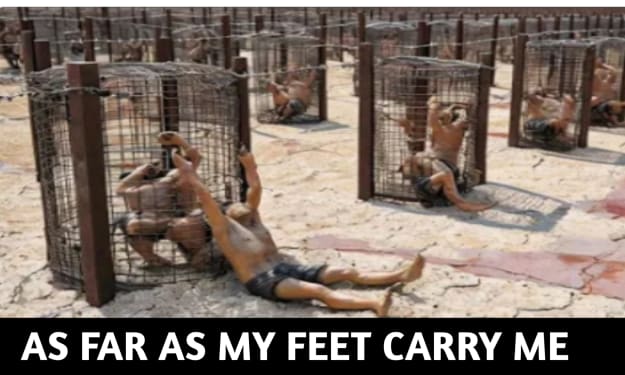
At the beginning of the story, we see a prison in Siberia, where many German soldiers are lined up. In fact, after the end of World War II, Russia captured a large number of German soldiers and forced them to work day and night in coal mines. Although the security of this prison was quite low, no one ever tried to escape from it. The reason was that the prison was surrounded by nothing but endless snow, and it was located about 14,000 kilometers away from any human settlement. So even if a prisoner managed to escape from this prison, his death in the freezing cold of Siberia was certain. This prison was built in the middle of snow stretching thousands of kilometers in every direction, which is why no prisoner could even imagine escaping from here. However, among these prisoners, there was one man who was extremely intelligent and wanted to escape from this prison to return to his wife and daughter. This prisoner’s name was Clemens Feirl. He had been sentenced to 25 years in this prison, and Clemens did not want half of his life to pass inside these prison walls. Clemens wanted to escape from this prison at any cost. Fortunately, one day Clemens got a chance to escape, and he fled the prison by hiding inside a freight train carrying coal. When he came out of the prison and saw the stars in the open sky, he felt overwhelmed with happiness. But this happiness was short-lived. After traveling some distance, the freight train was stopped. When Clemens looked outside, he saw a Russian soldier standing in front of him with a gun aimed at him. Unfortunately, Clemens was caught, and for the crime of escaping, he was locked inside an open-air cell. The cold was extreme, and the rain during the night worsened Clemens’s condition. He was not kept in that cell for a few hours, but for a full two days. After two full days, the next morning, the prison warden came to him and took him out of the cell, but did not torture him. He only said, “Your companions are waiting for you impatiently.” When Clemens reached his fellow prisoners, they were waiting for him with sticks and clubs in their hands. They were extremely angry with Clemens because, due to his escape attempt, all of them had been kept hungry for the past two days. Now Clemens understood why the warden had said that his companions were waiting for him. As soon as the other prisoners saw Clemens, they attacked him and beat him very badly. During this beating, Clemens was injured so severely that he had to be admitted to the prison hospital. The doctor of this prison was also a German prisoner. When Clemens regained consciousness, he said to the doctor, “I want to escape from this prison once again, and I need your help.” The doctor was astonished by Clemens’s courage. Even after enduring so much suffering, he was still not ready to give up. The doctor explained to him that escaping alive from this prison was impossible, and even if he did escape, he would die in the freezing cold outside. But the truth was that even if he did not escape, his death was still certain. The coal mines where they worked had extremely high levels of carbon, which entered their bodies through the air and caused deadly diseases like cancer. That is why the doctor said to Clemens, “You must try to escape from this prison one last time.”
By Filmon Ke Raaz | Movie Mysteries Explainedabout a month ago in The Swamp
“When Survival Created the First Friendship Between Man and Beast”
This story takes us back about 20,000 years from today, to a time when humans lived in small tribes. In the story, we see ancient European people who lived in tribal groups and hunted together. We are introduced to the leader of this tribe, whose name is Ergen. A few months later, winter is about to arrive, so Ergen goes out hunting with the people of his tribe to gather food for the cold season. In front of them is a very large herd of wild bison. Everyone crawls closer to the bison. Ergen, being the leader of the tribe, waits for the right moment and signals the attack, and everyone rushes toward the bison. To escape the hunters, the bison start running in the opposite direction, and one by one many of them fall into a ravine. However, one bison survives and, in anger, charges toward Ergen’s son, Noyan. Noyan has come on a hunt for the first time and does not know how to protect himself. Ergen tells his son to move out of the way, but Noyan gets scared and starts running. The wild bison quickly approaches Noyan, lifts him onto its horns, and runs toward the ravine. Seeing this, Ergen throws his spear at the bison to save his son. The spear hits the bison, but despite being injured, it does not let go of Noyan and instead throws him toward the edge of the ravine. From here, the story goes into a flashback, one week earlier, where we see the tribe preparing for the hunt. They are making different kinds of sharp weapons from stones. This was not just preparation; new people who wanted to join the hunt had to make such stone weapons. Whoever made the sharpest and most pointed weapon was selected for the hunt. In this competition, Ergen’s son Noyan also succeeds. That night, Noyan’s mother tells Ergen not to take Noyan on the hunt with him, saying that he is still a child. She says that she loves him very much and does not want to lose him. Ergen replies that winter is coming and at this time of the year everyone goes hunting. If they do not hunt, they will die of hunger during the winter, and Noyan must prove that he is his son. The next morning, all the people of the tribe leave for the hunt. Noyan’s mother feels anxious that something might happen to her son, but Ergen reassures her and says not to worry, nothing will happen to Noyan. Then they all set off on the hunt. After going some distance, they encounter another tribe that, like them, has also gone out hunting to gather food for the winter. After traveling a long distance, they reach a stone structure that was built by their ancestors. This journey is very dangerous, and many of their elders had lost their lives during it, which is why they built this stone structure in their memory. Moving forward, they spot a wild boar, which they injure with a spear. Ergen tells his son Noyan to kill it, but Noyan has never hunted before. He panics and is unable to kill the boar. Ergen then snatches the stone dagger from his hand, kills the boar, and says: “I never thought you would turn out to be so cowardly. Only the strong survive here — this is the law of the jungle.” At night, while they are eating their hunt, strange sounds are suddenly heard. Ergen tells everyone to stay alert. At that moment, a lion appears and carries away one of the boys. The next morning, they make a small grave in memory of that boy and continue their journey. Despite walking many miles, they do not find any more prey. After walking the entire day, they decide to spend the night in a cave. There, Ergen makes star-shaped tattoos on Noyan’s hand and tells him that these stars will appear in the night sky, and if he follows them, he will find his way back home. In reality, this is a map, so that if someone gets lost during the hunt, they can find their way back home.
By Filmon Ke Raaz | Movie Mysteries Explainedabout a month ago in The Swamp
Greed in the Desert: How the Promise of Gold Turned Survival Into a Death Trap
The film begins with a man named Sam who is traveling on a train. His life is not going well at all. At every turn, he faces problems. It is revealed that he is going to a deserted, desert-like city where he has to start a new job.
By Filmon Ke Raaz | Movie Mysteries Explained2 months ago in The Swamp