
How Visual Analysis Is Changing Modern Financial Research
Financial markets generate enormous volumes of structured and unstructured data every second. Traditional research methods often struggle to keep pace with this data velocity

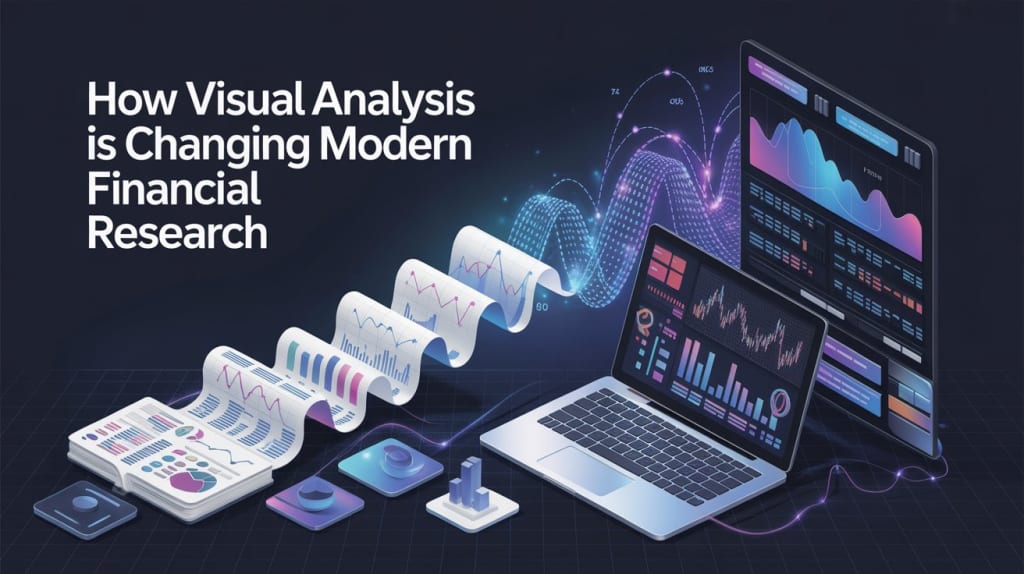
Financial research has evolved far beyond spreadsheets and quarterly reports. Analysts, traders, and portfolio managers now rely on sophisticated digital tools that transform raw information into visual formats, enabling faster interpretation and deeper insight. In this environment, image search techniques play an emerging role in how financial professionals discover patterns, verify data sources, and interpret market signals. Visual analysis has become a practical bridge between massive data sets and actionable investment intelligence, allowing decision-makers to assess trends with greater speed and precision.
The Shift Toward Visual Intelligence in Finance
Financial markets generate enormous volumes of structured and unstructured data every second. Traditional research methods often struggle to keep pace with this data velocity. Visual intelligence tools address this challenge by presenting complex information through charts, heat maps, dashboards, and visual recognition systems. Instead of manually combing through textual reports, analysts can quickly scan visual outputs to detect anomalies, correlations, and emerging trends. This shift is not merely aesthetic; it represents a fundamental change in how financial insight is produced and consumed.
Visual processing aligns well with human cognitive strengths. Investors can often identify patterns and irregularities faster when information is presented graphically rather than in rows of numbers. For instance, a visual comparison of sector performance over time can reveal cyclical movements that might be less obvious in numerical tables. By integrating visual analysis into research workflows, financial professionals enhance both efficiency and interpretive accuracy.
Enhancing Data Discovery and Verification
One of the most significant advantages of visual analysis is its ability to improve data discovery and verification. Financial researchers frequently need to validate charts, corporate disclosures, and economic indicators sourced from multiple platforms. Modern systems incorporate image search techniques to locate similar visual content, confirm authenticity, and identify potential inconsistencies. This capability helps reduce the risk of relying on outdated or manipulated visuals, which can lead to flawed investment decisions.
Verification through visual matching is particularly valuable in an era of rapid information sharing. When charts circulate across social media or financial forums, analysts can trace their origin and confirm their accuracy using visual search tools. This process strengthens due diligence and ensures that research conclusions are grounded in reliable information. As financial markets become more interconnected and digital, the importance of verifying visual data continues to grow.
Visual Analysis in Market Trend Identification
Market trends often manifest visually before they become obvious in written reports. Price movements, volume spikes, and sentiment shifts can be detected through visual patterns that emerge in real-time dashboards. Analysts use visual overlays, comparative charts, and pattern recognition software to interpret these signals. Such methods allow for early identification of opportunities and risks, enabling quicker responses to market developments.
Incorporating visual workflows also helps analysts compare historical performance with current market conditions. By overlaying past cycles onto present-day charts, researchers can evaluate whether current trends align with previous patterns. This historical visualization supports scenario analysis and risk forecasting, providing a more comprehensive understanding of potential outcomes. When combined with advanced analytics, visual methods create a multidimensional view of financial markets.
Integration with Artificial Intelligence and Automation
Artificial intelligence has accelerated the adoption of visual analysis in finance. Machine learning models can process vast collections of visual data, identifying patterns that might be imperceptible to human analysts. These systems can categorize charts, recognize logos or branding in financial documents, and detect anomalies in graphical data. The integration of AI with visual tools enhances the speed and scale at which financial research can be conducted.
Automation also enables continuous monitoring of visual data streams. For example, automated systems can scan news images, corporate presentations, and regulatory filings for visual indicators of market activity. By leveraging image search techniques within AI frameworks, financial institutions can build dynamic research pipelines that operate in near real time. This approach reduces manual workload while increasing the breadth of data coverage.
Improving Communication and Decision-Making
Visual analysis does not only assist in data discovery; it also improves communication among stakeholders. Financial findings presented through visual formats are often easier for executives, clients, and regulators to understand. Clear visual representations of risk exposure, asset allocation, and performance metrics facilitate more informed discussions and decisions. As financial research becomes more collaborative, the ability to convey insights visually becomes increasingly important.
Decision-makers benefit from visual dashboards that integrate multiple data sources into a unified interface. These dashboards allow users to adjust variables, test scenarios, and observe potential outcomes instantly. By transforming complex financial information into accessible visual narratives, organizations can align their strategies more effectively. This clarity supports faster, more confident decision-making across departments.
Risk Management and Compliance Applications
Risk management is another area where visual analysis has significant impact. Financial institutions must monitor a wide range of risk indicators, from market volatility to regulatory compliance metrics. Visual tools help analysts track these factors simultaneously, highlighting deviations from expected ranges. When anomalies appear in visual dashboards, risk teams can investigate and respond promptly.
Compliance functions also benefit from visual verification systems. Regulatory documents, transaction records, and audit trails often contain visual elements that require validation. Using image search techniques compliance teams can cross-reference visual data across multiple sources to ensure consistency and authenticity. This process strengthens internal controls and reduces the likelihood of regulatory breaches.
Challenges and Considerations
Despite its advantages, visual analysis in financial research presents certain challenges. Data quality remains a critical concern, as inaccurate or incomplete visuals can lead to misinterpretation. Analysts must ensure that visual data sources are credible and up to date. Additionally, reliance on automated visual systems requires careful oversight to prevent algorithmic bias or errors.
There is also a learning curve associated with adopting advanced visual tools. Financial professionals must develop new technical skills to interpret and manage visual analytics platforms effectively. Organizations that invest in training and infrastructure are better positioned to realize the full benefits of visual analysis. As the field continues to evolve, maintaining a balance between automation and human judgment is essential.
The Future of Visual-Driven Financial Research
The trajectory of financial research points toward deeper integration of visual technologies. As data volumes continue to expand, visual methods will become increasingly central to how analysts interpret and act on information. Emerging tools will likely offer more advanced pattern recognition, predictive visualization, and real-time collaboration features. These innovations will further enhance the role of visual intelligence in financial decision-making.
Image search techniques are expected to remain a key component of this evolution. As visual data becomes more prevalent across digital platforms, the ability to locate, verify, and analyze images will support more comprehensive research strategies. Financial institutions that adopt these tools early can gain a competitive advantage by improving the speed and accuracy of their insights.
Conclusion
Visual analysis has transformed modern financial research by enabling faster data interpretation, improved verification, and more effective communication. Through the integration of advanced visual tools and AI-driven systems, analysts can navigate complex markets with greater confidence. As technology continues to advance, visual intelligence will play an increasingly vital role in shaping investment strategies and risk management practices. By embracing these innovations, financial professionals can enhance their analytical capabilities and adapt to the evolving demands of global markets.
About the Creator
Hammad Nawaz
Hammad here, sharing stock market insights, trading strategies, and tips. Helping traders understand trends, risk, and opportunities in equities, forex, and commodities.
Keep reading
More stories from Hammad Nawaz and writers in Trader and other communities.
Eternal Share Price: Market Performance, Trends, and Investment Insights
Introduction: Eternal Share Price Overview The Eternal share price has become a key focus for investors, analysts, and market enthusiasts exploring emerging and established companies. Tracking the Eternal share price helps investors gauge market sentiment, monitor operational performance, and make informed investment decisions.
By Hammad Nawaza day ago in Trader
Australia Oxygen Cylinders Market 2026: Respiratory Care Expansion, Home Healthcare Growth and Portable Oxygen Demand
Australia Oxygen Cylinders Market Overview Australia’s oxygen cylinders market is witnessing steady expansion as healthcare providers prioritise reliable oxygen delivery across hospitals, clinics, aged-care facilities and home-based care environments. Oxygen cylinders remain a critical component of respiratory therapy, supporting emergency treatment, chronic disease management and industrial applications such as welding and manufacturing. As Australia’s healthcare system continues to modernise and patient care models shift toward outpatient and home settings, demand for portable and efficient oxygen cylinder solutions is rising.
By Amyra Singh5 days ago in Trader



Comments
There are no comments for this story
Be the first to respond and start the conversation.