
The trade that looked perfect… but became the biggest loss.
Trader experience from Newbie to Proffessional (9)


Let’s go through another powerful trader experience — one that many professionals say shaped their discipline permanently:
The trade that looked perfect… but became the biggest loss.
This type of experience teaches something deeper than any winning trade: respect for uncertainty.
The Perfect Setup Illusion
The market environment looked ideal.
Liquidity was increasing.
Sectors were rotating normally.
Momentum was strong.
The VNIndex had been trending upward for weeks, creating confidence across the market.
Every pullback was bought.
Every breakout seemed to work.
In that kind of environment, traders naturally become more aggressive. Confidence grows, and sometimes it quietly turns into overconfidence.
Then one particular stock appeared on the watchlist.
It looked almost perfect.
The technical structure had everything:
Tight consolidation for nearly two months
Declining volatility
Volume drying up before breakout
Sector leadership confirming the move
From a chart perspective, it was exactly the type of setup traders look for.
Everything suggested a high probability breakout.
The Entry
The breakout happened on a strong morning.
Volume surged.
Price pushed above resistance.
I entered the trade almost immediately.
Risk was defined.
Stop loss placed below the consolidation zone.
At that moment, there was zero concern.
In fact, confidence was unusually high.
The setup looked so clean that it felt almost certain to work.
That feeling — certainty — is the hidden danger.
Because the market never guarantees outcomes.
The First Warning Sign
During the first day, the stock did not follow through strongly.
It closed slightly above the breakout level, but momentum was weaker than expected.
Normally this would raise caution.
But bias had already formed.
Instead of reading the chart objectively, I interpreted the situation optimistically.
“Maybe it just needs another day.”
This is a common psychological trap called confirmation bias.
When traders believe strongly in a trade, they unconsciously look for information that supports their decision.
The Gap Down
The next morning the unexpected happened.
The stock opened gap down.
Not dramatically, but clearly below the breakout level.
Technically, this was a major warning signal.
Breakouts that immediately fall back below resistance often become false breakouts.
But emotions intervened again.
Instead of exiting immediately, I told myself:
“It might recover during the day.”
Sometimes markets do recover from gap downs.
But relying on hope instead of structure is dangerous.
The Collapse
Selling pressure increased throughout the session.
Volume expanded — but on the downside.
By the afternoon, the stock had dropped sharply.
The stop loss triggered.
Normally a stop loss should control the damage.
But this time something worse happened.
Liquidity disappeared.
Orders executed with slippage, meaning the exit price was worse than expected.
The final loss was significantly larger than planned.
Instead of –1R, the loss became nearly –2R.
One trade erased the profits from several previous trades.
The Emotional Reaction
After the trade closed, frustration appeared immediately.
Questions started appearing in the mind:
“Why didn’t I exit earlier?”
“Why did the setup fail?”
“Did I miss something?”
But the most important realization was this:
The chart wasn’t wrong.
The analysis wasn’t wrong.
The mistake was believing the trade could not fail.
Markets are probabilistic.
Even the best setup might fail.
The Hidden Lesson About Probability
Professional trading is not about certainty.
It’s about probability management.
Even a great setup may only have:
60% chance of success
40% chance of failure
That means failure is normal.
But when traders emotionally believe a trade is “perfect,” they subconsciously increase risk exposure or reduce discipline.
That’s when losses become larger than planned.
The Danger of the “Perfect Trade”
The most dangerous trades are not the ugly ones.
They are the ones that look flawless.
Because when everything aligns perfectly, traders lower their guard.
They hesitate to exit.
They adjust stops.
They justify holding longer.
That hesitation turns small losses into large ones.
The Importance of Mechanical Rules
After this experience, I introduced stricter execution rules:
Breakout failure exit rule
If price returns below breakout level within two days, exit immediately.
No bias rule
Every trade must be treated as uncertain.
No setup is guaranteed.
Liquidity awareness
If volume conditions change, reduce exposure quickly.
These rules prevented similar losses in the future.
The Role of the Index
Another important factor appeared during review.
While the stock was breaking out, the VNIndex was actually showing subtle weakness.
The index wasn’t collapsing, but momentum had slowed.
Breadth indicators were weakening.
That meant the market environment was not as strong as it appeared.
A breakout during weakening market conditions is more likely to fail.
That was a critical contextual lesson.
The Long-Term Impact
That loss did not destroy the account.
But it permanently changed how trades were evaluated.
From that point forward, I stopped asking:
“Is this a perfect trade?”
Instead, I asked:
“What happens if this trade fails?”
That single question improves risk awareness dramatically.
The Psychological Upgrade
Losses can either damage confidence or build discipline.
The difference lies in how traders interpret the experience.
Instead of blaming the market, I treated the event as data.
It revealed a weakness in decision-making.
Once the weakness was identified, the system improved.
Professional traders evolve through cycles of:
success
failure
analysis
adjustment
That process never stops.
The Core Truth
Every trader eventually experiences a trade that feels perfect but fails dramatically.
The purpose of that experience is simple:
To remind you that the market is always bigger than your analysis.
Respecting that reality keeps traders disciplined.
Ignoring it leads to catastrophic losses.
The Final Lesson
Winning trades build confidence.
But losing trades build wisdom.
And in the long run, wisdom matters more.
Because consistency in trading does not come from predicting the market perfectly.
It comes from managing uncertainty better than most participants.
About the Creator
Zidane
I have a series of articles on money-saving tips. If you're facing financial issues, feel free to check them out—Let grow together, :)
IIf you love my topic, free feel share and give me a like. Thanks
https://learn-tech-tips.blogspot.com/
Fundus Camera Market Size & Forecast 2026–2034
The global Fundus Camera Market is poised for steady expansion over the next decade. According to Renub Research, the market is projected to grow from US$ 493 Million in 2025 to US$ 828.68 Million by 2034, registering a CAGR of 5.94% during the forecast period 2026–2034.
By Sakshi Sharma7 days ago in Trader
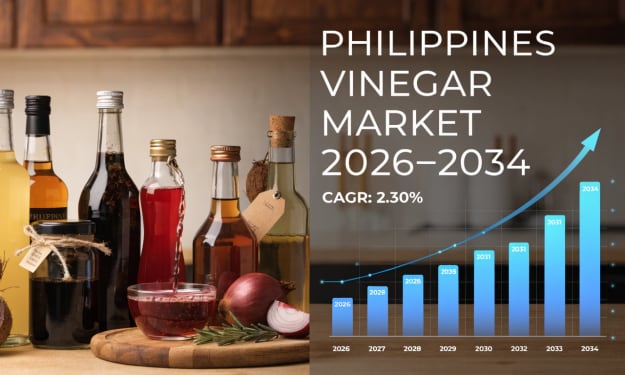
Philippines Vinegar Market 2026: Culinary Heritage, Natural Ingredient Demand and Household Staple Consumption
Philippines Vinegar Market Overview The Philippines vinegar market continues to demonstrate stable growth as vinegar remains a fundamental component of Filipino cuisine, food preservation practices and household consumption. Vinegar is widely used as a cooking ingredient, dipping condiment and marinade base, supporting consistent demand across residential and commercial foodservice segments. Deep-rooted cultural preferences for traditional vinegar varieties such as coconut and cane vinegar, combined with rising consumer interest in natural and locally sourced food products, are sustaining market momentum. As modern retail and packaging innovations improve accessibility, vinegar consumption is gradually expanding across both urban and regional markets.
By Manisha Dixit7 days ago in Trader
A Knight of the Seven Kingdoms Series Review (Season 1)
As one of the biggest properties in fantasy, A Song of Ice and Fire remains immensely popular with audiences. After reaching far into the past with House of the Dragon, a second spin-off was on the cards. A Knight of the Seven Kingdoms serves up a bite-sized slice of action and drama, but it still claims a spot among the best small-screen titles.
By Robert Cain7 days ago in Geeks



Comments
There are no comments for this story
Be the first to respond and start the conversation.