football
Talking about college and professional football daily. Chances are we hate your team.
Somers Cheerleaders are on a Roll
See Photos at end of Article Cheerleader Team Aims for National Championship On Wednesday, Nov. 19, SYSO Cheerleading held its annual showcase at Somers Intermediate School. With a gym full of enthusiastic parents, 147 athletes from six age groups took center stage. Those include the Tiny Tuskers (K-2), D8, D10 small, D10 large, and D12, but the 14D finale served as a preview of bigger things to come in early December.
By Rich Monetti2 days ago in Unbalanced
Tennessee vs Vanderbilt: More Than a State Rivalry
When Tennessee vs Vanderbilt appears on the schedule, it feels different. The air carries history. Families pick sides. Old memories return. Some remember heartbreak. Others remember last-minute wins that still give them chills.
By Muqadas khan4 days ago in Unbalanced
PSG vs Metz: More Than Just Another Ligue 1 Night
Some football matches feel routine. Others carry quiet tension long before kickoff. PSG vs Metz may not always dominate global headlines like a European final, yet it holds its own emotional weight. For Paris Saint-Germain supporters, every match is about defending status and chasing perfection. For Metz fans, facing a giant like PSG brings a mix of fear, pride, and belief. On paper, the gap between the two clubs looks wide. In reality, football rarely follows paper logic. A single counterattack, a missed penalty, or a red card can rewrite expectations in seconds. That unpredictability is what makes PSG vs Metz more than just another Ligue 1 fixture. It is a reminder that in football, history matters, but the present moment decides everything.
By Muqadas khan4 days ago in Unbalanced
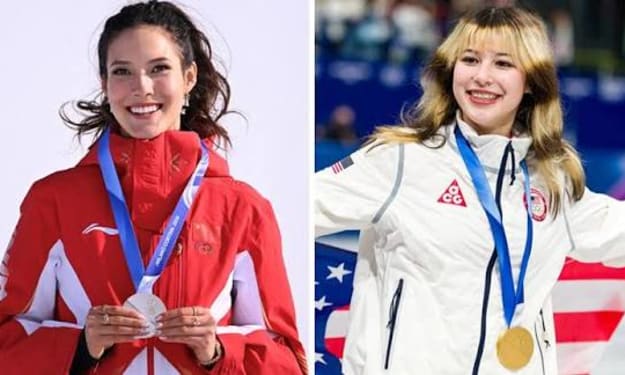
Alysa Liu vs Eileen Gu — How Two Chinese American Stars Wound Up on Opposite Sides of an Olympic Proxy War. AI-Generated.
The rivalry between Alysa Liu and Eileen Gu has come to symbolize more than athletic competition. As both athletes rise to global prominence at the Winter Olympics, their contrasting national affiliations have turned them into unlikely figures in a broader geopolitical struggle between the United States and China. Though they share Chinese heritage and were both raised in the United States, Liu and Gu have made different choices about which flag to represent. Those decisions have placed them at the center of heated debate over identity, loyalty, and the politicization of sport. Two Paths from Similar Beginnings Alysa Liu grew up in California and became one of America’s most promising figure skaters at a young age, winning national titles and emerging as a symbol of the U.S. skating future. She competes under the American flag and has consistently emphasized her identity as an American athlete shaped by the U.S. training system. Eileen Gu, by contrast, made headlines when she chose to compete for China despite being born and raised in San Francisco. Her decision transformed her into a national celebrity in China and a marketing icon with sponsorship deals and widespread media coverage. Both athletes have said their choices were personal and rooted in family ties and opportunity rather than politics. Yet their visibility has ensured that their decisions are interpreted politically whether they intend it or not. Media and Public Reaction In the United States, Gu’s decision sparked controversy and accusations of divided loyalty, while others defended her right to define her own identity. In China, she was celebrated as a homegrown champion returning to her cultural roots. Liu, meanwhile, has been portrayed by American media as a symbol of domestic talent and perseverance, with her Olympic performances framed as part of the U.S. sporting narrative. Chinese social media users have sometimes contrasted her path with Gu’s, turning two athletes into symbols of competing national pride. “Neither athlete asked to become a political statement,” said one sports sociologist. “But in today’s climate, elite athletes with dual cultural identities are inevitably drawn into geopolitical narratives.” Sport as a Proxy Battleground The rivalry reflects how the Olympics increasingly function as a stage for soft power competition. Medal counts and star athletes are viewed as reflections of national systems and global influence. Gu’s success for China has been presented domestically as proof that China can attract global talent and compete with Western sports powers. Liu’s performances for the United States reinforce the American emphasis on individual achievement and freedom of choice. This dynamic has fueled what some commentators call an “Olympic proxy war,” where athletic outcomes become symbolic victories in a wider ideological contest. Personal Cost Both athletes have faced intense scrutiny online. Gu has been targeted by critics in the U.S. accusing her of exploiting opportunities in both countries. Liu has endured pressure to perform not only as an athlete but as a representative of American values. Friends and coaches say the athletes have tried to shield themselves from political commentary and remain focused on training. Yet the weight of expectations is difficult to escape. “These are young women who want to skate and ski,” said a former Olympic coach. “Instead, they’re being treated like diplomats.” What It Says About Identity The Liu-Gu divide highlights a deeper tension faced by many Chinese Americans navigating multiple cultural identities in a polarized world. Their stories show how personal heritage can be reframed as political allegiance under international spotlight. Rather than a simple rivalry, their parallel careers illustrate two valid expressions of identity: one rooted in birthplace and opportunity, the other in heritage and cultural connection. Looking Ahead As future Olympic Games approach, both athletes are expected to remain central figures in their respective national teams. Whether their rivalry continues to be framed politically may depend less on them and more on the evolving relationship between Washington and Beijing. For now, Alysa Liu and Eileen Gu remain linked in public imagination — not because they compete directly, but because their choices represent opposite sides of a cultural and political fault line that extends far beyond sport. Their journeys remind the world that in the modern Olympics, medals are no longer just about athletic excellence. They are also about identity, narrative, and the power of symbols in an age of global rivalry.
By Fiaz Ahmed 4 days ago in Unbalanced
Real Madrid: Glory, Pressure, and the Weight of White
There are football clubs, and then there is Real Madrid. For millions of fans around the world, the name carries emotion that goes far beyond sport. It represents unforgettable goals, dramatic comebacks, and nights when belief felt stronger than logic. The white jersey is not just a uniform. It is a symbol of expectation. When players step onto the pitch wearing it, they carry history on their shoulders.
By Muqadas khan8 days ago in Unbalanced
Chloe Kim Eyes Historic Three-Peat at 2026 Winter Olympics Women’s Snowboarding Halfpipe
The 2026 Winter Olympics in Milan-Cortina have delivered unforgettable moments across all disciplines, but few events have captured global attention like the Women’s Snowboarding Halfpipe. With the likes of Chloe Kim defending her Olympic titles, the competition has become a thrilling spectacle of athleticism, creativity, and nerve. As the Games reached February 12, 2026, the Halfpipe finals emerged as a centerpiece, blending high-stakes competition with the artistry and daring that define snowboarding at its highest level.
By Story Prism13 days ago in Unbalanced
Arizona vs Kansas: When College Basketball Feels Personal
Some games feel bigger than the scoreboard. Arizona vs Kansas is one of them. It is not just about rankings, stats, or trophies. It is about history, pride, and the kind of tension that fans carry in their chest long before tipoff. When these two programs meet, the air feels heavier. Every pass matters. Every mistake lingers. For longtime fans, this matchup brings back memories of heartbreak and joy in equal measure. For new viewers, it quickly becomes clear that something deeper is happening. This article looks at why Arizona vs Kansas continues to matter, how it grew into a powerful college basketball clash, and why it still feels personal every single time.
By Muqadas khan15 days ago in Unbalanced
A Change at Quarterback and a Tougher Path
On February 8, 2026, the Seattle Seahawks etched their place in NFL history in a dominant all-around performance, defeating the New England Patriots 29-13 in Super Bowl LX. What made this victory especially compelling wasn’t just that Seattle hoisted the Lombardi Trophy — it was how they did it, and how contrasting paths to the Super Bowl highlighted the impact of personnel moves, especially at the most important position in sports. 
By Logan M. Snyder16 days ago in Unbalanced
Super Bowl LX Recap: A Team Called Hawks. Top Story - February 2026.
Sixty. The Super Bowl turned 60! Still amazes me that this was the sixtieth Super Bowl played in NFL history. It seems like yesterday that I watched Super Bowl XXVII, the first SB I ever watched. The QB who won Super Bowl XXVII has since called a few SBs, and will call next year's game, but that's another story. Super Bowl LX took place at Levi's Stadium in Santa Clara, California, the home stadium of the San Francisco 49ers. However, it was one of their division foes who represented the NFC, as the Seattle Seahawks faced off against the New England Patriots.
By Clyde E. Dawkins17 days ago in Unbalanced
Michigan vs Ohio State: Why This Rivalry Feels So Personal
Some games feel bigger than sports. Michigan vs Ohio State is one of them. It lives in family arguments, childhood memories, cold Saturdays, and long silences after the final whistle. Even people who do not follow college football closely know this matchup means something deeper. It is not just about rankings or trophies. It is about pride, history, and identity. For more than a century, this rivalry has shaped seasons, careers, and entire communities. In this article, we will explore why Michigan vs Ohio State carries such emotional weight, how it began, how it evolved, and why it still feels personal to millions of people today.
By Muqadas khan17 days ago in Unbalanced
Return of the Empire: The Patriots return to glory
A rebuild isn't supposed to be this quick. Once Tom Brady left the New England Patriots after the 2019 season, New England was expected to need some time to find it's way back to relevence. Sure seasons of Cam Newton, Brian Hoyer, Mac Jones and Bailey Zappe were hard to stomach.
By Ben Hercik21 days ago in Unbalanced
The Parade of Nations Is an Olympic Highlight. Italy Says, Let’s Have 4.. AI-Generated.
The Parade of Nations has long been one of the most beloved moments of every Olympic opening ceremony: athletes marching behind their national flags, waving to the world and officially launching the Games. For the Milan-Cortina Winter Olympics, Italy is preparing to rethink that tradition in an ambitious way. Instead of one parade, organizers plan to stage four separate parades across different host cities, reflecting the unique multi-venue structure of the 2026 Games. Italy’s proposal aims to celebrate the geographic and cultural diversity of the country while easing logistical pressures created by hosting events across northern Italy. The Winter Olympics will be split between Milan, Cortina d’Ampezzo, Verona, and Val di Fiemme, with competitions spread over hundreds of kilometers. Officials say a single massive opening ceremony no longer fits the reality of a decentralized Games. A New Format for a Classic Tradition The Parade of Nations typically takes place inside one stadium, with athletes from more than 90 countries marching together. For Milan-Cortina, organizers envision four synchronized ceremonies, each featuring a portion of the participating delegations. The events will be linked through live broadcasts and digital displays, creating what planners describe as “one opening ceremony in four chapters.” Each city will host a segment of the parade that highlights its regional identity. Milan’s ceremony is expected to focus on modern design and innovation, Cortina will emphasize alpine heritage, Verona will draw on its Roman and Renaissance history, and Val di Fiemme will showcase winter sports culture. “The Olympics are no longer confined to a single arena,” said one official involved in planning. “Our concept mirrors the reality of these Games — spread across regions but united in spirit.” Reducing Athlete Fatigue A key motivation behind the plan is athlete welfare. In past Olympics, competitors often waited hours to march in freezing temperatures or sit through lengthy ceremonies. Some athletes skipped the parade entirely to rest for upcoming events. With four ceremonies closer to competition venues, organizers hope athletes will be able to participate without long travel times or late-night schedules. Delegations will be assigned to the ceremony nearest their event locations. “This is a practical solution to a modern problem,” said a sports logistics expert in Rome. “Athletes want to experience the opening ceremony, but they also need sleep and recovery. Splitting the parade could improve both.” A Technical Challenge The proposal presents major technical hurdles. Broadcasting four ceremonies simultaneously will require precise coordination, advanced satellite links, and unified timing. Viewers worldwide must still feel they are watching one single global event rather than four separate shows. Italian broadcasters are reportedly working with international partners to ensure smooth transitions between cities, with shared music, countdowns, and symbolic moments such as the raising of the Olympic flag and the lighting of a central Olympic flame. There is also debate about whether the Olympic cauldron should be lit in one location or in four. Some designers are considering a main flame in Milan, accompanied by three smaller flames in the other cities. Mixed Reactions from the Olympic Community The International Olympic Committee (IOC) has welcomed the idea cautiously. Officials say they support innovation but stress that the unity of the Games must remain visible. “The Parade of Nations is a symbol of global togetherness,” said one IOC representative. “Any change must preserve that meaning.” Athletes have expressed curiosity and optimism. “It could be amazing to march in a place that reflects where you’re competing,” said an Italian alpine skier. “It makes the ceremony more personal.” However, some critics worry that splitting the parade may weaken the emotional impact of seeing all nations together in one space. The traditional image of a packed stadium filled with athletes from every corner of the world is considered iconic. “There is power in physical togetherness,” said a former Olympic organizer. “Four parades risk turning one powerful moment into several smaller ones.” Part of a Broader Olympic Shift The plan reflects a broader shift in how the Olympics are organized. Rising costs and public opposition to mega-stadium construction have pushed the IOC toward regional hosting models. Milan-Cortina is the first Winter Games to be formally designed as a multi-city event from the start. Italy’s experiment could shape future Olympics. If successful, it may encourage other host nations to rethink centralized ceremonies and explore regional participation. Environmental considerations also play a role. Fewer long-distance transfers of athletes and spectators could reduce the Games’ carbon footprint, a priority for both Italy and the IOC. Cultural Showcase on a National Scale Beyond logistics, Italy sees the four-parade format as a chance to present a richer cultural story. Each city will contribute music, architecture, and historical themes, offering a broader picture of Italian identity than a single stadium ceremony could provide. From Milan’s fashion and design legacy to Cortina’s alpine glamour, the ceremonies are expected to combine tradition with modern spectacle. A High-Risk, High-Reward Idea The success of the plan will depend on flawless execution. A fragmented ceremony could confuse audiences, but a well-coordinated event could redefine how the world experiences the Olympics. Italy’s gamble reflects a growing belief that the Games must evolve to remain relevant and sustainable. By transforming one of the Olympics’ most cherished traditions, the country hopes to show that unity does not require a single location — only a shared moment. Whether four parades will feel like one global celebration remains to be seen. But Italy’s bold approach has already ensured that the Parade of Nations will once again be one of the most closely watched elements of the Olympic opening ceremony.
By Fiaz Ahmed 21 days ago in Unbalanced