history
The roots of feminism were planted millennia ago; we must understand feminism throughout history to contemplate how much farther we can go.
What the vote meant for me
As I ponder the meaning of my life and look back on what I achieved I turn to one of my trusted confidants, Google. I type ‘oldest woman to live’ and am cheered to discover Jeanne Louise Calment. A woman who lived to the age of 122. A hope flickers inside me. Maybe I have a lot longer to achieve all of the things I want? To actually write a bucket list and start ticking it off, but most of all to make a difference.
By Melanie Charles5 years ago in Viva
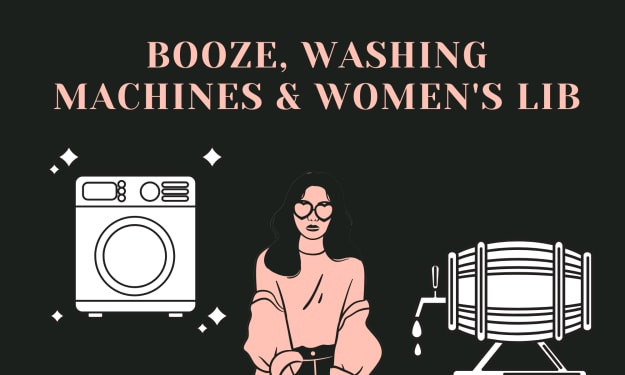
What Do Booze & Washing Machines Have In Common?. Top Story - March 2021.
Many of us learned in school about the 19th Amendment, which was passed in 1920 and gave women the right to vote across America. We also learned about the 18th Amendment, ratified in 1919, outlawing alcohol and ushering in an era known as “Prohibition.” And, we all learned about the Second Industrial Revolution, which also began in the early 1900s and was characterized by railroads, steel production, manufacturing and machinery, and electricity.
By Lacey Doddrow5 years ago in Viva
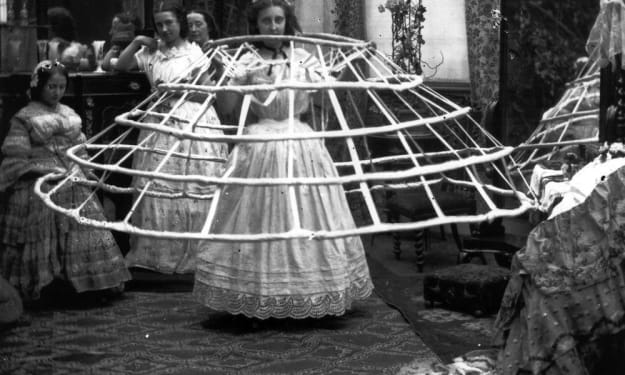
All About Corsets
The corset has a bad reputation. And unfairly so, according to real women, and actual evidence, who say this undergarment of centuries past is not nearly as evil or confining as modern folks have come to believe. First, though, a bit of quick history - The corset has been an indispensable article of clothing for several centuries in Europe, evolving as fashion trends have changed. Women, as well as some men, have used it to change the appearance of their bodies. The corset first became popular in sixteenth-century Europe, reaching the zenith of its popularity in the Victorian era. While the corset has typically been worn as an undergarment, it has occasionally been used as an outer-garment; corsets as outer-garments can be seen in the national dress of many European countries. Even as it gained popularity, the corset was not worn by everyone. Mary, Queen of Scots, for example, did not wear a corset. During the reign of Louis XV of France and again during the French Revolution, the corset went out of style, as the fashions were simpler. But, what you know as a corset, and the term corset itself only came into use at the start of the Victorian era (1820s and 1830s) and lasted up through the 50s and 60s. Previously, women (and mostly in England - the french were less keen on them) wore stays. In early 16th century Europe, corsets called “payre of bodies'' or ‘stays’ pushed the breasts upward and shaped the torso into a slim cylinder, thanks to boning made of horn, buckram or whalebone, and a flat wooden “busk” running down the center. But by the 17th century, corsets took on more of a cone-like shape, often made of two separate pieces of boned fabric known as stays, held together in the front with the busk. For a brief time, from 1800 to 1830, the Napoleonic high “empire waist” allowed for short stays to reign briefly.
By Jules Monfort5 years ago in Viva
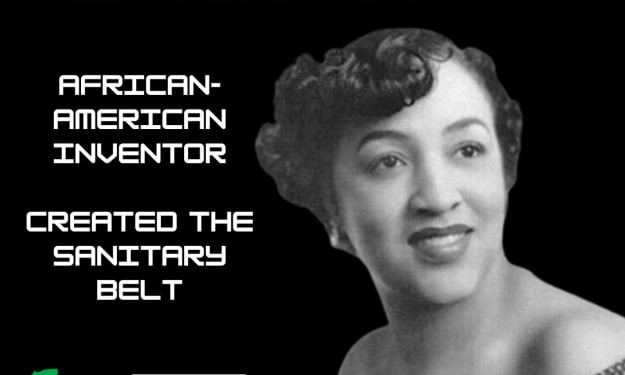
Mary Kenner created the sanitary belt
It is always troubling to me to hear that the color of someone's skin or their gender is the only reason they were not treated fairly. I will never wrap my head around the fact that many modern inventions were unfairly delayed because of racism and or sexism. The black female innovator that I am writing about today created something that was very useful to women during her time. This product is no longer in use today and many young women may not even have heard of it. Mary Kenner invented the sanitary belt which gave women a method that was beneficial during their monthly periods.
By Cheryl E Preston5 years ago in Viva
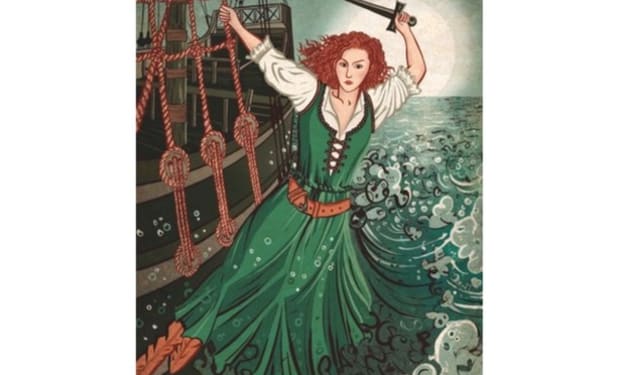
Queen's Do Not Cry
‘They tell us not to fear the unknown. They tell us that all will well, as long as we believe. As long as we keep the faith, we will be okay. At least that's what they tell everyone else. From a young age, I was taught differently than the common folk. I was taught to not show fear, to not show sadness or grief. I was taught from a young age not to cry before our subjects. Not even when my mother passed around seven was I to cry at her funeral. I was forced to watch as the carriage, and rows of horses carried her body up to the royal cemetery with my head held high. I remember my father did hold my hand, my older brother Stephan beside him and my grandmother in a black veil. My father pulled me along when our carriage came to view, he helped me inside and I thought it was safe to cry, but he wouldn't have it.
By C.N. McDonald5 years ago in Viva
6 Reasons Why I Would be Accused of Being a Witch. Top Story - November 2020.
The Salem Witch Trials that occurred in 1692-1693 saw a rise in the accusations of witchcraft in the United States. It’s a popular topic nowadays, especially with the rise in the pagan religion and practice of witchcraft. In these modern times, not a lot of people think twice about these spiritual practices given the increase in religious and spiritual acceptance and tolerance. Claims from back in these trials ranged in severity from witches sacrificing animals to putting curses on families and possessing young girls. Over the years that preceded, many guidelines were put into place on how to spot a witch, and the following hysteria resulted in roughly 25 deaths. The Salem Witch Trials have been largely denounced, considering there is not an accurate way to spot a witch, and even if there is, the tolerance and understanding towards the spiritual practice has grown so much.
By Alesia Brooks5 years ago in Viva
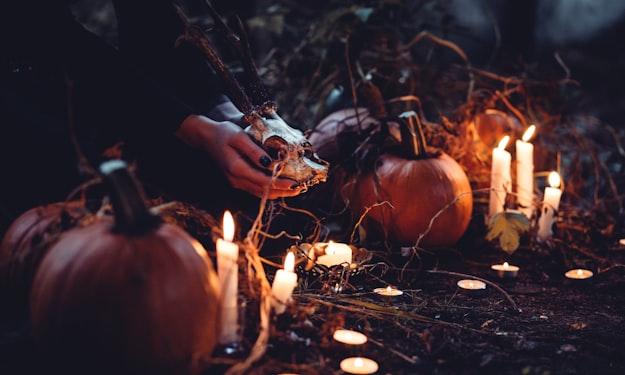
Witches, The Original Feminists
Witch. What a powerful word. When I used to think of a witch, my mind would run to Glenda the “Good Witch”, the wicked with of the west, and the classic ladies of “Hocus Pocus.” Spells, black cats, culdrens, and black magic weren’t far behind.
By Lauren Shipley5 years ago in Viva
The Woman Who Fought For Our Annual Thanksgiving Tradition
In 1846 a woman named Sarah Josepha Hale began a campaign for Thanksgiving to become a national holiday that is celebrated annually on a fixed date. Up to now Thanksgiving was primarily only celebrated in the Northeast.
By Paula C. Henderson5 years ago in Viva