
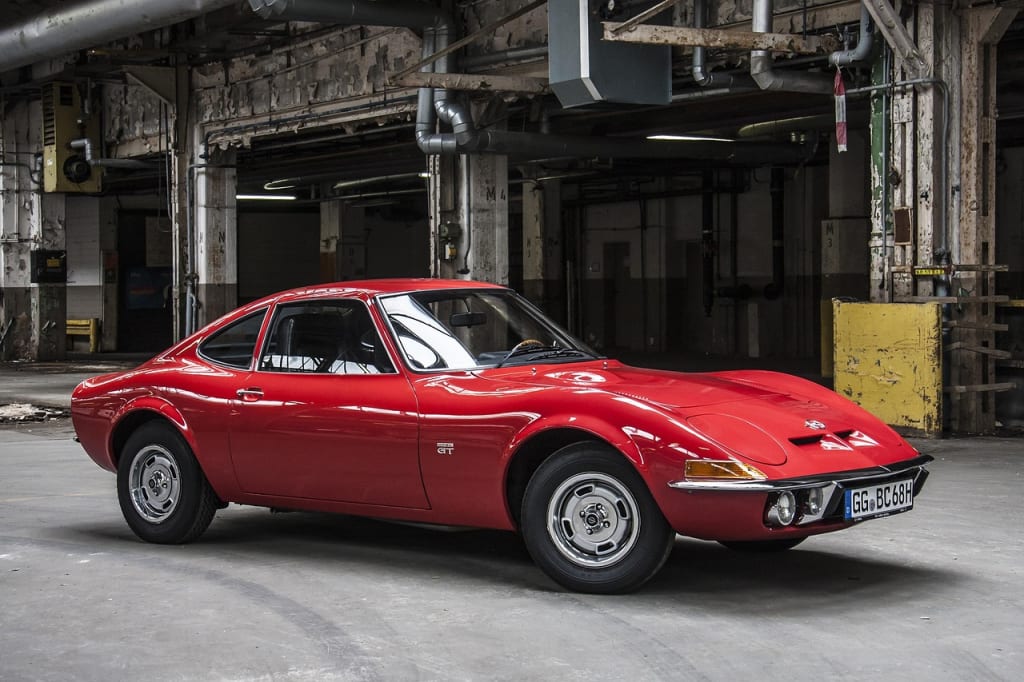
If you watched the 2004 Will Smith film ‘I Robot’, you’ll know that a minor plot point is that cars in this future are, by default, self-driving. They can still be driven manually, but this is considered a risky choice which only Smith’s character chooses to do, due to being a fan of such ‘retro’ choices. When his car is wrecked during an attack late in the film, his boss assumes that he crashed due to driving manually (the one time in the film he actually wasn’t). At the time of the film’s release, self-driving cars must have seemed hugely futuristic to help to sell the future setting.
And yet, twenty-two years later, this might be close to becoming a reality or, at least, people are trying to make it so. For years now, companies such as Tesla have been making the news with their efforts to develop self-driving cars. In many ways, it feels like a natural progression from the increasing computerization of cars. From inbuilt satnav devices, to parking cameras, to collision sensors, modern cars significantly streamline the act of driving. So why not cut out the middleman (you) and just drive themselves? Driving does involve guiding a heavy metal box at speed alongside other metal boxes of varying sizes down a road framed with pedestrians on either side. Wouldn’t it be much safer if this process was automated? There were an estimated 128,272 casualties of all severities on UK roads in 2024. Surely that number could be cut to zero if we could just get self-driving cars working reliably? Yes, but that ‘if’ is a big one, as one of the primary challenges in getting self-driving cars approved for widespread use is getting them to actually work.
Once you’ve been driving a while, it’s easy to forget just how complex driving is from a decision-making perspective. Even a short drive under the most optimal conditions requires a lot of judgement calls with little time to consider. What if the car in the next lane decides to suddenly move into your lane? An experienced driver can often see it coming by subtle signs such as the position of the car and how it is moving. But teaching a computer to correctly speculate based off such unclear information is quite difficult. This represents the danger of being wowed by a new technology; it’s easy to assume it can do more than it actually can. Such as the infamous case from 2004 (again) of the man who thought that the ‘cruise control’ option on his new motor home was a self-driving function, and got up to go make himself a cup of coffee.
Driving can be dangerous when treated carelessly, which is why companies probably shouldn’t be trying to monetize it before the technology is reliable. Of course, investors tend to want a return on their investment sooner rather than later, which might explain some of the haste. For the record, I would love for self-driving cars to become reliable. While I would always want to keep my hand in when it comes to driving, it would be amazing to be able to safely read a book on a long journey.
But I’ll happily put that off until companies have done a bit more testing and development. If, in the future, people talk about me in the same sentence as self-driving cars, I want it to be with incredulity that I was of a generation which had to drive our own cars. And not because I was one of the self-driving early adopters who died in a fiery crash.
About the Creator
Keep reading
More stories from Joe Morgan and writers in Wheel and other communities.
Field Repairs
‘How’s it going down there?’ Sarah gave a distracted grunt, but otherwise ignored the question that came from her comm unit, focusing instead on the mess of circuitry and pipes in front of her. There was definitely some rewiring that needed to be done, but the positioning of the circuit board would make it awkward. This was because if an antimatter processing unit of this size broke down, you were supposed to replace it entirely. You certainly weren’t supposed to attempt field repairs with any part of the ship still powered up. The stickers on the unit didn’t warn you about voiding your warranty; they had a to-scale illustration detailing just how large an explosion you could cause.
By Joe Morgan6 years ago in Futurism
The Ultimate Checklist Before Selling Your Car to a Wrecker
If your car has reached the end of its life or has serious damage, selling it to a wrecker can be a fast and convenient solution. Many car owners assume wreckers only provide scrap value, but professional wreckers often pay based on the condition and reusable parts of your vehicle.
By Alec Johnson4 days ago in Wheel
Why BMW Still Builds Inline-Six Engines When Others Don’t
For decades, most car manufacturers have moved toward smaller four-cylinder engines or compact V6 designs. They’re easier to package in modern cars, cheaper to build, and often simpler to fit into tight engine bays. Yet BMW continues to invest heavily in inline-six engines. From classic engines like the M54 to modern units such as the B58 and S58, the straight-six remains central to the brand’s identity. The reason isn’t nostalgia, it’s engineering.
By MT Auto Parts – BMW Specialists from the UK2 days ago in Wheel


Comments
There are no comments for this story
Be the first to respond and start the conversation.