Annie Kapur
Bio
I am:
🙋🏽♀️ Annie
📚 Avid Reader
📝 Reviewer and Commentator
🎓 Post-Grad Millennial (M.A)
***
I have:
📖 300K+ reads on Vocal
🫶🏼 Love for reading & research
🦋/X @AnnieWithBooks
***
🏡 UK


Stories (2951)
Filter by community
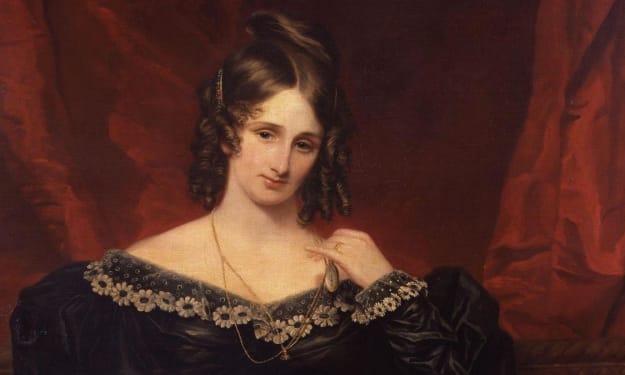
'Frankenstein' by Mary Shelley
Mary Shelley's Frankenstein is a novel synonymous with the beginning of sci-fi, the high fothic novel, the beginning of the modern novel and even the start of the modern world. Written in 1818 and revised for over a decade after, Mary Shelley's novel was first published as a part of a competition set by the poet Lord Byron. The competition was that they had to write a frightening story and the winner would get funded for publication.
By Annie Kapur7 years ago in Horror
'Jane Eyre' by Charlotte Bronte (Pt. 4)
A section of New Historicism regards the structure of the novel itself and the characters are secondary. Gretchen Brown's essay entitled, Untarnished Purity: Ethics, Agency and the Victorian Fallen Woman deals with the fact that both stories of women in the Victorian Era are incredibly predictable and pretty much, all the same. In one stance, we have the "Fallen Woman," which includes the characters of Aurora Floyd and Vixen by Mary Elizabeth Braddon, Bleak House by Charles Dickens, Adam Bede by George Eliot and the most famous Victorian Fallen Woman, Tess of the D'Urbervilles by Thomas Hardy. In another stance, we have the Victorian Woman's bildungsroman, or "coming-of-age" novel. This is defined by Brown as "a loving marriage with a preferred suitor and stable social participation." Thus, stating that no matter how hard Jane seems to rebel, since she is not a part of the social chasm of the Fallen Woman, she will have to divert her attention to a loving marriage and the "happy ending" archetype. In fact, it is the theory of the Fallen Woman's story being the direct opposite to the Bildungsroman that keeps Jane going.
By Annie Kapur7 years ago in Geeks
'Jane Eyre' by Charlotte Bronte (Pt. 3)
Now that we've covered what there is to cover of Jane's identity (in parts one and two) as a reliable or unreliable narrator—we must look now into theory and literary studies to find more descriptions and anecdotes of how she appears to a reader with a particular lens.
By Annie Kapur7 years ago in Geeks
'Jane Eyre' by Charlotte Bronte (Pt. 2)
I will be looking intertextually and using historicism and formalist criticism with additions of psychoanalysis, structuralism and ecocriticism in some places—in order to identify what is so enigmatic about Jane Eyre and why does she change so much through the space of one novel? [Note that these lenses of criticism may appear in future articles on Jane Eyre.]
By Annie Kapur7 years ago in Geeks
'Jane Eyre' by Charlotte Bronte
In 1852, the Literature Critic, George Henry Lewis, is sitting in his office and held spellbound by a work of semi-fiction by a man called Mr. C. Bell. He writes a lengthy piece of an article about it in The Quarterly Review and calls the book a "reality...a deep and significant reality." But who knew that this book was not actually written by Mr. C. Bell at all...?
By Annie Kapur7 years ago in Geeks
The Massacre Tapes
It happened last year, or somewhere in the middle of last year. Our town witnessed the single greatest horror in the history of any town anywhere; I'm sure of it. It was first said to be an unknown phenomenon of some kind, and people were blaming it on a disease we didn't know existed yet. But it was far from it. Let me tell you what happened. Men, in their 20s, would start randomly being found dead doing perfectly normal things. There was one named Christopher—I forget his last name—who died whilst he was on his way to work. He didn't appear to have any cuts and bruises, no marks to the skin. Nothing happened to him that could've been inflicted by someone else. Everyone, at that time, just shrugged it off as a death of natural causes. But then, more things happened.
By Annie Kapur7 years ago in Horror
The Tunnel
I am trapped in a tunnel. I have no idea how the hell I got here, and, at this moment, I have no idea how the hell I'm going to get out. I've been down here for about four, maybe five days. My sense of self, and my sense of time have both seemingly vanished. The ceiling above me is a stone grey arch that's mounted down on both sides of the floor–the arch stretching about five metres in width. There's not much light, but the cracks in the walls let some of the sunlight in every now and again, so at least I can tell when night-time comes. Whether that light is from the sinking sun, or the rising moon, I'll never know. I have to keep moving, maybe five miles per day just to keep away from that rising shadow that keeps following me. I've travelled far enough now that I know there's probably no end to this tunnel in sight–there's still an endless run of that stone grey arch in front of me, it fades out near the end, where my eyes can't make out anymore. Then, behind me is all the length I've travelled, again it fades to black. I normally drop my now-empty water bottle with the nozzle pointing in the direction I am supposed to be walking the next day, just to remember where I'm going. The stone floors don't offer soil to make footprints in, only the beating sound of the steps or movements of whatever's after me, gaining on my trail.
By Annie Kapur7 years ago in Horror
My Top Ten Favourite Songs by Bob Dylan (Pt. 14)
You'd think I would run out of things to say about Bob Dylan, and yet, here we are. Bob Dylan has an amazing track record of releasing some incredible and enigmatic music. He not only has that, but he also does cover songs of other people's music. Bob Dylan's versions of Johnny Cash's "Folsom Prison Blues" is just brilliant and he sings my favourite version of the Beatles' song "Yesterday"(sorry Paul).
By Annie Kapur7 years ago in Beat
My Top Ten Favourite Songs by Bob Dylan (Pt. 13)
As we get into the hundreds, we move into the lesser known Bob Dylan songs to some. But, to a Bobcat or Dylanologist, this stuff is still very surface level material. Bob Dylan's output is extraordinary and I feel we will probably never see the end of it (I hope we never see the end of it). I feel like there will be many more bootlegs and many more stories to tell (hopefully, one of those stories is Chronicles: Volume 2). With so many things happening in terms of anniversaries of albums and even Bob Dylan's birthday coming up, us bobcats are well-prepared for 2019.
By Annie Kapur7 years ago in Beat
Bob Dylan and Conversing with Jesus
"Dear Landlord"is one of Bob Dylan's most enduring songs and it has many messages that can be interpreted from its lyrics. It marks the beginning of a new era of folk music for Dylan and many have interpreted this song to mean something along those lines. Many have stated that there are clues in the songs of John Wesley Harding that give meaning to Bob Dylan's new semi-acoustic folk era. But, I believe that there's something more religious going on here. I know I talk a lot about Bob Dylan's religious aspects and well, I believe he is in conversation with Jesus Christ about his past and present positions. Though John Wesley Harding is known to be pretty religious, I think that there is something special about this song. "Dear Landlord" seems to be, ultimately, Bob Dylan begging for one more chance, something where he'll redeem himself.
By Annie Kapur7 years ago in Beat
50 Reasons to Listen to Bob Dylan
I don't really want to do too much of an introduction and give things away, but there are certain reasons that people don't or do listen to Bob Dylan. For example: I listen to Bob Dylan because I enjoy that kind of music, and his poetry is beautiful. However, my brother doesn't listen to Bob Dylan, because he prefers other types of music, but he doesn't doubt that Bob Dylan is quite possibly the best songwriter in history. What we're going to do is go through a few reasons as to why Bob Dylan is so loved and appreciated all over the world, and by the title—you should already be able to tell that this was the case. Let us begin.
By Annie Kapur7 years ago in Beat