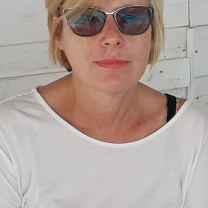
Patrizia Poli
Bio
Patrizia Poli was born in Livorno in 1961. Writer of fiction and blogger, she published seven novels.
Stories (283)
Filter by community
Luca Raimondi's "Se avessi previsto tutto questo"
This genre of novels arouses interest not for the plot nor for the style which, although correct, is original only in the alternation between colloquial and scholastic. If anything, as a mirror, more than of a generation — “If I had foreseen all this”, by Luca Raimondi, is set in the nineties, to tell us about it there are many small details and the musical soundtrack — rather of a climate, of an atmosphere, attributable to today’s, of young people immersed in a precariousness that is not only work but extends to all aspects of life, from study, to ethics, to feelings. It is a moral precariat of values, interests, culture, passions. A generation that goes from the nineties to 2016, which includes eighteen and forty-year-olds and is characterized by an absence of center, of references, of real involvement. A generation that floats in the void, with a creeping depression and a total absence of purpose or direction.
By Patrizia Poli3 years ago in Humans
Old Friends and New Lovesa
Since 2009, the literary agency Jo March has been involved in “bringing to light distant fiction, in time or space, wrongly forgotten or never translated into Italian”. The translation and reprint of “Old Friends and New Fancies”, by Sybil G. Brinton, defined as “the ancestor of all sequels”, of all Austenian spin-offs and derivatives, written a hundred years after “Pride and Prejudice” (1813) and translated in Italian one hundred years after its publication (1913), satisfies precisely this criterion.
By Patrizia Poli3 years ago in Humans
The Photo Novels
In the beginning it was the feuilleton of nineteenth-century newspapers, a popular novel in installments, destined to increase newspaper sales. Then, in 1947, a certain Stefano Reda goes around the publishing houses proposing the crazy and innovative idea of a comic that has photos instead of drawings. Only the small Novissima publishing house, affiliated with Rizzoli, accepts. Sogno, a sixteen-page newspaper, comes out. The subjects are by Reda and Luciana Peverelli, writer of romance novels. Shortly after, Arnoldo Mondadori also publishes a book of photo novels entitled Bolero (film). To these two must be added the previous Grand Hotel, whose novels, however, were only drawn.
By Patrizia Poli3 years ago in Humans
Who Comes Before Wilbur Smith?
We all know that Henry Rider Haggard (1856–1925) is fully regarded, thanks to the Ayesha cycle — most notably the best seller “She”, but also adventurous gothic tales such as “The Lady of Blossome” — the forerunner of fantasy and literary imagination, like Lovecraft, Poe, Verne and Stevenson.
By Patrizia Poli3 years ago in Humans
Roberto Cortelli's"Scusate se usa e consuma"
This essay has no title, it is recognized through an isbn code. It is the final part of a trilogy, which also includes “My Continuous Becoming” and “The Omniverse”, which the author himself defines as “a trilogy of thoughts, considerations, opinions, comparisons, hopes, opportunities”.
By Patrizia Poli3 years ago in Humans
Neither Psycologism nor Naturalism
Lecturer not in the history of art, but in the history of philosophy at the University of Bergamo, Giuseppe Fornari proposes in this essay, “La verità di Caravaggio”, a personal interpretation of the work of Michelangelo Merisi da Caravaggio.
By Patrizia Poli3 years ago in Art
Grant Allen's "Questi Barbari Inglesi"
As the author himself states in the preface, “The English Barbarians” aims to “represent points of view (…) in romantic fiction rather than in thoughtful essays”. And the novel, in fact, is a mixture of three genres: bland science fiction, sentimental fiction and pamphlet. In reality, it tends towards the third way, the other two are just pretexts to make the subject more captivating.
By Patrizia Poli3 years ago in Humans
The New Jewish Cemetery
The Jewish cemetery in Via Mei in Livorno, behind the municipal cemetery of La Cigna, is more recent than the other in via Ippolito Nievo (which preserves only nineteenth-century corpses and is in a state of decay) since it was opened in 1900. Of great historical value, the tombstones and cenotaphs (not the remains) of the very first cemeteries of the Jewish community, dating back to the seventeenth century, have now been sheltered.
By Patrizia Poli3 years ago in Humans
Gordiano Lupi's "Miracolo a Piombino"
Either because we are compatriots, either by age proximity, or by that contamination between high and popular culture that unites us, or by a profound inner affinity, no author pines and moves me like Gordiano Lupi, and “Miracle in Piombino” is no exception.
By Patrizia Poli3 years ago in Humans
Rosachiara's girls
There was not only the Michelangelo coffee bar in Florence, the headquarters of the Macchiaioli, where Renato Fucini recited his sonnets amid the general hilarity, together with his friend Edmondo de Amicis, there were also the Livorno cafes, meeting places for artists and writers, where cultural ferments and avant-garde boiled.
By Patrizia Poli3 years ago in Humans