
Frederick McKinley Jones
Cold Air, Warm Courage
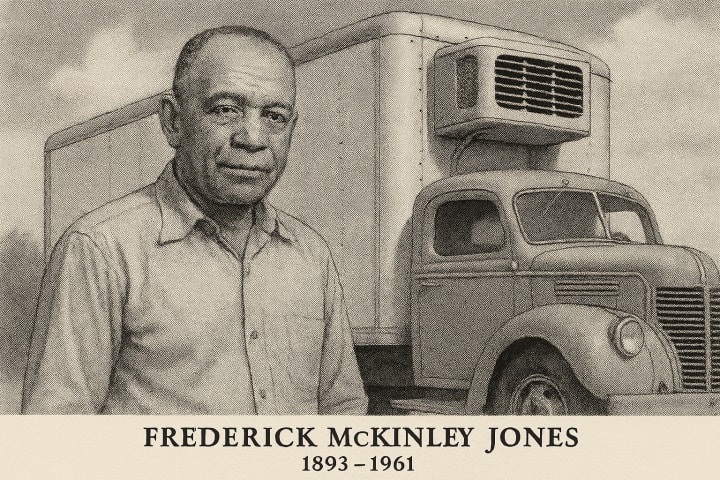
The train that carried Frederick McKinley Jones back to Hallock, Minnesota, after World War I rattled like a pocketful of bolts. Through the window, winter wheat lay flat against the prairie, and the sky stretched in a pale sheet to the horizon. He had a duffel bag, a head full of machine music, and the kind of hands that remembered how things fit together long after memory had given up the words.
Hallock was a town of straight streets and square shoulders, its corners shaped by the wind and by people who respected what work could do to a day. Fred found work the way a river finds a path—quietly, persistently—until the path belonged to him. He fixed tractors, tuned engines, and took night shifts as a projectionist at the movie house, where reels chattered like a bird startled from a fence line. He loved the hum of the projector, the hypnotic strobe of light, the way scraps of celluloid became stories when they sprinted past the lens. He loved, too, the problem that stood right in the middle of that light: images were easy; sound was a mule. Keeping their steps matched was a dance no one had taught the machine to do.
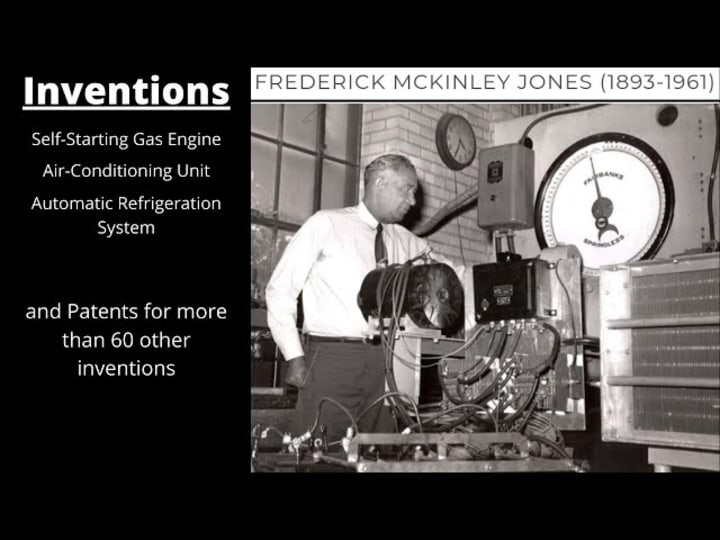
Fred had no patience for unsolved rhythms. He studied the projection booth like a watchmaker studies balance springs. He heard drift the way a musician hears a wrong note, and he found solutions the way a farmer finds rain—by watching the sky until it offers a path. In the small hours, while the town slept, he sketched and soldered and carved. He shaped a sound synchronization device that taught images to walk in lockstep with their words. The first time it worked perfectly, the audience didn’t know. That, to Fred, was the mark of good engineering: when a miracle looked like nothing at all.
He didn’t patent the device. Perhaps he didn’t imagine it would become the currency of an entire industry, or perhaps he believed—almost religiously—in moving on to the next problem. Either way, he absorbed the lesson without complaint. If the world noticed, it also forgot, and Fred went back to work. He built a ticket machine and patented it; he devised control systems, compressors, engines that breathed more efficiently. For him, invention was less a thunderclap and more a steady rain: sixty-odd patents across a lifetime of figuring out better ways to make things behave.
The problem that would shape his legacy arrived, unsuspecting, in the back of a truck.
It began with spoiled fruit on a summer’s day—the smell of it, the disappointment. Northern winters could keep a harvest cold with no more technology than a snowbank, but summer on the roads was a thief. A truck groaned its way from farm to market and delivered crates of wilted greens, sour milk, meat turned mean. For farmers, waste gnawed at the bottom line; for families, it meant fewer choices. For Fred, it was an engineering itch: Could you bring a winter’s certainty to a summer road?
Boxes of ice had been tried. Fans had been tried. Even the miracle of the modern era—the compressor—had flirted with the idea. But the roads shook machines to pieces, and compressors demanded careful treatment, steady current, and a haven from dust and rain. Early attempts mounted the equipment on the truck bed, where a load could bump and tilt, where the heat of the engine seeped back through the chassis like a bad habit. The units failed, and when they failed the food failed with them.
Fred watched trucks roll through Hallock, windows down, drivers sweating, the metal frames shimmering with heat. He thought about engines as personalities: proud, fussy, stubborn. He thought about how heat rises. He thought about air, paths, and the way a system reveals its own grace once you listen long enough. The solution came to him not as an idea but as a direction—a place to put the machine where it could breathe.
Put it on the roof.
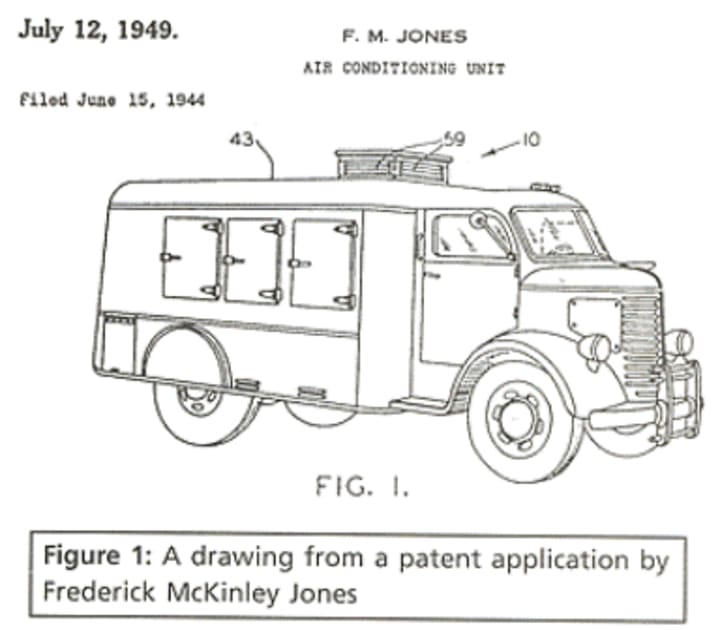
The first roof-mounted unit looked like a stubborn suitcase bolted to the cab, with intake grilles that resembled the gills of some untroubled fish. It wasn’t beautiful. It was practical and proud of it. He tuned a small engine to drive the compressor. He isolated it from shock with careful mounting. He routed air so it would circulate through the cargo bay like a river through a plain—swiftly, then gently, with eddies in the corners so nothing sat warm and forgotten. He drew power from a separate system, so the truck’s temper wouldn’t infect the cooling cycle. Then he drove. He drove over washboard dirt and blacktop, in the noon glare and the midnight hush, until the unit hummed through the test like a choir holding a note.
In the back, the air turned honest and steady. Lettuce kept its spine. Milk stayed sweet. Meat held the firmness of a promise. Fred, who rarely crowed about anything, let himself smile and filed the patent.
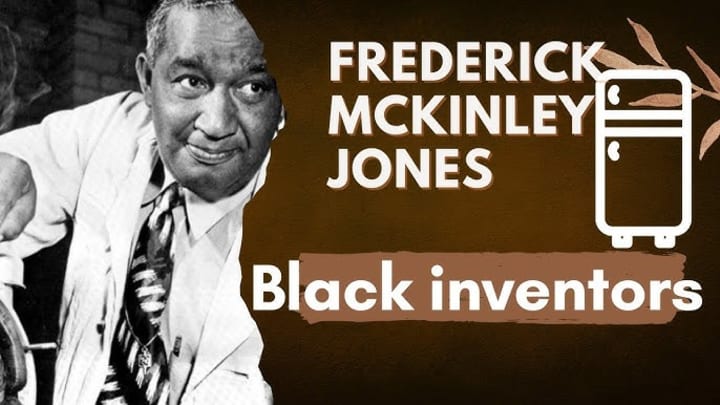
What he couldn’t have anticipated—but would never have been surprised by—was how quickly the world would rearrange itself around a box of cold air. One invention seldom exists alone; it’s a door that swings open onto a room of other inventions, and then a hallway of businesses, and then a district of livelihoods. Restaurateurs could plan menus without gambling on the weather. Farmers could reach markets that had seemed as far away as the moon. Cities could taste strawberries in months that had previously belonged to potatoes and pickles.
And then there was the war.
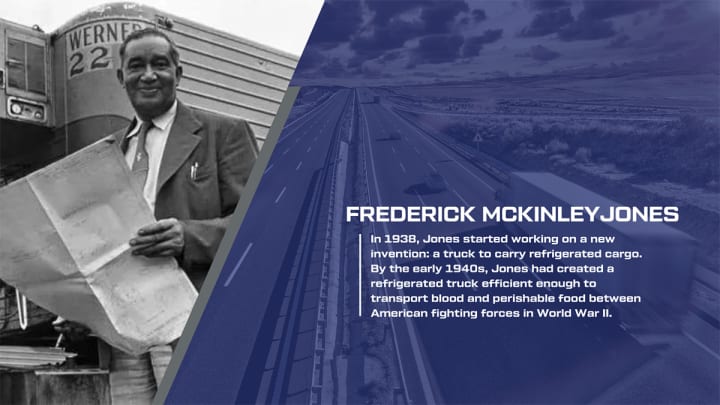
By 1940, the world’s supply lines had started to look like wires pulled too tight across a drum. When Frederick McKinley Jones’s roof-mounted units joined those lines, they delivered not just food but the promise of survival. Medical units stacked crates of plasma and whole blood behind rolling walls of cold air and brought them to the edge of chaos, where surgeons fought under tents and the night ferried in the injured. Fred’s machines didn’t shout or shine; they didn’t charge hills. They held a temperature so constant that life could be carried like a candle through the wind.
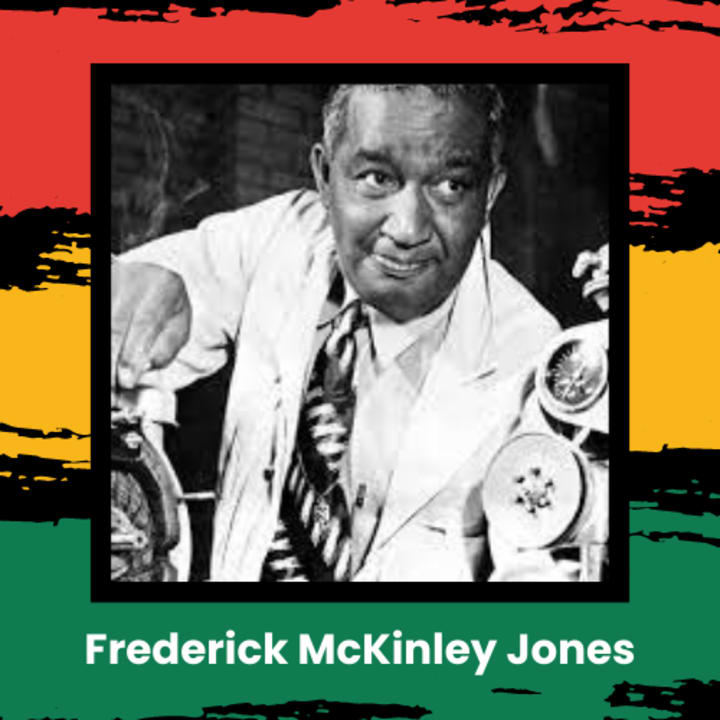
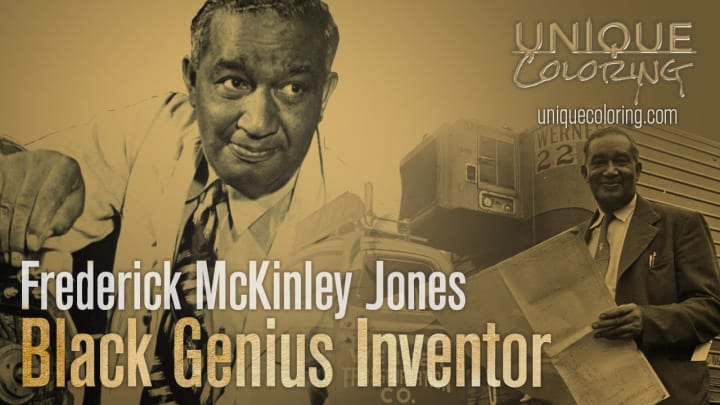
People began to know his name, though fame didn’t interest him. What moved him was the litany of problems still jostling for attention: a better control for internal combustion engines that acted like conductors with batons; a temperature control system that learned the discipline of a good schoolteacher; compressors that spun like ice skaters, poised and strong. Hallock knew what he had done, and the nation learned, and throughout it all, he returned to his shop the way some men return to their front porches. He liked the smell of oil, the tidy result of a fresh thread cut on a lathe, the satisfying click when a part seated just right.
If you had asked him to explain what kept him working, he might have shrugged, as if the answer were obvious. Machines were puzzles. People needed solutions. The distance between the two was his road to walk.
He never forgot the projection booth, though. On quiet afternoons he would pause at the threshold of a memory—the dim cone of light, the beam dust dancing like snow, the story laughing its way out of the lens—and he would shake his head at the way time moves. The synchronization device had been a ghost of an invention, something that worked so perfectly it disappeared. He harbored no bitterness. The lesson it had taught him was simple and sturdy: If your ideas are going to carry weight in the world, protect them. So he became a man who protected his ideas with paper and signatures, and he built a fortress of patents around the cold he had tamed.
There were still tastes the world hadn’t known it wanted. The modern supermarket, with aisles like a well-tuned orchestra, required a cold chain as reliable as sunrise. Hospital supply rooms and blood banks learned the dignity of decimals—33 to 41 °F, measured and kept. Ice cream trucks rang like little bells of joy along sidewalks in neighborhoods that had never expected such a luxury. Behind each of these, there was a unit purring—a whisper of engineering that let strawberries sit cheek by jowl with winter.
Fred never confused usefulness with perfection. He was always adjusting, sneaking small improvements into new models: a valve that breathed easier; a housing that shed heat a little quicker; a compressor that tolerated dust like an old man tolerates a joke he’s heard a thousand times. He had that rare confidence that prefers evolution to revolution: the willingness to make something a little better every day until, when you look back, you realize you’ve reinvented the landscape.
He knew what it meant to work among and across barriers. He knew the rooms he entered didn’t always expect him, and some didn’t want him, but screws don’t ask who holds the driver; temperatures don’t care about a man’s biography. He let the work speak. It spoke with the definiteness of a dial settling on its mark.
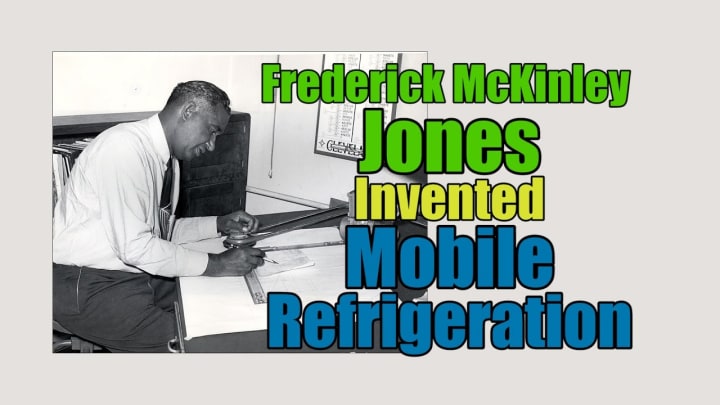
Years later, as he sat with sketches spread around him like maps of places only he had visited, young mechanics would come through the door of his shop carrying questions the way you carry a pail—heavy, a little awkward, but necessary. Fred would listen. He was patient with questions. He had asked enough of his own to respect their weight. He would answer with the kind of modest clarity that invites understanding instead of awe. Sometimes he would rest his hand on the cool side panel of a unit he’d just finished tuning, and he would smile at the way steel can feel like a living thing when it is doing its job.
That was the heart of his genius: he treated machines not as enemies to be beaten into obedience but as partners to be convinced, coaxed, and taught. He listened to the tone a bearing made when it wanted more grease. He felt the complaint that rose in a compressor starved of airflow. He had learned those songs in farm fields and projection booths, on factory floors and along the empty, wind-laundered roads of the upper Midwest. He had learned that the difference between waste and plenty could be as thin as a sheet of gasket paper cut to fit.
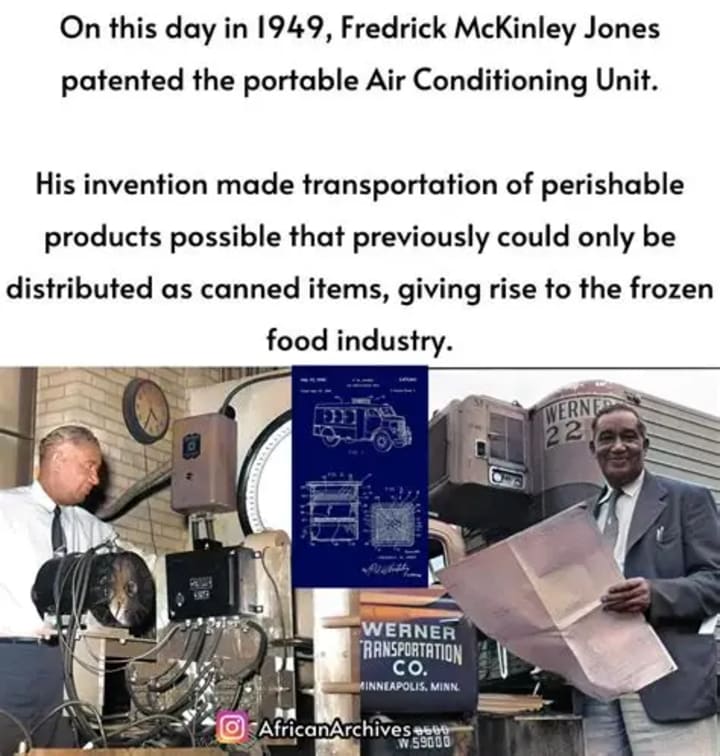
And he had learned, again and again, that invention could be an act of generosity. A cold truck was a kindness to a farmer’s livelihood, to a mother’s pantry, to a nurse’s midnight shift. It was a way of steadying the breath of a complicated world. When the war ended and the trucks came home, the cold rooms in the backs of those vehicles did not come with medals, but they kept granting mercies by the mile.
As his career ripened, Fred could look out across an America that had stretched itself around new habits—strawberries in winter, salmon in Kansas, vaccines along rural routes—and see a thread of his thinking woven through. Not in a boastful way, but in the way a craftsman recognizes his handwriting without needing the signature. He had given the world a tool. The world had used it well.
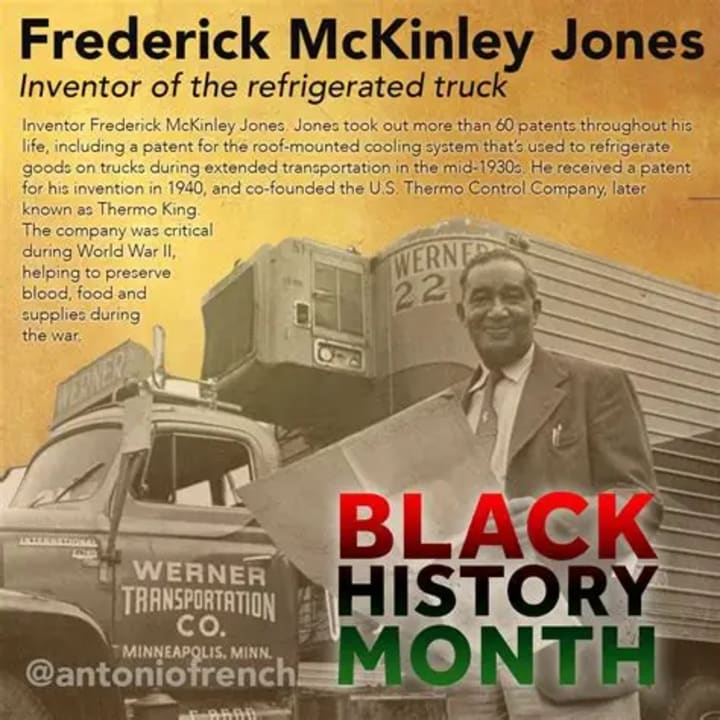
In the end, when people asked for his story, some started with patent numbers, others with truck fleets or wartime logistics. But those who knew him started with the man: a boy who learned by taking things apart; a soldier who learned by surviving; a mechanic who learned by listening. The machine that changed everything began as a willingness to look at summer and wonder how to carry winter within it. From that question blossomed a life of answers.
And so, when you hear the hush of a refrigerated trailer glide past you on the highway, when you step into a grocery aisle glittering with choices, when a hospital cooler door closes with a resilient, well-sealed thump—you are hearing the echo of Frederick McKinley Jones. It is the sound of kept promises. It is the music of synchronized reels: vision and sound in faithful step, warmth and cold in measured partnership. It is the calm authority of a dial that knows its work and does it faithfully, mile after mile, day after day.
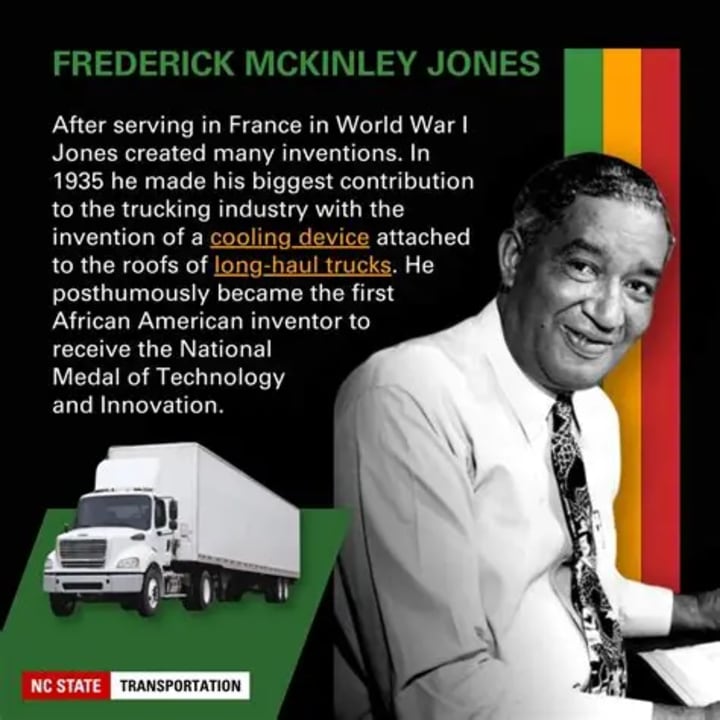
Fred once stood on the roof of a truck in the clean Minnesota morning, tightening bolts against a sky so wide it made a man feel both small and capable. He wiped his hands on a rag. He climbed down. He listened as the compressor came to life, felt the cool air brush against his cheek, and nodded to no one in particular—as if to say, Now the road has room for this, too.
Quick note from you (as requested)

About the Creator
TREYTON SCOTT
Top 101 Black Inventors & African American’s Best Invention Ideas that Changed The World. This post lists the top 101 black inventors and African Americans’ best invention ideas that changed the world. Despite racial prejudice.
Keep reading
More stories from TREYTON SCOTT and writers in BookClub and other communities.
Book Review: Atmosphere by Taylor Jenkins Reid
I flipped the book over in my hands in the centre of the small airport book shop. Although I had heard promising reviews of Atmosphere by Taylor Jenkins Reid, I hesitated. The synopsis didn’t compel me - I wasn’t much of a space girly. In high school it made me cringe when my peers would talk about the stars.
By sleepy drafts24 days ago in BookClub
7 Great Books for Beginners to Read in 2026
Reading opens doors to knowledge, imagination, and self-discovery, yet starting your reading journey can feel overwhelming. With thousands of books vying for attention, how do you know where to begin? These books are not only easy to read but also packed with meaningful stories, practical insights, and timeless lessons that will resonate with readers of all ages.
By Diana Meresc4 days ago in BookClub




Comments
There are no comments for this story
Be the first to respond and start the conversation.