
Who Will Be Iran’s Next Supreme Leader?
The Role of the Assembly of Experts Guardian Council Approval Process Voting Requirements and Selection Procedure

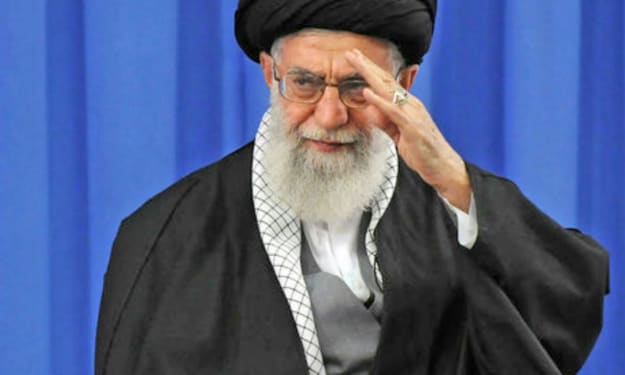
On Friday, Iran’s Supreme Leader Ayatollah Seyyed Ali Khamenei, who was killed in a U.S. and Israeli attack on Tehran, was the most powerful figure in the country.
Under Iran’s Constitution, the position of Supreme Leader was created after the 1979 Islamic Revolution under the leadership of Ayatollah Khomeini. He became the country’s first Supreme Leader on December 3, 1979.
Ayatollah Khomeini held the position for nine and a half years. After his death in 1989, Ayatollah Ali Khamenei was chosen as the country’s second Supreme Leader, serving for 36 and a half years until his death on February 28, 2026.
Who holds control until a new Supreme Leader is selected?
According to Article 111 of Iran’s Constitution, from the death of the Supreme Leader until a new leader is introduced by the Assembly of Leadership (Assembly of Experts), a three-member council temporarily assumes leadership duties. This council consists of the country’s president, the head of the judiciary, and one jurist from the Guardian Council selected by the Expediency Discernment Council.
However, this three-member council does not have full authority. In the following matters, its decisions can only be implemented with the approval of three-quarters of the members of the Expediency Discernment Council:
Determining the general policies of the system
Issuing a referendum decree
Declaring war or peace
Impeaching the president
Dismissing or appointing the Chief of the Joint Staff, the Commander-in-Chief of the Islamic Revolutionary Guard Corps, or senior military and law enforcement commanders
If the Supreme Leader is temporarily unable to perform his duties due to illness or an accident, the same council assumes responsibilities in the same capacity.
The Assembly of Experts and the selection of the Supreme Leader
Iran is currently the most powerful country in the world with a majority Shia population, and under the Constitution, the Supreme Leader can only be an Ayatollah, a religious authority within Shia Islam.
However, when Ali Khamenei was selected, he was not an Ayatollah. The law was amended to enable him to assume the position.
In Iran, an 88-member body of clerics known as the Assembly of Experts elects the Supreme Leader. Every eight years, millions of Iranians vote to elect members of this body. The last time this occurred was in 2016.
However, any candidate for the Assembly of Experts must first be approved by the Guardian Council, whose members are directly or indirectly selected by the current Supreme Leader.
It is evident that the Supreme Leader exerts influence over both the Guardian Council and the Assembly of Experts. Over the past three decades, Ayatollah Ali Khamenei ensured a conservative majority within these bodies.
Currently, the chairman of the Assembly is Mohammad Ali Movahedi Kermani, while Hashem Hosseini Bushehri and Alireza Arafi serve as deputy chairmen.
According to regulations, a meeting of the Assembly of Experts is valid if at least two-thirds of its members (59 individuals) are present. The selection of a new leader requires a two-thirds majority vote of those present. This means that if only 59 members attend, 40 votes would be sufficient to elect a new leader.
The commission reviewing potential candidates
A commission within the Assembly of Experts is tasked with assessing the qualifications of individuals who may be considered eligible for the position of Supreme Leader.
Key members of this commission include Ahmad Hosseini Khorasani, a jurist member of the Guardian Council; Guardian Council members Alireza Arafi and Mohammad Reza Modarresi Yazdi; First Vice Chairman of the Assembly of Experts Hashem Hosseini Bushehri; former representative of Ayatollah Khamenei in Europe Mohsen Mohammadi Araki; Friday prayer leader in Isfahan Abolhassan Mahdavi; and Hassan Amoli, three-time member of the Assembly of Experts and Friday prayer leader in Ardabil.
How long does the selection take?
There is no fixed timeframe for selecting a new Supreme Leader. Since the three-member interim council has already been formed, at least on paper there will be no power vacuum.
However, experience following the death of Islamic Republic founder Ayatollah Ruhollah Khomeini shows that members of the Assembly of Experts acted swiftly in choosing a successor under similar circumstances.
Ayatollah Khomeini passed away after 10 p.m. on June 4, 1989, and the Assembly of Experts convened the following morning, making a decision on succession within a few hours.
The importance of the position of Supreme Leader
According to Article 57 of Iran’s Constitution, “The government of the Islamic Republic of Iran consists of three branches: the legislature, the judiciary, and the executive. These three branches function under the supervision of the absolute guardianship of the jurist and the leadership of the Ummah, in accordance with the provisions of the Constitution.”
Although there is political diversity in Iran, from the first day the position of Supreme Leader has been the focal point of public and political movements due to perceived threats to national security and the Islamic Revolution.
While the Constitution allows for oversight of the Leader and even disagreement, the Leader is regarded as a symbol of the Islamic Revolution, and opposition to him is often seen as opposition to the revolution itself.
Under Article 91 of the Constitution, the Supreme Leader appoints six of the twelve members of the Guardian Council, and under Article 157, he appoints the Chief Justice.
Article 110 grants him authority to determine Iran’s general policies in consultation with the Expediency Discernment Council and to oversee the entire system of government.
He also has the authority to call referendums, appoint the heads of all armed forces including the Islamic Revolutionary Guard Corps, and is the sole authority empowered to declare war.
After presidential elections, the decree appointing the winning candidate is issued by the Supreme Leader. He also has the authority to dismiss the president, but only if the Chief Justice finds the president guilty of a crime or if parliament declares the president incompetent under Article 89.
If disputes arise between different branches of government, they are referred to the Leader. However, interpretation of the Constitution is referred to the Guardian Council. The Leader also appoints the head of Iran’s state broadcasting organization and has the power to pardon those convicted by the judiciary. Additionally, the Leader may delegate his powers to others.
According to Article 60 of the Constitution, the president exercises executive authority with the assistance of ministers, except for those powers specifically reserved for the Leader. In practice, however, the Leader has delegated certain supreme command authorities over the armed forces to the president.
The Supreme Leader and Iran’s armed forces
Iran’s armed forces include the Islamic Revolutionary Guard Corps, along with its ground, naval, and air forces, as well as the Quds Force, a strategic unit. In addition, Iran’s conventional armed forces, known as the Artesh (Islamic Republic of Iran Army), are also part of the country’s military power. The Supreme Leader serves as the commander-in-chief of all these forces and appoints their leaders.
It is said that Iran has more than ten million volunteers known as the Basij. Its formation was announced by Ayatollah Khomeini with the aim of “safeguarding the Islamic Revolution.” It is also known as the Resistance Basij Force, but its official name is the Organization for the Mobilization of the Oppressed.
Initially, it was an independent body, but later it was incorporated into the Revolutionary Guards. Its head is also appointed by the Leader. The Basij has an administrative staff paid as state employees, while its ordinary volunteers serve without pay.
Who could succeed Ayatollah Ali Khamenei?
Following Ali Khamenei’s death, the most important question is who will be appointed as his successor.
Like his predecessor Imam Khomeini, Ali Khamenei was unable to build a broad coalition beyond his supporters, but he maintained the backing of key commanders of the Revolutionary Guards.
Therefore, it is likely that the leadership of the Revolutionary Guards could influence the selection of the country’s next Supreme Leader.
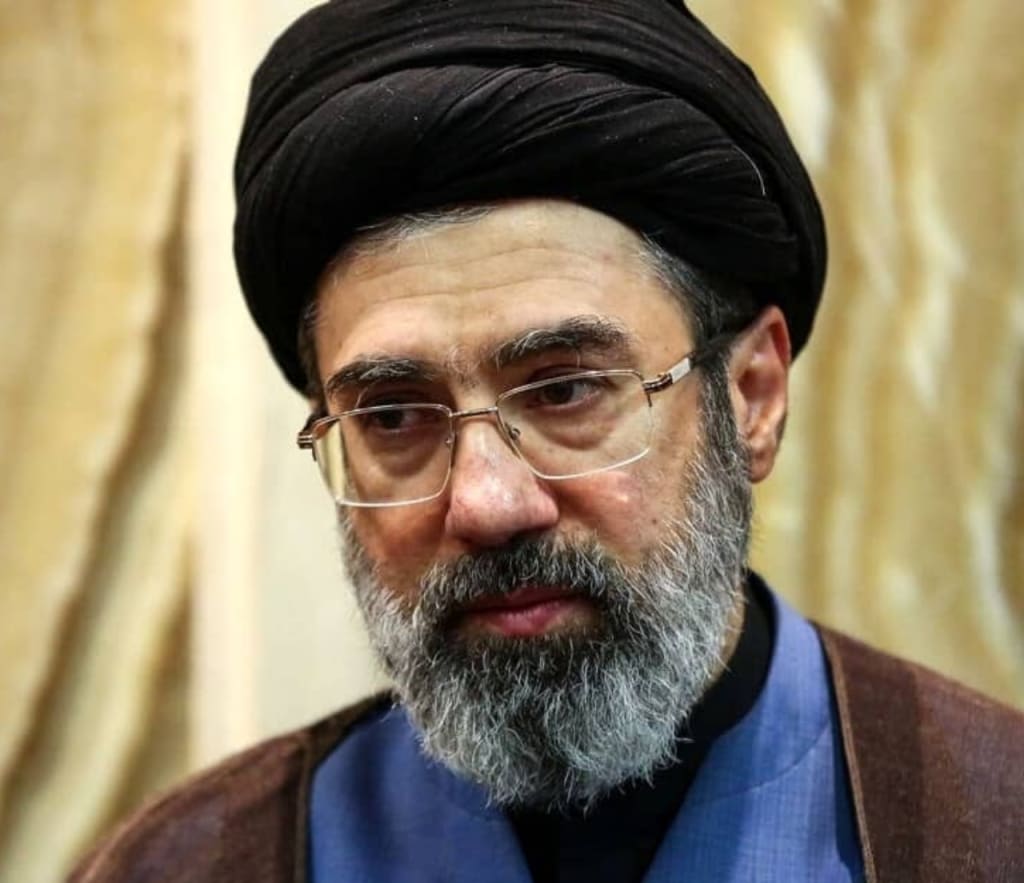
During Khamenei’s lifetime, some believed that two individuals were particularly favored: his son Mojtaba Khamenei and the head of the judiciary, Ebrahim Raisi. However, Ebrahim Raisi was killed in a helicopter crash in 2024.
About the Creator
Keep reading
More stories from Real content and writers in Chapters and other communities.
The Cave Part 6
If you have ever heard a tale about yourself that you cannot remember and doubtless think is made up, you will know how I felt when Tharkin related all that the eagle had seen of me before my memories were scattered. Of far distances and traveling companions that I did not recall, camping out under the stars and making our way to the mountains with deliberate purpose. The great bird had lost contact with my party once we entered the forests, and the seven other members were not seen again by him or his brethren since.
By Jamye Sharp15 days ago in Chapters
🏢💥 Unraveling 9/11 Conspiracy Theories: Understanding Claims, Evidence, and Public Debate
The September 11, 2001 attacks on the United States remain among the most significant and tragic events in modern history. Nearly 3,000 lives were lost, the global economy was shaken, and the world witnessed the rise of a new era of geopolitical tension and security concerns. Alongside these events, a complex web of conspiracy theories has emerged, challenging the official narrative and sparking debate that spans governments, media, academia, and the public.
By Haroon Pasha5 days ago in Chapters


Comments
There are no comments for this story
Be the first to respond and start the conversation.