
Earth
From sustainability hacks to the latest on climate change to Mother Nature appreciation, Earth is a place to share anything and everything about the planet we call home.
Stats
Stories
- 30,484
Creators
- 13,837
Top Creators


Top Stories
Stories in Earth that you’ll love, handpicked by our team.
We Were Never Meant to Live Like This!
When you look at the world today, it's like looking at a madhouse. The world is more connected than ever through the miracle of electronic devices. People, at least in the West, of course, there are exceptions, are living longer, eating better, living in homes, and driving the latest cars. We have iPhones/Android phones, social media, AI, etc.
By Nicholas Bishop10 months ago in Earth
Chestnut Ridge Farm/Scottish Highlanders/Lab's & Littlepop's Popcorn!!
Willow & Buhler The Chestnut Story The view from my back deck Chestnut flowering Chestnut Harvest Well to begin my story, we’ll have to go back to 1999 when I planted a chestnut orchard in the northeast section of my town in Ellington, Connecticut. I had come up with the idea from earlier memories of my father working with some trees in our backyard in the late 60’s. I found out land was available and I was planning on building a house as well. I cleared around 8 acres and planted approximately 800 trees! The planting went well and the trees were looking beautiful. Unfortunately, when the following spring came, because of the combination of too much water in the soil and the variety of chestnut trees I had planted, almost all but a few didn’t make it. I didn’t give up and I cleared some more land that was on higher ground and today almost 25 years later, at the time of this writing, I have approximately 150 trees. Not all are producing because some are still too young. In 2022 I had a record crop and I sold about 1,400 lbs. into the market. Last year, 2023, I didn’t do as well they only produced about half as much as in 2022. That’s farming!
By Bruce Luginbuhl 2 years ago in Earth
Look Up
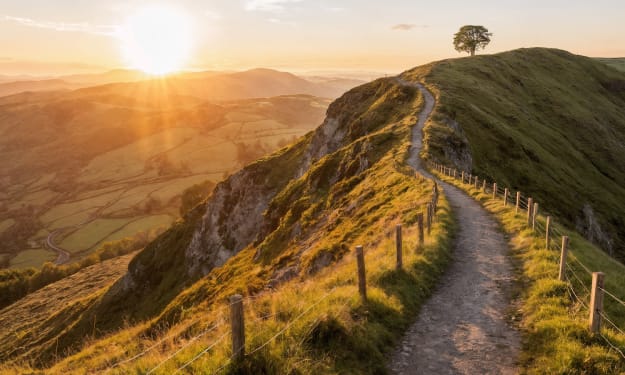
We don’t look up enough. We take the world around us for granted sometimes, and we don’t see the beauty in what we are surrounded by. In all the hustle and bustle, evening appointments, heading to or from work, taking the dog out, taking the trash to the curb, outside, smoking a cigarette (😵💫) or sitting around a fire.
By Colleen Walters2 years ago in Earth
Water Walkers
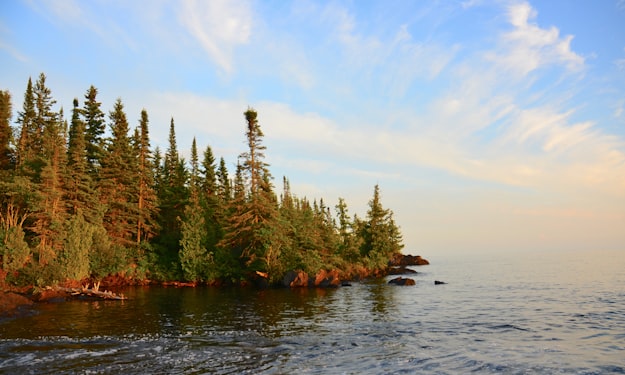
Lake Superior is a big lake. Some say it is an inland Sea. My Anishinabe people call it Gitchigama or the Great Sea. Lake Superior is a very large body of water that some people consider to be an inland sea. It is the largest freshwater lake in the world by surface area and the third-largest by volume, holding 10% of the world’s surface fresh water. It has a coastline of nearly 10,000 miles and spans across the border between Canada and the United States1. It is also home to many fish species, islands, and shipwrecks23. The name Lake Superior comes from the French term le lac supérieur, meaning the upper lake, because it is above Lake Huron4. However, the Ojibwe people who live around the lake call it gichi-gami, meaning great sea4. This name reflects the lake’s immense size and power, as well as its cultural and spiritual significance for the Ojibwe people. Quote from Microsoft Bing
By Denise E Lindquist2 years ago in Earth










Collections
Themed story collections curated by the Vocal moderators.
Latest Stories
Most recently published stories in Earth.
After the year 2030, what will become of the International Space Station? Explanation of NASA's Deorbit Strategy
The International Space Station (ISS), the most expensive and complex structure ever assembled in space, has become both an unrivaled hub of scientific research and an increasingly difficult aging outpost to maintain in low Earth orbit. The International Space Station (ISS) has been a laboratory for experiments in everything from advanced materials science to microgravity biology for more than two decades. But as it nears its planned retirement, stakeholders are grappling with how to responsibly wind down its operations, manage its physical end, and transition to new orbital platforms.
By Raviha Imranabout 2 hours ago in Earth
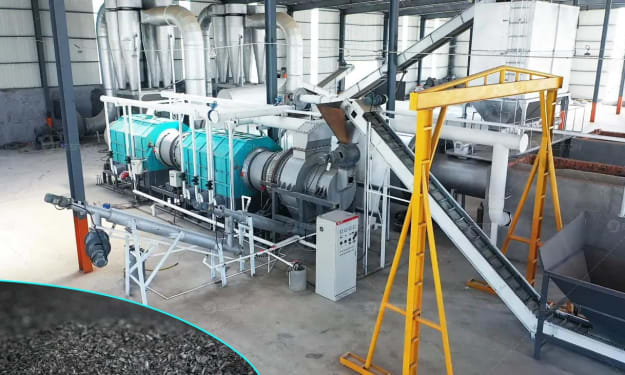
Batch vs. Continuous Pyrolysis: Choosing the Right Reactor for Biochar Production
The global biochar market is experiencing a period of rapid expansion. Driven by the need for scalable carbon dioxide removal (CDR) and a growing demand for soil amendments, project developers are moving from pilot studies to commercial production. However, for those entering the space, one of the most critical decisions involves the core technology itself: the pyrolysis reactor.
By Bestonpyrolysisabout 14 hours ago in Earth
The Technical Rise of Naphtha Recovery from Plastic Waste
For decades, the global narrative surrounding plastic has been defined by a linear economy: produce, use, and dispose. While mechanical recycling has served as the primary method for managing plastic waste, its limitations are well documented. Degradation of polymer chains, contamination from food waste, and the complex composition of multilayer packaging mean that a significant portion of collected plastics—often cited as high as 70%—is relegated to landfills or incineration.
By Bestonpyrolysisabout 14 hours ago in Earth
What Is Hardiness? Understanding Your Zone and Plant Survival. AI-Generated.
Hardiness is a plant's ability to survive adverse conditions, most critically cold temperatures. It is quantified through hardiness zones, a system that maps average minimum winter temperatures across regions. Learning to read and apply this system transforms you from a hopeful gambler into an informed gardener who selects plants destined to survive and thrive.
By Emma Wallaceabout 20 hours ago in Earth
Winter Olympics Must Tackle Environmental Impact Before the Snow Runs Out. AI-Generated.
The future of the Winter Olympics is increasingly threatened by the very climate conditions that once defined it. Rising global temperatures, shrinking glaciers, and unreliable snowfall are forcing organizers to confront an uncomfortable truth: without urgent environmental reform, the Games may soon struggle to find suitable natural winter settings. Recent editions of the Winter Olympics have relied heavily on artificial snow and extensive infrastructure projects to compensate for warming conditions. While technology has allowed competitions to proceed, it has come at a significant environmental cost. Artificial snowmaking requires vast quantities of water and energy, placing additional strain on fragile alpine ecosystems already stressed by climate change. Climate Change and Vanishing Snow Scientists warn that many traditional Winter Olympics host regions may no longer be viable within decades. Areas in the Alps, once considered snow-secure, now experience shorter winters and more frequent rain instead of snow. According to climate research groups, average winter temperatures in mountainous regions have risen by nearly two degrees Celsius over the past century, drastically reducing dependable snow cover. This trend is forcing Olympic planners to consider fewer and fewer potential host cities. By mid-century, only a small number of high-altitude or northern locations may be able to provide natural snow conditions for outdoor events such as skiing, snowboarding, and biathlon. The Environmental Cost of Hosting Beyond snowmaking, the construction of Olympic venues has long raised environmental concerns. New roads, hotels, and ski facilities often require deforestation and large-scale land reshaping. After the Games end, many venues are underused or abandoned, leaving behind what critics call “white elephants” in sensitive landscapes. Transport is another major contributor to the carbon footprint. Tens of thousands of athletes, officials, media personnel, and spectators travel internationally to attend the Games, producing millions of tons of carbon emissions. For an event that celebrates human endurance and natural beauty, this contradiction has become increasingly difficult to ignore. Calls for Reform Environmental groups and athletes alike are urging the International Olympic Committee (IOC) to adopt stricter sustainability standards. Some propose limiting host cities to a fixed rotation of climate-resilient venues rather than building new sites every four years. This would reduce construction emissions and allow organizers to invest in long-term green infrastructure. Others suggest shifting more events indoors or redesigning sports formats to reduce reliance on perfect snow conditions. Innovations in energy use, such as fully renewable-powered venues and electric transport systems, are also gaining support. The IOC has already pledged to make future Games climate-positive, promising to cut emissions and offset remaining carbon output. However, critics argue that offsets alone are not enough and that fundamental changes in how the Games are planned and hosted are required. Athletes Speak Out Many athletes who train in mountain environments are among the most vocal advocates for change. They witness disappearing glaciers and unpredictable seasons firsthand. Several Olympic champions have joined climate campaigns, warning that winter sports themselves are at risk of becoming inaccessible to future generations. “You can’t celebrate snow sports if there’s no snow left,” one former skier remarked. “Protecting the climate is protecting our sport.” Their message resonates with younger audiences, who increasingly expect major global events to demonstrate environmental responsibility. A Race Against Time The challenge now facing the Winter Olympics is not only logistical but moral. As one of the world’s most visible sporting spectacles, the Games carry symbolic weight. They can either continue to adapt in ways that worsen environmental damage or become a model for sustainable international events. If current warming trends continue, experts warn that future Winter Olympics could be confined to a handful of locations with artificial conditions resembling theme parks rather than natural winter landscapes. Such a shift would undermine the spirit of the Games, which has always been rooted in ice, snow, and mountains. Conclusion The Winter Olympics stand at a crossroads. Climate change has transformed snow from a guarantee into a luxury, and the environmental cost of maintaining the Games is rising sharply. To survive, the Olympics must evolve—by cutting emissions, rethinking host locations, and embracing genuine sustainability rather than temporary fixes. Without decisive action, the world’s greatest winter sporting event may find itself running out of snow—and time.
By Fiaz Ahmed a day ago in Earth
A 7.1-magnitude earthquake strikes offshore, less than 100 km from the coast". AI-Generated.
A powerful 7.1-magnitude earthquake struck offshore early today, less than 100 kilometers from the coastline, sending shockwaves through nearby coastal communities and prompting tsunami monitoring alerts, though no major wave threat was immediately confirmed by authorities. According to seismic monitoring agencies, the earthquake occurred at a shallow depth beneath the ocean floor, intensifying the shaking felt on land. Residents in several coastal cities reported strong tremors lasting up to 20 seconds, causing buildings to sway, household items to fall, and brief power outages in some districts. Emergency services were placed on high alert as authorities assessed the potential for damage and casualties. Local disaster management officials said the quake’s epicenter was located in a seismically active zone known for frequent tectonic movement. Initial reports suggested that while structural damage appeared limited, inspections were underway for bridges, ports, and coastal infrastructure, particularly in low-lying areas vulnerable to secondary hazards such as landslides or liquefaction. Hospitals in nearby regions activated emergency protocols, preparing for possible injuries. So far, only minor injuries have been reported, mostly due to people slipping or being struck by falling objects during the shaking. Officials urged residents to avoid unnecessary travel and to stay away from damaged buildings until safety inspections could be completed. Maritime authorities issued precautionary advisories to vessels operating near the epicenter, warning of possible strong underwater currents and aftershocks. Fishermen and small boat operators were advised to remain in port until conditions stabilized. Ports temporarily halted operations while engineers evaluated docks and cargo facilities for structural integrity. Seismologists explained that the earthquake resulted from the sudden release of stress along a fault line beneath the seabed. Because the quake occurred offshore, it raised concerns about a potential tsunami. However, early readings from ocean buoys and tide gauges indicated no significant sea-level changes. Monitoring agencies later downgraded the tsunami risk but emphasized that coastal populations should remain alert for updates. Government officials addressed the public in a brief televised statement, calling for calm and cooperation. “Our emergency response teams are fully deployed, and we are closely monitoring aftershocks,” the interior minister said. “At this time, there is no confirmed large-scale damage, but we urge citizens to follow safety instructions and avoid coastal areas until further notice.” Schools in several coastal districts were closed for the day as a precautionary measure. Public transportation systems operated with delays while safety checks were carried out on rail lines and stations. Utility companies reported scattered power interruptions but said most services were restored within hours. The quake comes amid heightened awareness of seismic risks in the region, where previous offshore earthquakes have caused destructive tsunamis and widespread damage. Experts warned that aftershocks could continue for days or even weeks, some of them potentially strong enough to be felt on land. International aid agencies and neighboring countries expressed readiness to assist if the situation worsened. Disaster response teams reviewed contingency plans, including evacuation routes and emergency shelters, should further tremors occur or conditions change unexpectedly. Residents described scenes of fear and confusion as the ground shook. “It felt like the whole building was moving,” said one coastal resident. “We ran outside with our children because we were afraid it might collapse.” Others reported hearing a low rumbling sound moments before the shaking began. Authorities stressed the importance of earthquake preparedness, reminding people to secure heavy furniture, keep emergency kits ready, and know safe evacuation routes. “This event is a reminder that we live in an earthquake-prone area,” a senior emergency official said. “Preparedness saves lives.” As of now, damage assessments are ongoing, and officials continue to monitor seismic activity closely. While the immediate danger appears to have passed, the situation remains under observation, with updates expected as more information becomes available from field teams and scientific agencies.
By Fiaz Ahmed a day ago in Earth









Creators We’re Loving
The creative faces behind your favorite stories.