
Death Valley sees its most spectacular superbloom in a decade
Unusual rains turn one of Earth’s driest places into a vibrant sea of wildflowers

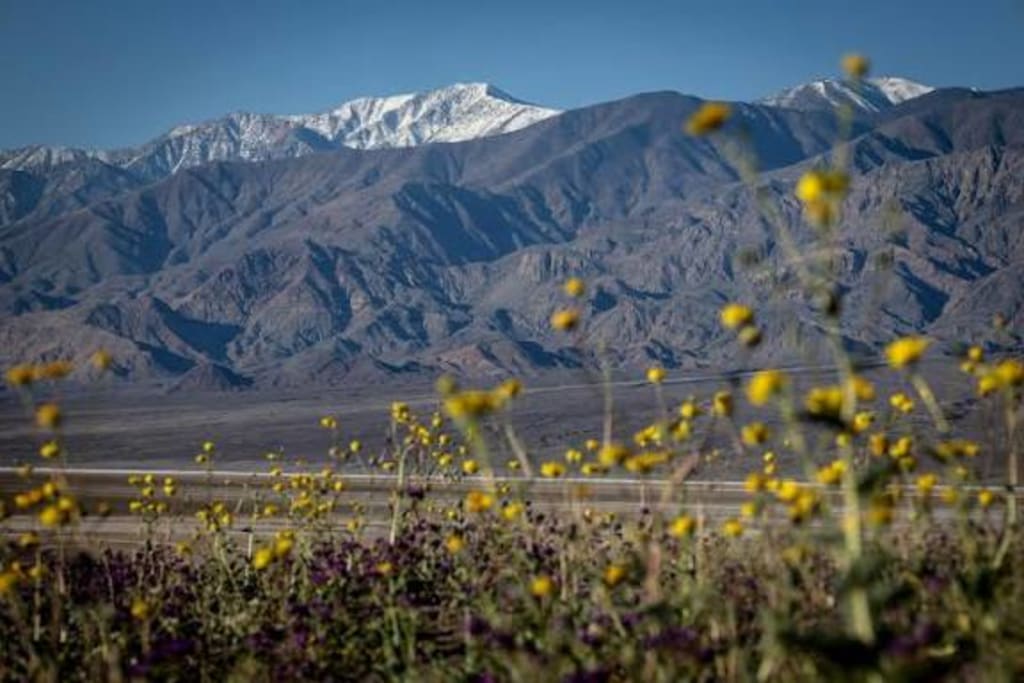
One of the most extreme landscapes on the planet—Death Valley National Park—is currently experiencing an extraordinary natural event: its most spectacular wildflower superbloom in a decade. What is usually a stark expanse of sun‑baked desert has transformed into sweeping carpets of vibrant color, drawing visitors, scientists, and photographers to witness a rare and fleeting burst of life.
This year’s bloom, described by the U.S. National Park Service as the most dramatic since 2016, is the result of unusually wet weather during the fall and winter months. Typically known as the hottest and driest place in North America, Death Valley averages only about two inches of rain annually. But from late autumn through early January, the region received more than its yearly average in a short span, creating ideal conditions for dormant wildflower seeds to sprout and burst into bloom.
A Desert Transformed
Normally a landscape of sand and jagged rock, this spring the valley floor has come alive with a riot of pinks, purples, yellows, and whites. Species such as Desert Gold, Phacelia, Sand Verbena, and Mojave Desertstar blanket the ground, creating scenes that defy Death Valley’s harsh reputation. Park officials and wildlife enthusiasts alike have expressed amazement at the scale of the bloom and the speed with which it has taken over the valley.
“This area that’s known basically for hot weather, sand and dirt has just become this amazing landscape of colors,” said David Blacker, executive director of the Death Valley Natural History Association. “The smell is just amazing.”
At lower elevations, the wildflower display is already widespread and expected to last through mid to late March, weather permitting. As temperatures gradually shift, blooms at higher elevations may continue into April and even through June, though the full extent of later displays will depend on ambient heat and moisture levels.
Rain: The Key to the Bloom
Superblooms in desert environments are extremely rare and hinge upon a delicate balance of weather conditions. In Death Valley, a confluence of well‑timed rainfall events and moderate winter temperatures created just the right environment for seeds that often lie dormant for years to germinate, grow, and flower.
Abby Wines, acting deputy superintendent at the park, noted that the exceptionally wet period provided more moisture than the valley would typically receive in an entire year. This unusual rainfall allowed plants to take root and flourish, even in areas that ordinarily remain barren.
Although the term “superbloom” doesn’t have a strict scientific definition, it is widely used by park officials and visitors to describe years when wildflower blooms exceed normal patterns in scale and intensity. These events usually happen only once every decade or so in Death Valley, adding to their scarcity and appeal.
A Magnet for Visitors and Scientists
The rare spectacle has drawn crowds of visitors who typically think of Death Valley as nothing more than a harsh landscape of sand dunes and heat. In recent days, photographers and nature lovers have flocked to well‑known viewing areas such as Badwater Basin, Jubilee Pass Road, and surrounding alluvial fans where blooms are especially dense.
Park officials are encouraging visitors to follow “Leave No Trace” principles: staying on designated paths, avoiding picking flowers, and being mindful of fragile ecosystems. Because these blooms are so dependent on specific conditions, conservation‑minded behavior plays a key role in protecting future displays.
For scientists and ecologists, the superbloom offers a unique opportunity to observe how desert ecosystems respond to atypical weather events. Flowering cycles in these environments are closely tied to climatic patterns, and scientists can gather valuable data that may inform understanding of ecological resilience in the face of climate variability
A Fleeting Celebration of Life
Despite the stunning display, the superbloom is temporary. Once the rains stop and the desert heats up, the flowers will quickly fade and set seed, leaving behind a memory of colors before the valley reverts to its usual starkness.
Still, for those who have made the journey this spring, the sight of Death Valley awash in hues of gold, purple, and pink is a reminder of nature’s capacity to surprise—and a testament to the fragile beauty that can spring from even the harshest environments.
About the Creator
Fiaz Ahmed
I am Fiaz Ahmed. I am a passionate writer. I love covering trending topics and breaking news. With a sharp eye for what’s happening around the world, and crafts timely and engaging stories that keep readers informed and updated.
Keep reading
More stories from Fiaz Ahmed and writers in Earth and other communities.
Amid European Energy Fears, Coal Creeps Back Into Favour
Europe’s energy landscape is shifting as fears over supply security and rising costs drive some countries back toward coal, a fossil fuel many had hoped to phase out entirely. The resurgence comes amid heightened tensions over energy imports, particularly natural gas, as the war in Ukraine and geopolitical friction with Russia have exposed vulnerabilities in the continent’s energy systems. Germany, long seen as a leader in renewable energy adoption, recently announced plans to keep several coal-fired power plants online longer than initially scheduled. Officials cited winter energy demands and the need to maintain a reliable baseload while natural gas supplies remain constrained. Similar considerations are emerging in Poland, the Czech Republic, and other nations that rely heavily on imported energy. “The energy crisis has forced governments to make difficult choices,” said Dr. Klaus Weber, an energy policy analyst at European Energy Institute. “While the climate goals remain important, ensuring citizens have access to electricity and heat this winter has become a more immediate priority.” The return to coal is not simply a response to price spikes. Energy security has become a pressing concern after European reliance on Russian gas pipelines was disrupted, prompting countries to diversify sources and store reserves. Coal, abundant in Europe and globally traded at competitive prices, provides a short-term buffer against shortages. At the same time, rising electricity costs have placed enormous pressure on households and industries. According to recent statistics from the International Energy Agency, European electricity prices surged by nearly 40% in the past year, prompting governments to subsidize energy bills and rethink fuel strategies. Coal-fired generation, though more polluting, offers predictable output and can be ramped up quickly to stabilize grids. Renewable energy advocates have expressed concern that this shift could undermine Europe’s climate leadership. Coal emits roughly twice the CO₂ per unit of energy compared to natural gas, posing challenges to achieving net-zero targets. Critics warn that extending coal use—even temporarily—risks locking in infrastructure that is inconsistent with long-term decarbonization goals. “Every megawatt-hour produced from coal is a step backward for Europe’s climate ambitions,” said Maria López, senior campaigner at Greenpeace Europe. “Governments need to pair any temporary measures with accelerated renewable deployment to avoid backsliding on emissions reductions.” Some nations are attempting to balance these pressures by deploying cleaner coal technologies. Advanced coal plants with carbon capture and storage (CCS) can reduce emissions by capturing a significant portion of CO₂ before it enters the atmosphere. Germany and the Netherlands are investing in pilot projects to integrate CCS into existing power plants, though critics note that large-scale implementation remains costly and complex. Analysts suggest that Europe’s return to coal is likely to be temporary. Once gas supplies stabilize and renewable infrastructure expands, reliance on coal is expected to decline. Yet the episode has highlighted the fragility of energy systems in the face of geopolitical shocks and the tension between short-term energy security and long-term climate goals. Meanwhile, citizens and businesses are feeling the immediate impact. Many households in Eastern and Central Europe face sharply higher heating costs this winter, and industrial manufacturers are warning that energy-intensive production could be scaled back if prices remain high. Policymakers are caught between the urgent need to maintain supply and the imperative to meet climate commitments. The European Union is working on strategies to mitigate these challenges. Measures include expanding LNG import terminals, investing in cross-border electricity interconnectors, and boosting renewable energy capacity. However, the gap between energy supply and demand, exacerbated by geopolitical tensions, means coal may remain a stopgap solution for months to come. Europe’s cautious return to coal underscores a broader reality: energy transitions are never linear. Even as governments and citizens push toward a greener future, external shocks—conflict, supply disruptions, and price volatility—can temporarily alter priorities. The key challenge for policymakers will be ensuring that short-term reliance on fossil fuels does not derail long-term climate ambitions.
By Fiaz Ahmed 3 days ago in Earth
Planning a Vegetable Garden Layout: Sun, Space, and Succession
You've decided to grow your own food. You've cleared a space, bought seeds, and imagined baskets overflowing with tomatoes and zucchini. Then reality intervenes. The tomatoes shade the basil. The zucchini engulfs the carrots. By midsummer, you have more lettuce than you can eat, followed by a gap of nothing until frost.
By Emma Wallace4 days ago in Earth
The BAFTA Awards
By now, in a stunning departure from recent years, most of the world is aware of what happened at the BAFTA film awards. Social Media Headlines will tell you the bare bones: that John Davidson, a Tourette's Syndrome advocate, shouted a racial slur at two Actors of Colour, Michael B Jordan and Delroy Lindo.
By Natasja Rose6 days ago in Psyche


Comments
There are no comments for this story
Be the first to respond and start the conversation.