
Hell Pigs and the Abnormal Shrimp: 6 Nightmarish Predators From Prehistoric Earth
Such as the reptile version of a saber-toothed tiger and the whale that crushed the skulls of other whales...


Did you know that millions of years ago, a carnivorous, pig-like creature roamed America eating camelids? It turns out that ancient Earth was home to all sorts of bizarre predators - let's take a look at...
- The Pigs From Hell
- The Man-Sized Sea Scorpion
- The Reptile Sabre-Tooth
- The Land-Walking Fish
- The Whale-Eating Whale
- The Dreaded "Abnormal Shrimp"
The Pigs From Hell
With some examples reaching 2m in length and packing a monstrous, meter-long jaw, the Archaeotherium were piggies you really didn't want to go to market.
Though sometimes called (for obvious reasons) the "hell pig" these creatures weren't actually porcine - in fact, they were more closely related to whales and hippos. They did fill a similar niche to pigs though, as their teeth suggest that they tended to grub for roots and tubers.
That said, these creatures were quite capable of predation. The bones of Poebrotherium (a camelid roughly the size of a sheep or deer) have been found with puncture marks matching the powerful teeth of the hell pig!
The Man-Sized Sea Scorpion
Hundreds of millions of years ago, the oceans of the world played host to vicious arthropods known as eurypterids... or sea scorpions.
Now, while they looked superficially similar to the scorpions of today, few (if any) eurypterids seem to have had a sting in the tail. It's thought that the sea scorpions relied on their claws to rend prey instead - which brings us to Jaekelopterus rhenaniae, a sea scorpion bigger than a human.
We don't have a great deal of information about the creature, but what we do have comes from a preserved claw. The fossil dates back to between 460 and 255 million years ago, with the appendage being 46cm long. Researchers compared the claw's size to that of other eurypterids to estimate the length of Jaekelopterus rhenaniae, coming up with a body length of around 2.5m... which means it probably would have been able to dismantle a human if we'd been around at the same time!
You might be thinking that you could keep safe from these creatures by simply staying out of the ocean, but several eurypterid species lived in brackish or fresh water. Some research even suggests that they possessed dual respiratory systems... that would have let them make brief trips onto land!
The Reptile Saber-Tooth
The incredibly strange Inostrancevia comes from the therapsids, a broad group of creatures that bridge the gap between reptiles and mammals.
Reaching up to 3m in length and nearly half a ton in weight, these predators blended mammalian and reptilian characteristics into a deadly package. Reconstructions of their remains suggest a stocky, hippo-like body with a short tail and reptilian skin. The head looked like a cross between a T-rex and a big cat... complete with a set of massive protruding canines.
Funnily enough, these creatures are though to have occupied the niche that would later be taken by big cats. Researchers believe that it would have been an ambush predator, attempting to sink those long teeth into the throat of unwary prey!

The Land-Walking Fish
Long before the modern-day mudskipper came the tiktaalick, a "fish" that trundled onto land around 375 million years ago.
It represented one of the earliest vertebrates to try the surface world, making the best of its fishy features to explore the shore. Researchers believe it had a robust pelvic girdle and prominent hip joints that controlled powerful hind fins. Coupled with its reasonably sturdy front fins, this "fishapod" would have been able to move itself like a four-legged animal - while still being able to swim like a fish. It had both gills and primitive lungs, meaning it was well suited to excursions above and below the water.
The tiktaalick may come across as an ungainly explorer adventuring into dangerous new lands, but this creature was a powerful predator in its own right. Some examples reached around 3m in length and possessed a crocodilian-style head well suited to snapping up prey!
The Whale-Eating Whale
The Basilosaurus or "king-lizard" was a true nightmare of the ocean. A primitive whale, these creatures were initially misidentified as a powerful reptilian predator with a long tail, an almost crocodilian head and vicious triangular teeth. They could exceed 20m in length... and had an appetite to match.
Researchers believe that Basilosaurus isis had a brutally high bite force (gripping with an estimated 2,300 pounds of force) which they used to prey on smaller whales. Dorudon whales may have been comparatively small (a mere 5m or so long) but the fossil record suggests that Basilosaurus could bite into their skulls like a human crunching into an apple!
The Dreaded "Abnormal Shrimp"
Did you know that half a billion years ago, one of the ocean's apex predators was similar to an angry giant shrimp?
Anomalocaris (which even means "abnormal shrimp") was a strange looking, free-floating invertebrate rather than a true shrimp. It had a pair of bristled "arms" that it probably held out in front of itself - this would have been the most aquadynamic way for the creature to swim. It also had a set of large googly eyes, meaning it was well-suited to hunting other swimming prey (albeit while looking rather silly.)
Though Anomalocaris was a massive for its time, the arthropod was only around 60cm long. The bristles on its arms were fairly fragile, which suggests that it fed on soft-bodied prey - trying to crack tough shells would likely have broken the spikes!
Thanks for reading, perhaps you'd also like...
- Body-Burrowing Hagfish and Spider-Tailed Vipers: 5 Natural Nightmares
- Grim Hybrids and Mummified Scarabs: Explore 6 Strange Sets of Animal Remains
- Six Bizarre Fossils I Wish I'd Found
Sources and Further Info:
About the Creator
Bob
The author obtained an MSc in Evolution and Behavior - and an overgrown sense of curiosity!
Hopefully you'll find something interesting in this digital cabinet of curiosities - I also post on Really Weird Real World at Blogspot
The Problem with Invasive Plants: Identification and Responsible Removal
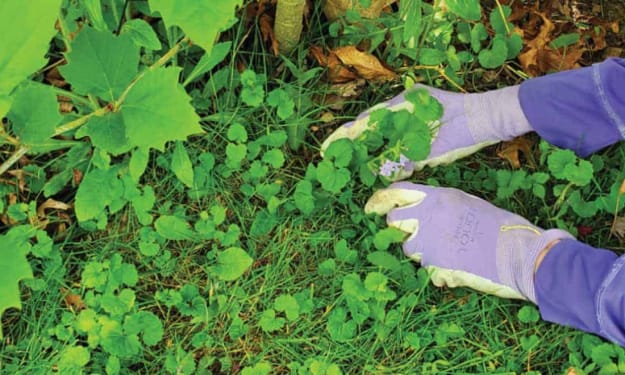
This scenario plays out in gardens across the continent. Many invasive plants started as intentional garden introductions, valued for their beauty, vigor, and ease of growth. Those same qualities—rapid spread, adaptability, and resilience—make them ecological threats when they escape cultivation.
By Emma Wallace3 days ago in Earth



Comments
There are no comments for this story
Be the first to respond and start the conversation.