

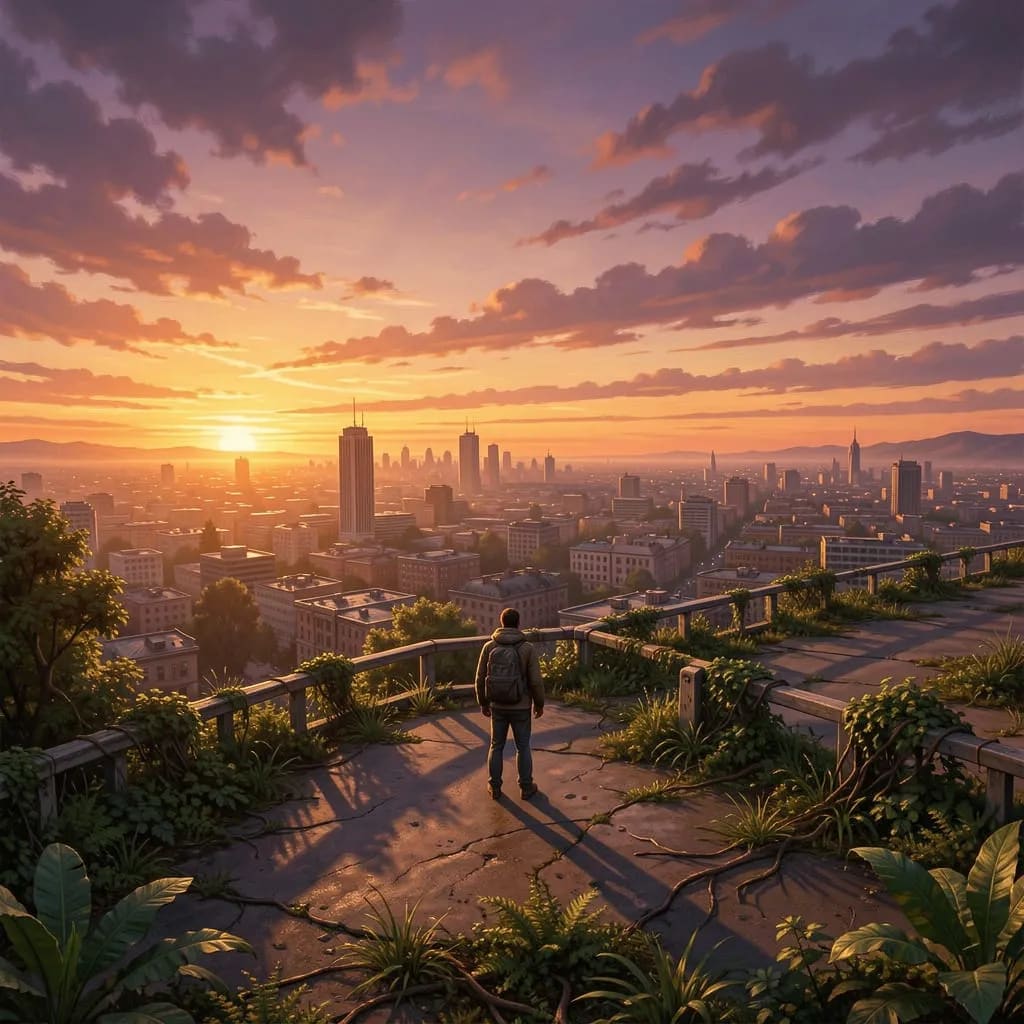
The silence is the first thing that breaks you. It isn’t the quiet of a sleeping house or a snowy woods; it is a heavy, pressurized absence of sound. No hum of distant tires, no white noise of air conditioners, no rhythmic thrum of the electrical grid.
If you were truly the last person on Earth, the world wouldn’t just stop—it would begin a violent, beautiful, and terrifying transformation. The human era has been a blink in geological time, but our infrastructure is a stubborn skeleton. As you wander through the remains of a species that vanished overnight, here are ten things that would define your new existence.
1. The Death of the Grid
Within the first 24 hours, the lights go out. Fossil fuel power plants are the first to fail as they run out of coal or gas. Nuclear plants would switch to "safe mode" as their cooling systems detect a lack of human input. For a few weeks, hydroelectric dams might keep a ghostly hum alive, but eventually, silt buildup or mechanical failure would trigger a total blackout.
The world will become darker than you have ever seen it. Without light pollution, the Milky Way will appear like a glowing wound across the sky, so bright it casts shadows on the ground. You will live by the rhythm of the sun, and for the first time in your life, you will understand why our ancestors feared the moonless night.
2. The Great Animal Migration
With the fences unpowered and the sirens silent, the animal kingdom moves in. It starts with the pets—the millions of dogs and cats who suddenly find themselves hungry. Within weeks, the streets of major cities would be prowled by packs of former golden retrievers and house cats, reverting to their primal instincts.
But the real shift happens when the "wild" returns. Coyotes, bears, and deer will wander into suburban cul-de-sacs. Eventually, zoo animals that managed to escape their enclosures would create surreal ecosystems; imagine a pride of lions hunting elk in the middle of a freeway in Kansas. You are no longer at the top of the food chain; you are just another primate trying not to be noticed.
3. The Reclaiming of the Concrete
Concrete feels permanent, but it is incredibly fragile. Without humans to clear the gutters and patch the cracks, water becomes an agent of destruction. In the first winter, water will seep into the pavement, freeze, and expand, shattering the roads.
Weeds will push through the fissures, followed by saplings. Within five years, Broadway in New York or the 405 in Los Angeles would look like a meadow. Vines like kudzu and ivy will climb the sides of skyscrapers, acting like a slow-motion green tide. Your neighborhood will transform into a forest with "house-shaped" mounds of debris hidden under the canopy.
4. The Domestic Collapse
Inside your home, the atmosphere changes. Without climate control, moisture becomes the enemy. Mold will bloom on the wallpaper within months. Books, if not kept in an airtight environment, will begin to rot as the glue in their bindings breaks down.
The "stuff" of our lives—the plastic toys, the stainless steel appliances, the polyester clothes—will endure, but the structures holding them will fail. Roofs will leak, causing floorboards to rot. Eventually, the very house you once considered a sanctuary will become a hazardous trap of falling drywall and weakened beams.
5. The End of "Digital" History
Everything you’ve ever posted, every photo on the cloud, and every email you’ve ever sent will vanish. Without a massive workforce to maintain servers and provide cooling, the internet dies within days of the power grid. Hard drives have a shelf life; within a decade, most digital storage will be corrupted.
If you want to leave a record for the universe that you were here, you’ll have to go back to basics. You would find yourself carving names into stone or etching messages into lead plates. Our most high-tech era will ironically be the one that leaves the least evidence behind for future civilizations.
6. The Psychological "Mirror" Effect
Without other humans to provide feedback, your sense of self begins to blur. We define ourselves through our roles: parent, employee, friend, rival. When those roles vanish, who are you?
You might find yourself talking to mannequins, trees, or even your own shadow just to keep the linguistic part of your brain from atrophying. The lack of a "gaze" from another person means you stop caring about how you look or how you act. You become a creature of pure utility and whim. The thin line between reality and hallucination becomes a daily battle.
7. The Chemical Time Bombs
The world is littered with industrial sites that require constant human monitoring. Without workers, refineries, chemical plants, and pesticide factories will eventually leak. Some might explode as pressure builds in unvented tanks.
You would see massive plumes of colored smoke on the horizon, or find that a once-clear river has turned neon orange overnight. The "post-human" world isn't just a garden; it’s a minefield of industrial leftovers that will take centuries to neutralize.
8. The Scavenger’s Paradox
Initially, you are the wealthiest person to ever live. Every grocery store is your pantry; every car dealership is your garage. But everything has an expiration date.
Canned goods might last 20 to 50 years, but gasoline goes "stale" in about six months to a year. Medications lose their potency. Fresh water becomes a daily chore as pipes burst or dry up. You will spend your mornings scavenging for the last remaining "good" items of a dying world, realizing that a bottle of high-quality antibiotics is worth more than all the gold in Fort Knox.
9. The Silence of the Sky
The satellites currently orbiting Earth will eventually succumb to atmospheric drag. Without ground stations to give them "nudges" to stay in orbit, they will fall.
For the first few decades, you might look up at night and see a "shooting star" that is actually a billion-dollar communication satellite burning up. Eventually, the GPS network will fail, the weather satellites will go dark, and the sky will be as empty and mysterious as it was in the Middle Ages.
10. The Return of the Earth’s Pulse
Finally, the planet begins to heal. The carbon dioxide levels in the atmosphere will start to drop as the massive forests of the world breathe it in. The oceans, no longer churned by thousands of shipping vessels, will become clear and teeming with life.
You will witness a planet that is vibrant, loud with birdcall, and utterly indifferent to your presence. You are the last observer of a world that has moved on. You are a ghost living in a garden, the final period at the end of a very long, very noisy sentence.
About the Creator
Richard Weber
So many strange things pop into my head. This is where I share a lot of this information. Call it a curse or a blessing. I call it an escape from reality. Come and take a peek into my brain.
Keep reading
More stories from Richard Weber and writers in Earth and other communities.
Itchy Apocalypse
Although the notion of bed bugs taking over the world seems like a plot point for a B-movie, their astonishing adaptability and recent resurgence point to a more sinister potential. These small, bloodsucking animals have traits that can provide them with an unanticipated edge in a world that is changing. Here are some reasons why bed bugs may end up ruling our future in silence.
By Richard Weberabout a year ago in Earth
The Day the Stars Went Silent
It began without darkness. The stars still shone. On a clear Thursday night, children in deserts and cities pointed upward at familiar constellations. Satellites orbited peacefully. Aircraft crossed continents. The sky looked exactly as it had the night before.
By Abubakar2206 days ago in Earth



Comments
There are no comments for this story
Be the first to respond and start the conversation.