
Wars Across the Globe: A Search for Peace
Understanding Today’s Conflicts and the Hope for a Safer World

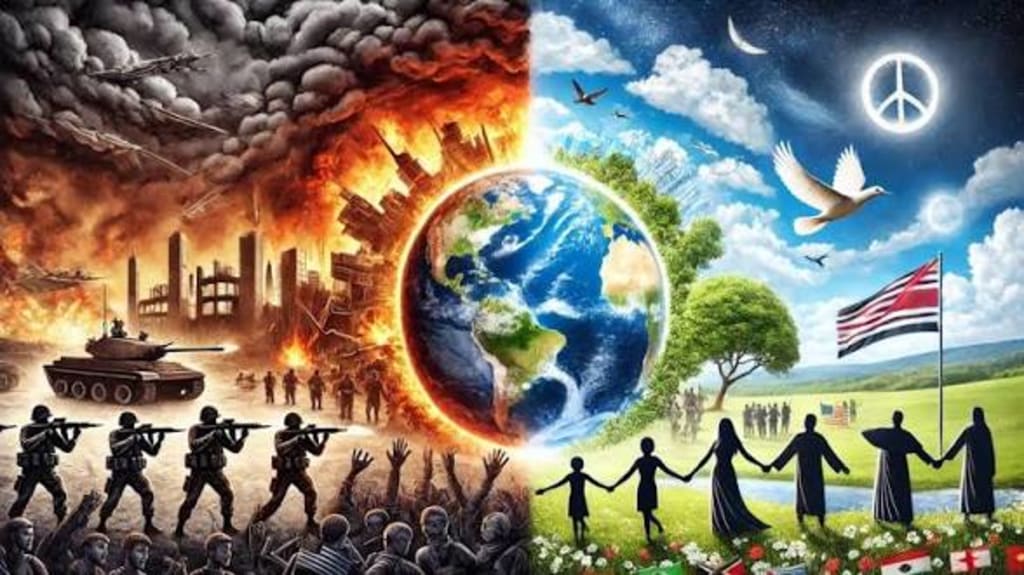
Today, the world is facing several conflicts at the same time. In different regions, wars are affecting millions of lives. While each conflict has its own history and causes, the human impact is very similar everywhere—loss of life, displacement, fear, and a strong desire for peace.
One of the most widely discussed conflicts is the war between Russia and Ukraine. This war began in 2022 and has caused heavy destruction in cities and towns. Many families have lost their homes, and millions of people have been forced to leave their country to find safety. The conflict has also affected global food supply and energy prices, showing how one war can impact the entire world.
In the Middle East, violence continues between Israel and Palestine. This conflict has lasted for decades, but recent escalations have caused severe humanitarian crises. Civilians on both sides face danger every day. Homes, schools, and hospitals have been damaged, and many innocent people have suffered deeply.
Another major conflict is happening in Syria. The Syrian civil war started in 2011 and continues to affect the country. Different groups and foreign powers have been involved, making peace difficult to achieve. Millions of Syrians have become refugees, living in camps or other countries while hoping to return home one day.
In Africa, fighting in Sudan has created a severe humanitarian crisis. Armed conflict between rival groups has destroyed infrastructure and forced many people to flee their homes. Access to food, water, and medical care has become extremely limited for civilians.
Today, several conflicts around the world continue to affect millions of lives, including the war between Russia and Ukraine, ongoing violence between Israel and Palestine, and humanitarian crises in Syria, Sudan, Ethiopia, and Yemen. Although the causes differ, the impact is similar everywhere—loss, displacement, and suffering—while people across the world continue hoping for dialogue, stability, and lasting peace.
Another conflict in Africa is in Ethiopia, particularly in the Tigray region. Although there have been attempts at peace agreements, the impact of the war is still visible. Many communities struggle with poverty, hunger, and rebuilding their lives after violence.
War also continues in Yemen, where years of conflict have created one of the world’s worst humanitarian crises. Many people suffer from hunger, disease, and lack of basic services. Children are among the most affected, facing an uncertain future.
Although these conflicts happen in different places, they share common causes. Political power struggles, historical tensions, economic pressure, and disputes over land or identity often lead to violence. However, ordinary people rarely want war. Most people simply want safety, stability, and a chance to live normal lives.
The global community plays an important role in responding to these crises. International organizations provide humanitarian aid such as food, medicine, and shelter. Peace negotiations and diplomatic efforts aim to stop violence and bring opposing sides to dialogue. While progress can be slow, these efforts are essential for long-term stability.
Media and technology also influence how people understand war. News spreads quickly, helping the world see the reality of conflict. This awareness can encourage support and compassion, but it can also spread fear if information is not accurate. Responsible communication is important to build understanding rather than division.
Peace is not only the responsibility of governments. Individuals also contribute by promoting tolerance, respect, and understanding. When people reject hatred and support cooperation, they help create a culture where peace can grow.
History shows that conflict is not permanent. Nations that once fought have later built partnerships and peaceful relationships. This gives hope that today’s wars can also end. The search for peace requires patience, courage, and cooperation from leaders and citizens alike.
Despite the challenges, hope remains strong. Every act of dialogue, every humanitarian effort, and every voice calling for understanding brings the world closer to peace. The future depends on the shared belief that humanity can choose unity over conflict and build a safer world for everyone.
About the Creator
shaoor afridi
“I am a passionate writer dedicated to sharing informative, engaging, and well-researched articles. My goal is to provide valuable content that educates, inspires, and adds real value to readers.”
Keep reading
More stories from shaoor afridi and writers in Earth and other communities.
What’s Going On in the World Nowadays?
The world today feels louder, faster, and more divided than ever before. News travels in seconds, crises overlap, and societies are undergoing changes that once took decades to unfold. From political instability and economic pressure to rapid technological growth and shifting social values, humanity is standing at a crossroads. To understand what is truly going on in the world nowadays, we must look beyond headlines and examine the deeper forces shaping our present and future.
By shaoor afridi25 days ago in Earth
The Technical Rise of Naphtha Recovery from Plastic Waste
For decades, the global narrative surrounding plastic has been defined by a linear economy: produce, use, and dispose. While mechanical recycling has served as the primary method for managing plastic waste, its limitations are well documented. Degradation of polymer chains, contamination from food waste, and the complex composition of multilayer packaging mean that a significant portion of collected plastics—often cited as high as 70%—is relegated to landfills or incineration.
By Bestonpyrolysis5 days ago in Earth
"Scream 7" (2026): Running out of Fresh Screams
This is the seventh time we’ve had a Ghostface crisis. Scream 7 is the latest edition of the Scream franchise. Sydney Prescott and her family are under attack by another anonymous killer dressed in a Ghostface costume. While having issues with her daughter, Tatum, they run from the bloody murders, trying to determine who is behind it all.
By Marielle Sabbagabout 21 hours ago in Horror



Comments
There are no comments for this story
Be the first to respond and start the conversation.