
Explosions in Tehran Force Pakistani Students to Leave Iran
Medical Students Return via Gwadar and Taftan as Security Situation Worsens, Why do Pakistani students go to Iran for medical education?

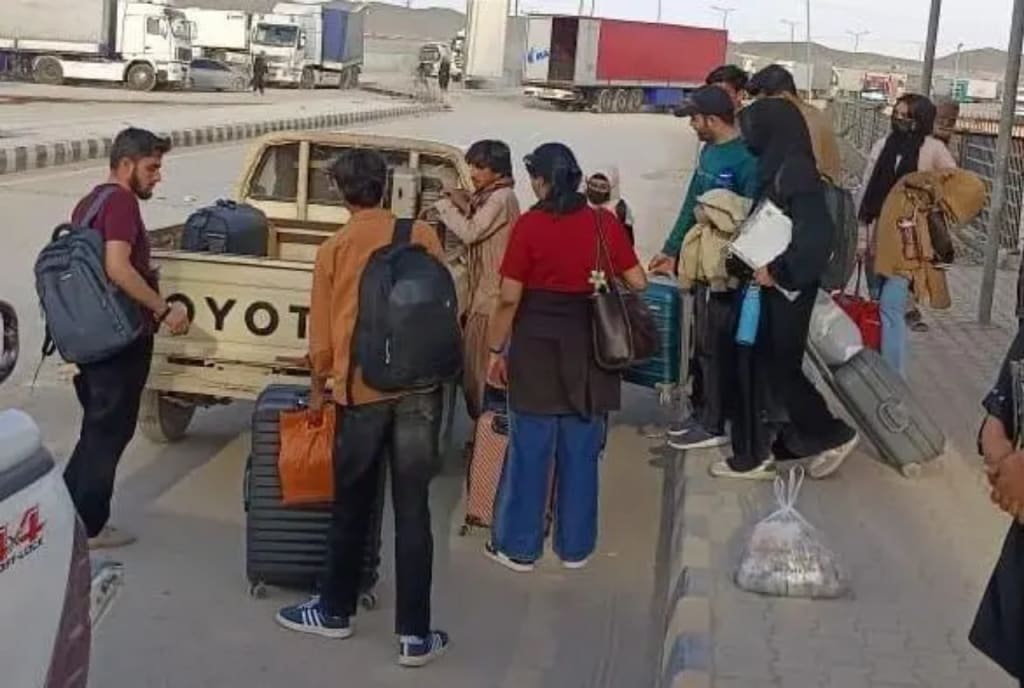
The intensity of the explosions caused by the missile attacks on Tehran was extremely high. In such a situation, it is natural for a person to feel frightened. Because of this situation, we immediately decided to leave.
This was stated by medical student Mohammad رضا, who arrived in Pakistan from Iran on Monday. According to رضا, he is enrolled at a medical college in Tehran where he had an important exam scheduled in the coming days, which he may now be unable to take.
Due to the ongoing war in Iran, many Pakistanis are now returning to their homeland.
Pakistan’s Ambassador to Iran, Mudassir Tipu, said on Monday that over the past 48 hours approximately 650 Pakistani citizens had been moved to safe locations across Iran. He added that most of those relocated were students.
According to the ambassador, “We are guiding and facilitating every Pakistani citizen who seeks our advice on various issues during this complex security situation.”
Pakistanis stranded in Iran are reaching Gwadar and Taftan via Chabahar and Zahedan.
Some individuals are also returning home through Azerbaijan. The Pakistani Embassy in Azerbaijan has advised those coming from Iran via the Astara (Azerbaijan) crossing to bring warm clothing with them.
The embassy stated that temperatures in Astara drop significantly at night, so travelers should choose appropriate clothing and warm garments accordingly.
Another student returning to Pakistan, Abdul Ghaffar, said he is enrolled in the fifth semester at a medical university in Zanjan. According to him, he had stayed in Iran for an important test, but due to the terrifying situation created by American and Israeli attacks, he will not be able to take the test scheduled for March 5, as it was no longer possible for him to remain there.
He said that after a major attack in the city of Zanjan, he left along with other Pakistani students.
Abdul Ghaffar, who belongs to Sindh province in Pakistan, said that earlier some of his Pakistani classmates and hostel fellows had returned to Pakistan in January following large-scale protests in Iran over inflation and a subsequent government crackdown.
He explained, “I was staying in a private building designated as a hostel by the university in Zanjan city. I heard loud explosions, and their intensity shook us. When I opened the window of my room, I saw flames rising from a building along with smoke and dust.”
He added that a junior Pakistani student in the hostel was extremely frightened and kept asking what would happen next and whether they would have to return to Pakistan.
Abdul Ghaffar said that after this incident, he contacted the Pakistani Embassy in a state of distress and, following their guidance, immediately made plans to leave Iran.
Student Jameel Anwar, who belongs to Lahore, said he was living in a private hostel in Tehran when attacks occurred in nearby areas.
Speaking to media representatives upon reaching Taftan, a border city in Balochistan adjacent to Iran, he said, “After the attacks on March 28, we contacted the Pakistani Embassy in Tehran. They had arranged eight buses for Pakistanis. We boarded them and departed for Taftan, and thank God we have arrived here safely.”
Although the students who returned safely to Pakistan are relieved, they are also worried about their academic future.
On condition of anonymity, a medical student said, “If a student fails two semesters or does not appear in exams in Iran, they are declared failed and must repay the entire semester’s fees.”
Deputy Commissioner Gwadar, Naqeebullah Kakar, said that by Monday evening, 104 Pakistani citizens—including 58 students studying at various Iranian universities—had returned to Pakistan via Gwadar. He said many of the returning students were enrolled at Zanjan University of Medical Sciences, Al-Mustafa University of Medical Sciences, Hormozgan University, and Kerman University of Medical Sciences.
He added that among those crossing into Pakistan through the Gabd Rimdan border were businesspeople, pilgrims, and tourists.
Similarly, 441 people have returned via Taftan, the majority of whom are students.
A federal government official in Taftan said that over two days, 395 students, 28 businesspeople, and 18 tourists arrived there.
Chief Minister of Balochistan, Mir Sarfraz Bugti, said that administrations in districts bordering Iran have been directed to provide all possible facilities, guidance, and necessary assistance to returning Pakistanis so that they do not face any difficulties.
In a message on social media platform X, the chief minister stated that immigration officials at border points are working around the clock to ensure that the movement process remains effective and organized without any inconvenience.
Why do Pakistani students go to Iran for medical education?
Every year, hundreds of young people from Pakistan go to Iran to pursue education, and a large proportion of them study medicine.
Speaking on this matter in the past, Pakistani medical student Zarnab Kamil said that medical education in Iran is relatively affordable, and the merit requirements for admission are not very high.
She explained that, unlike many other countries, Iran can also be reached by road, and most students choose this option as travel costs are very low.
She said that whereas Pakistani students sometimes face fraud in private universities in certain other countries, such issues do not arise in Iran because universities there are government-controlled, preventing fraudulent practices by university staff.
She added that food and accommodation costs in Iran are also not high. “Compared to other countries, a student can afford good quality food and housing at a very low cost.”
This marks the third large-scale return of Pakistani students and businesspeople in the past eight months.
Earlier, in June 2025, a large number of Pakistani citizens temporarily returned home due to Israeli attacks on Iran.
After that, in January this year, many students and other citizens returned via land routes due to large-scale protests in Iran against inflation.
About the Creator
Keep reading
More stories from Real content and writers in Education and other communities.
Is Nursing a Good Career in Global? Education, Salary & Global Demand Explained
When a patient writhing in pain is admitted to a hospital, the first face they usually see is that of a nurse. Before a doctor arrives, it is generally the nurse who asks about the illness, records the patient’s name and details, checks blood pressure and temperature, and then takes all this information to the relevant doctor.
By Real content6 days ago in Education
The Executive Mindset Shaping the Future of Health Technology
The healthcare industry is entering a new era defined by digital innovation, and the organizations that will thrive are those led by executives who understand the profound impact of technology. Digital transformation is no longer an optional upgrade or a series of isolated projects; it has become a fundamental shift that requires a complete rethinking of how healthcare is delivered, managed, and experienced. Artificial intelligence, telemedicine, wearable devices, and cloud-based systems are redefining the landscape, but technology alone is not enough. The success of health tech innovation depends on leaders who can cultivate a mindset focused on adaptability, strategic vision, and patient-centered care.
By Craig Kentabout 13 hours ago in Education
Unlocking Growth Through The Benefits of Hiring an External Perspective
Businesses often become deeply focused on daily tasks and internal routines. Over time, this focus can limit creativity and slow improvement. This is why many leaders explore the benefits of hiring an external perspective when facing complex decisions. An outside view brings clarity that internal teams may miss. Employees work closely with systems and may not notice hidden gaps. An external expert sees patterns without emotional attachment. Fresh insight can quickly highlight strengths and weaknesses. Clear feedback helps organizations move forward with confidence. Outside support also reduces internal bias. Leaders gain honest opinions that challenge old habits. Structured evaluation improves planning and results. When businesses open the door to outside insight, they often discover new opportunities for growth and stability.
By Nicole Metz4 days ago in Education


Comments
There are no comments for this story
Be the first to respond and start the conversation.