vintage
Vintage articles and footage from the science fiction archives.
Artifacts
Artifacts A common trait that many Science Fiction, Sci-Fi, and Fantasy aficionados seem to share is the love of things. Figurines, statues, props, and day to day objects adorn with our obsessions. They clutter our shelves, walls, table tops, and really any surface that can hang, hold, or display these things. This is not an uncommon behavior for fans of any genre or domain. Sports fans have their stashes of trinkets and garb displaying their colors and love of the game. However, the proverbial geeks of Science Fiction, Sci-Fi, and Fantasy seem to take this to an extraordinary measure.
By Nickolas Rudolph9 years ago in Futurism
Universe Hunting
A big part of collecting science fiction novels is the thrill of the hunt. The fact that the books aren't always easy to find adds a game element to discovering and buying them. It can be quite satisfying, randomly stumbling upon a longed for publication, on sale for next to nothing. I still can't get over how books are practically given away these days. When I look at my bookshelves, sometimes I have to do a double take, because it's not just pages on those shelves, but authors' blood.
By Joshua Sky9 years ago in Futurism
Classic Sci-Fi Robots
Automation and computation had dawned on the human mind even before computers were ever built. Classic sci-fi robots were the first inspiration for early computer engineers and programmers that inspired the technology we have today. These early classic robots were the first embodiments of the human imagination of a robotic being and companion. The technology we have today exists because of these robots. Even though these classic sci-fi robots aren't the same as what has come to exist in real life, the ideas for modern-day AI are rooted within them.
By Stephen Hamilton9 years ago in Futurism
Still Searching for Extraterrestrial Intelligence (SETI)
Irrespective of Hollywood's perspective on the implications of alien contact, the dialogues that would inevitably follow an actual encounter are enormous, almost too staggering to conceive. Imagine the questions we could ask a visiting extraterrestrial: Do you have a cure for cancer? Is there life after death? Are the physical laws in your part of the universe the same as in ours? Is there a way to overcome the burden of gravity, prolong youth, exceed the speed of light...? Think of the things we could learn, among them, as Carl Sagan put it, how "possibly to avoid the dangers of the period of technological adolescence we are now passing through."
By James Lizowski9 years ago in Futurism
'Mad Max' Tracks on 'Fury Road'
The video editing team at OMNI was curious to see just how similar the 1979 Mad Max trailer was to the Mad Max: Fury Road trailer. Taking the trailer of George Miller's famous Mad Max, the team overlaid the audio track from his updated masterpiece, Fury Road. They then repeated in reverse. Once again, what happened was surprising. The two trailers seem like their audio can be swapped without any issues, confirming one of the purest re-imaginings by an iconic director.
By Eddie Wong9 years ago in Futurism
Interview with 'Alien' Co-Creator Dan O'Bannon
In the below excerpt from Film Fantasy Magazine, Ed Sudden II interviews Alien co-creator Dan O'Bannon. In excerpt, O'Bannon recounts that the concept of the movie Alien began as a simple story called “Gremlins”. I was about a World War II B-17 bomber crew on a mission over Tokyo who are terrorized by a horde of midget monsters. Dan O’Bannon began his career as the the co-author and director responsible for design, editing, and special effects on the movie Dark Star. He also co-starred as Sgt. Pinback. Pinback’s scenes with his alien, a mean-looking and very mischevious beach ball with feet are notable high points of humor in sci-fi film history. Dan went from Dark Star to pre-production work on Jodorowsky’s Dune, the Frank Herbert novel, to effects work on Star Wars and his most iconic movie Alien.
By Futurism Staff9 years ago in Futurism
Artist Mario Martinez aka MARS-1 Interview
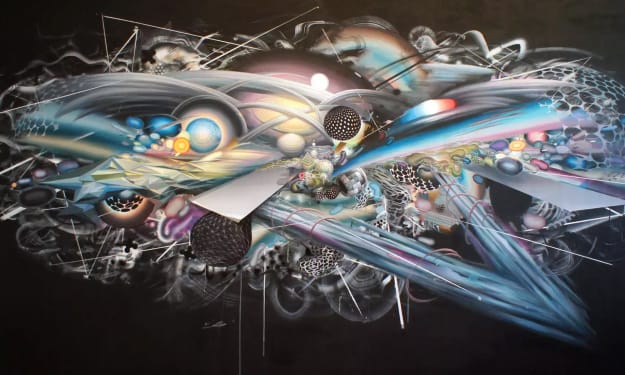
While artists abound who enjoy conjuring up astronauts, robots, space battles and creatures from another world, few are able to achieve the striking balance that makes the extraterrestrial imagery of Mario Martinez, better known simply as Mars-1, so compelling. Born of the skateboard and graffiti cultures of his Californian surroundings, and even more so by the trippy European Comics of Moebius and the pseudo-organic tech of latter-day anime, his paintings, sculptures, prints and toy designs evocatively convey the contents of an unbridled imagination. At the same time, his respect for scientific accuracy-even when pondering the far-flung future or the specifics of spacey species we (or most of us, anyway) have yet to encounter-invest his work with a vivid authenticity. This vintage HEAD interview presents a very organic and down-to-earth vibe of an artist whose journey was then at an early stage.
By Futurism Staff9 years ago in Futurism
Scientific Romances in the Atomic Age
The resolution to the War in the Pacific in 1945 threw a wholly new anxiety onto the shoulders of the world: the heretofore impossible spectre of actual global annihilation. The atomic bombings of Hiroshima and Nagasaki culminated a trend begun with The Great War. In that first conflict, the "Christian Century" of infinite moral progress was crushed beneath the violence of technological warfare predicted by the likes of H.G. Wells, George Tomkyns Chesney, and the other 19th century writers of doomsday invasion stories. Often they predicted an apocalyptic outcome to the oncoming war, but humanity's execution was blessedly stayed in 1919. Even with advances in tank, aeroplane and explosive technologies, truly obliterating humanity was beyond humanity's power.
By Cory Gross9 years ago in Futurism
Reviewing 'The Guccione Collection' OMNI Magazine Auction
Bob Guccione was more than just the founder of OMNI magazine, beyond this, he was an artist and lover of all things science fiction and art. He collected a variety of pieces from some of the world's most renowned artists; names like H.R. Giger, Stanislaw Fernandes, and Jim Burns. Thanks to his love of sci-fi art and his celebrity status, Guccione was able to commission some of the most recognized science fiction artists to create pieces that were later featured in various OMNI magazine issues. Thanks to a partnership with EBTH, you can now own a piece of the Bob Guccione OMNI magazine collection.
By George Gott9 years ago in Futurism
Time Traveling Views from Stars
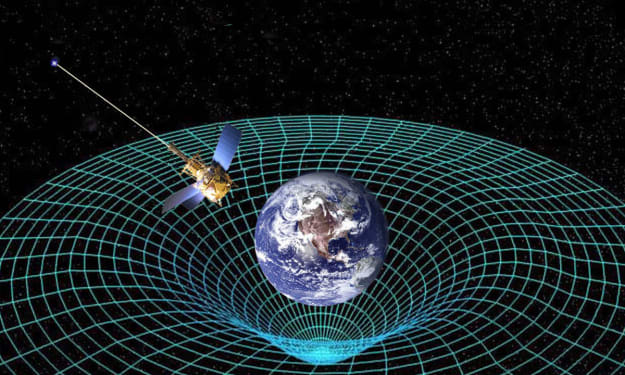
The White Queen in Through the Looking Glass made a regular morning habit of believing at least six impossible things before breakfast. There is one thing that simply cannot be done. It is impossible to travel backward in time. I have absolutely no faith that we might be able to transport ourselves back to the Crusades, the Ice Age, or even earlier I do not doubt that Einstein's relativistic time-dilation effect is valid; but that is a different thing.
By Conrad Morningstar9 years ago in Futurism
Irving Wallace Predictions of That Came True
Irving Wallace is a name from the past. If you are a Gen-X kid, you may have grown up in a world where every bathroom featured The Book of Lists, Wallace’s book (with kids Amy Wallace and David Wallechinsky—he had to take the old man’s Ellis Island name, huh?) that updated to The Guinness Book of World Records in the hip 70s. Why, just yesterday, before I wrote this article, I posted for friends Irving Wallace’s mind-blowing 1972 movie The Man, in which a fateful plane accident causes president pro tempore of the Senate James Earl Jones to become the President. A black President?! 1972 America’s collective mind is blown. Halfway between the Dr. Strangelove airplane and Darth Vader, JEJ is, of course, a magnificent voice and a majestic avatar of human dignity. Burgess Meredith—you know, Rocky’s trainer—plays the evil sculduggerous Southern teabagger who plots President Vader’s ruin.
By Matthew Wilder9 years ago in Futurism
Franz von Paula Gruithuisen's Venus Science Fiction
The fascinating story of Franz von Paula Gruithuisen, a German astronomer who became prominent early in the nineteenth century, has inspired sci-fi writers to ponder exploring distant worlds like Mars and Venus. His attempts at explaining the wonders of space were filled with promise of mystery and awe. He was a fairly good observer who concentrated on the moon and the planets, but his imagination was, somewhat vivid. For instance, he discovered what he believed to be an artificial structure on the moon and described it as a collection of dark, gigantic artistic ramparts.
By Izzy Erlich9 years ago in Futurism