vintage
Vintage articles and footage from the science fiction archives.
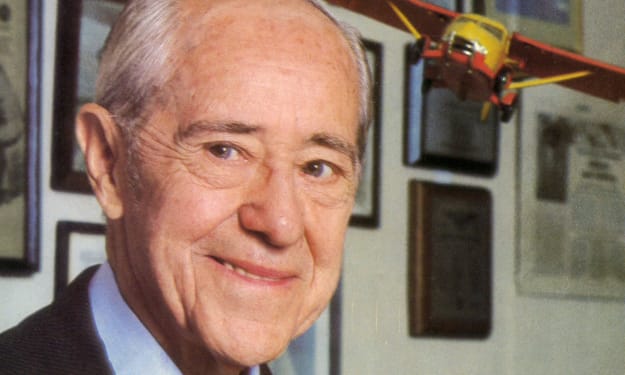
Interview With Ralph Barnaby
In October of 1910, when he was just 17 years old, Ralph Stanton Barnaby played hooky from high school and went to the Second International Gordon Bennett Air Race at Belmont Park, Long Island. His older brother was at the park, working on the engine of one of the planes entered in the race. The plane was the Baby Grand–owned and designed by Wilbur and Orville Wright. For a week before the race, young Ralph helped his brother and the Wrights put the final touches on Baby Grand.
By Futurism Staff9 years ago in Futurism
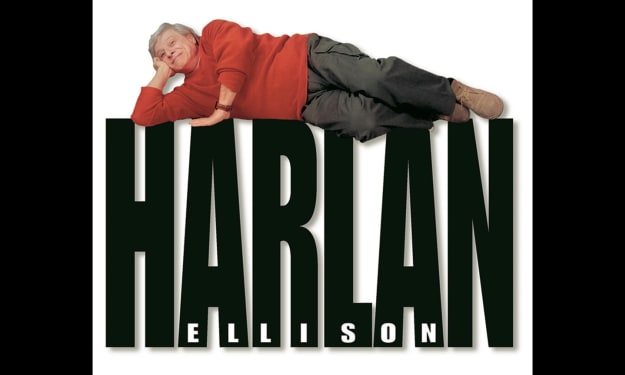
To Preserve a Demon
Writer/editor Jason Davis has a special ambition -- to catalog, digitize, edit, correct, annotate and re-publish (or publish for the first time, in some cases) all of Harlan Ellison's writings. Twenty-six four-foot-wide drawers of typescripts, over 100 feet of paper if stacked, the lifework of a man who is easily one of the most influential and cantankerous authors of the 20th century. Jason is spearheading the Harlan Ellison Books Preservation Project, a grand undertaking "To create definitive versions of all Harlan Ellison's writings, fiction and non-fiction, to preserve in print for posterity."
By Joshua Sky9 years ago in Futurism
Behind the Scenes of 'Star Wars'
Carrie Fisher is the beautiful Princess Leia, the woman who inspires the rebellion against the evil Galactic Empire. Carrie is the main female in the Star Wars movies up until A New Hope, where she still maintains her presence. When Star Wars was first released, this was quite an achievement. In the previous two biggest-ever money-making films of the 70s, The Godfather and Jaws, women had very little to say about things. But in Star Wars Carrie, tough-willed and rarin' to go, is right in there with the men. In February 1978, Fisher and some other Star Wars fan favorites sat down with Roy Pickard of PhotoPlay magazine to discuss their experience on the set of the well-known space opera.
By James Lizowski9 years ago in Futurism
Greatest Sci-Fi Artists of All Time
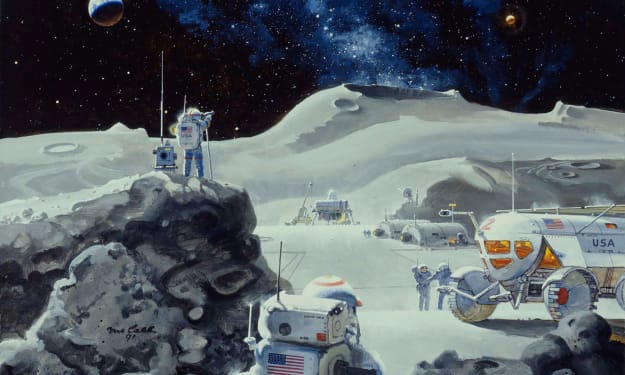
When engaged with science fiction as a genre, we are transported by the visual work of great sci-fi artists. Without their work in bringing books to life, and making films a reality, the science fiction world would be impoverished. While literature provides us with the opportunity to imagine science fiction worlds on our own, the work of artists allows us to share that vision with other fans and those outside the genre. Science fiction owes a great debt to the greatest sci-fi artists of all time.
By James Lizowski9 years ago in Futurism
Must See Episodes of 'The Twilight Zone'
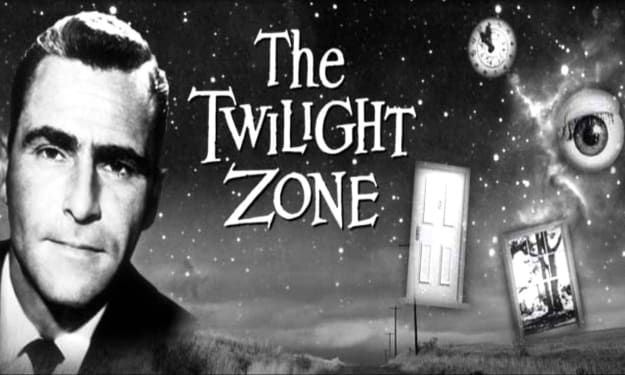
If you have never seen an episode of The Twilight Zone, then you cannot call yourself a true fan of television. The Twilight Zone is always among the top of any credible list of the best television shows in history. Created by Rod Serling, The Twilight Zone has 156 self contained stories that stick with an audience in a way no other show does. Some Twilight Zone episodes are great because of how creepy they are, while some episodes are great because of the powerful moral lessons they teach. While I recommend you watch the whole show, here are the best episodes of The Twilight Zone. Luckily they are all available on Amazon Prime and Hulu.
By Jason Schwartz9 years ago in Futurism
Universe Collecting
“People still read books! This generation has hope!” – Harlan Ellison I love science fiction because I collect universes. Each novel, each story, is another world unto itself. I started collecting, or hoarding, as some family members might call it, when I was ten years old.
By Joshua Sky9 years ago in Futurism
The Science Fiction of Music
My first novel, Big in Japan, is about a neurotic American prog-rocker coming of age in Japan. My second, Jellyfish Dreams, is about a biologist’s quest to reanimate his dead fiancée at the instigation of a black hole beneath his sofa. Readers who’ve read both books usually remark on how different they are, but I don’t see it that way. For one thing: crazy artist, mad scientist—same difference. For another, even if you agree with (a quote I’ve seen attributed to) sf comics genius Warren Ellis that “Prog rock was sick and wrong then and it is sick and wrong now,” one can’t deny that prog drinks as liberally from the sf well as it does from the epic and fantasy ones. And so, a primer on some of history’s more salient prog-sf conjunctions:
By M. Thomas Gammarino9 years ago in Futurism
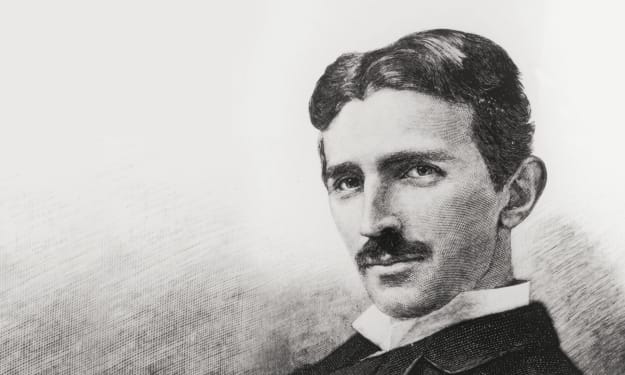
Buried Screwball Facts About Nikola Tesla
Travel anywhere outside the United States and the name of Nikola Tesla is known. Ask the average person on an American sidewalk? They’re apt to recall the 80’s rock band. Or they’ll nod and mumble about Elon Musk’s motor company.
By Matt Cates9 years ago in Futurism
Isaac Asimov's Autobiography: In Memory Yet Green
I ran into my pal, Matthew B. Tepper, a fellow Isaac Asimov enthusiast at the L.A. Science Fiction and Fantasy Society. To date, he owns 465 of the 515 books Asimov wrote. I asked him if he had any suggestions of what I ought to read that most people hadn’t from his oeuvre. He brought me into LASFS’ extraordinary library. Therein he pulled out the first volume of In Memories Yet Green, Isaac Asimov’s autobiography and said “read this.”
By Joshua Sky9 years ago in Futurism
Sci-Fi's Obsession with Ancient Greece and Rome
Sometimes science fiction returns to the past for places, people, and themes to enrich its mind-journeys into the future. Such is the case with these sci-fi movies, TV episodes, and works of fiction, each one drawing from the ancient worlds of Greece or Rome to dress its story. Brit Marling, a screenplay co-writer of Another Earth, says that this isn’t really surprising. “We’re retelling the same dramas from Ancient Greece,” Marling said. “These stories are so fundamentally old, the mythology that they come from, the hero’s journey — the way a narrative works. Science allows you to take the same story and see it from a new perspective because the science is always new and fresh.” Science fiction’s interest in the ancient world goes beyond mere allusion, as in the middle name of Captain James Tiberius Kirk (Tiberius, in case you’re wondering, was a somber, reclusive Roman ruler who nevertheless left the empire in a better state than he found it). If you’re deeply interested in how the speculative worlds of the future and the worlds of ancient Rome and Greece intersect, you may be interested in a serious paper by academic Tony Keen, “The 'T' stands for Tiberius: models and methodologies of classical reception in science fiction.” If that sounds a little heavy, enjoy the following summary of a few times when togas, laurel wreaths, aliens, and spaceships partied it up in one crazy combination.
By Sarah Quinn9 years ago in Futurism