Latest Stories
Most recently published stories in Geeks.
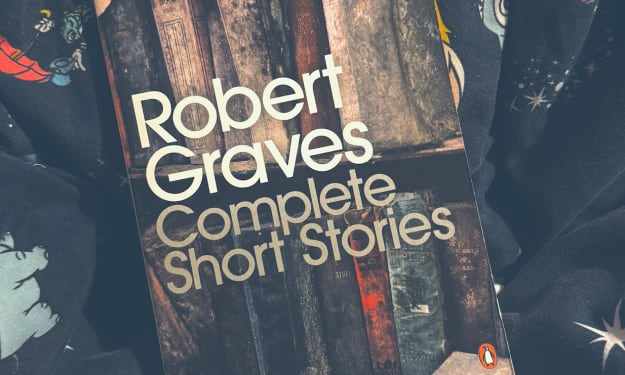
Book Review: "The Complete Short Stories" by Robert Graves
Robert Graves has always been a divisive writer for me. I once found his book I, Claudius unreadable and yet, Goodbye to All That was fantastic. His historical novels seem to be the worst possible historical novels - no imagination has gone into them and they read more like a textbook of fictions rather than a historical fiction masterpiece. Whereas, when he wrote Goodbye to All That you can definitely feel that his writing style is one of brilliance and atmosphere. Oh, and I have not forgotten about the comments he made about a young Bob Dylan.
By Annie Kapur2 days ago in Geeks
Scream Fanatic
Let me paint a picture for you. So it’s 1997 and me and my big sister Rudy are hanging out over my dad’s house for the weekend. My pops shares a place with his best friend who is like my uncle and whenever we come over he lets us borrow his copy of the movie Scream to watch. This movie had just come out at the end of 96’ and was literally one of the biggest movies in the world at the time. It also had a sequel that was on the way at the end of 97’ and would level the playing field of horror and slasher at the time. The foundation of what would be my top favorite movie series ever was being laid.
By Joe Patterson2 days ago in Geeks
SpongeBob Review
The episode “Karate Choppers” opens with an exuberant montage that immediately signals the central conflict: SpongeBob’s enthusiasm for karate, inherited from his fearless best friend Sandy, collides head‑first with the mundanity of his everyday obligations at the Krusty Krab. The writers cleverly employ a rapid‑cut, split‑screen technique that juxtaposes Sandy’s high‑octane training sessions with Mr. Krabs’ frantic attempts to keep the grill burning, allowing the audience to feel the mounting tension between personal passion and professional responsibility. Every punch, kick, and exaggerated “Hi‑ya!” is rendered with meticulous timing, underscored by a percussive score that mimics the rhythmic thuds of a karate dojo, while the background chatter of hungry customers provides a subtle but constant reminder of the stakes. The visual gags—most notably the way SpongeBob’s square pants flutter like a flag in a wind tunnel whenever he attempts a high kick—are expertly animated, showcasing the show’s ability to blend the humor with a surprisingly sophisticated understanding of kinetic energy.
By Forest Green2 days ago in Geeks
SpongeBob Review
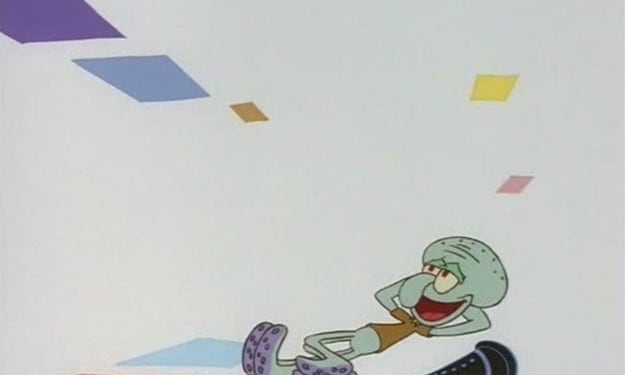
The episode “SB‑129,” a quintessential early‑season gem of SpongeBob SquarePants, thrusts the perpetually irritable Squidward Tentacles into a chronologically disorienting odyssey that begins with a simple desire to escape the incessant merriment of his neighbors, SpongeBob and Patrick. The narrative catalyst—a misfired experiment with a time‑traveling chronometer—plunges him into an eerily silent, sterile future Bikini Bottom where the familiar pastel hue of the oceanic streets has been supplanted by a stark, monochrome aesthetic reminiscent of 1960s futuristic optimism. This transition is rendered with meticulous attention to visual contrast: the crisp lines of the futuristic set design juxtapose sharply against the show’s usual wavy, hand‑drawn textures, emphasizing Squidward’s profound alienation and underscoring the episode’s thematic exploration of isolation versus community.
By Forest Green2 days ago in Geeks
SpongeBob Review
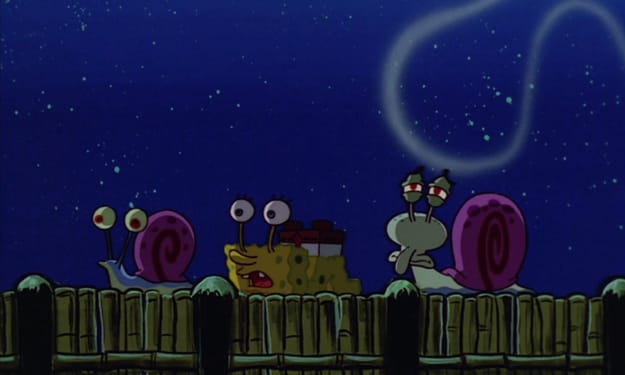
The episode “I Was a Teenage Gary” delivers a surprisingly layered narrative that satirizes classic horror movie tropes while staying true to the absurdist humor that defines SpongeBob SquarePants. From the opening scene, where the titular snail’s sudden transformation into a teenage version of himself is accompanied by a deliberate, melodramatic music cue reminiscent of 1980s horror films, the show signals its intent to blend parody with genuine character development. The script deftly balances slap‑stick moments—such as Gary’s over‑the‑top teenage angst manifesting in the form of an inexplicable craving for water—with more nuanced commentary on identity crises, highlighting how even a simple pet can embody the adolescent struggle between conformity and rebellion.
By Forest Green2 days ago in Geeks
SpongeBob Reviews
If you haven’t yet slipped into the delightfully eerie world of “Scaredy Pants,” you are missing one of the most cleverly constructed episodes in the entire SpongeBob SquarePants canon, and the evidence is overwhelming. From the moment the episode opens with a thunderstorm‑lit Bikini Bottom, the creators signal a departure from the usual slap‑slap comedy to a richly layered, tension‑laden narrative that still delivers relentless chuckles. This is not just a Halloween‑themed gag reel; it is a masterclass in blending suspense with the series’ trademark absurdity, persuading you to stay glued to the screen as the tension escalates and the jokes land with surgical precision. By positioning SpongeBob as an earnest, if slightly over‑enthusiastic, aspiring horror writer, the episode invites viewers to empathize with his creative yearning while simultaneously delivering a satirical commentary on the genre itself—an artistic maneuver that persuades even the most skeptical adult fan to appreciate the show’s sophisticated storytelling.
By Forest Green2 days ago in Geeks
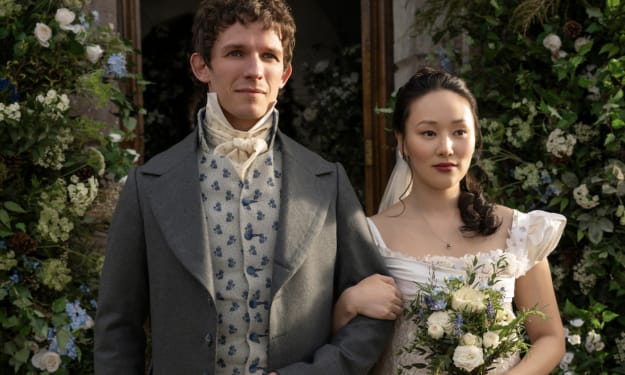
The Post-Credits Wedding, Benedict and Sophie's Romance, and What Comes Next in the Bridgerton Season 4 Finale
A post-credits wedding scene that delighted fans and teased the Regency drama's future while reigniting discussions about identity, representation, and narrative evolution on Netflix's hit show Bridgerton came to an end in a moment that was both romantic and unexpected. The conclusion of Season 4's second episode not only brings the love story between Benedict Bridgerton and Sophie Baek to a close, but it also sets the stage for what's to come. The central plot of the fourth season, adapted from Julia Quinn's "An Offer from a Gentleman," follows Benedict Bridgerton (played by Luke Thompson) and Sophie Baek (played by Yerin Ha) through a grand arc resembling that of Cinderella, with significant creative changes.
By Raviha Imran2 days ago in Geeks
Smiling Friends's Final Season: Why Adult Swim's Best-Selling Series Has Come to an End
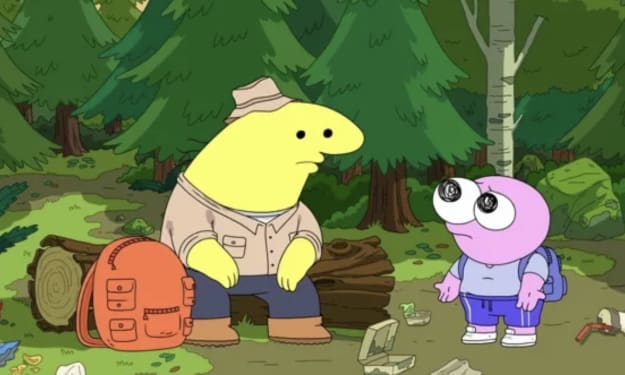
Fans of the quirky Adult Swim animated comedy Smiling Friends were stunned this week when creators Zach Hadel and Michael Cusack announced that the series will conclude with its third season, effectively cancelling further seasons despite prior renewal plans. One of the decade's most talked-about adult animated films abruptly comes to an abrupt end with the surprise announcement made by the showrunners themselves.
By Raviha Imran2 days ago in Geeks
Larry Reid discusses his split from E. Bernard Jordan and the lawsuit
Spiritual fatherhood has a dark side There has been a growing trend in Christianity where ministers exalt their mentor/spiritual father whenever they have a platform. Christianity is supposed to be about lifting up the Name of Jesus, but talking about other preachers has become the norm.
By Cheryl E Preston2 days ago in Geeks
Hamnet (2025) - A Beautiful, Raw, and Powerful Story
Will you be brave? Hamnet is a 2025 film based on Maggie O’Farrell’s book. Agnes and William Shakespeare grapple with an unimaginable loss. Overcome with grief, William takes inspiration to write a play that helps quell the thoughts and emotions they’re experiencing.
By Marielle Sabbag2 days ago in Geeks
Squatty Potty. AI-Generated.
How a small footstool sparked a global conversation about posture, digestion, and modern health In the world of wellness products, few items have sparked as much curiosity as the Squatty Potty. At first glance, it looks like a simple plastic or bamboo stool designed to fit around the base of a toilet. But behind that straightforward design lies a broader conversation about posture, digestive health, and how modern lifestyles have changed even the most basic human habits. While it may seem like an unconventional topic, bathroom posture has become a legitimate subject of interest in health circles. The Squatty Potty positioned itself not as a gimmick, but as a tool rooted in anatomy. The Idea Behind the Design The concept is based on the natural squatting position humans historically used for bowel movements. In many parts of the world, squat toilets remain common. Advocates of this posture argue that squatting straightens the rectum and reduces strain. Modern Western toilets, however, place the body in a seated position, which can create an angle that may require more effort during elimination. The Squatty Potty elevates the feet while sitting, mimicking a squatting posture without requiring a complete change in toilet style. Supporters suggest that this position can: Reduce straining Promote more complete elimination Help with occasional constipation Decrease pressure associated with hemorrhoids Though experiences vary, many users report improved comfort after adjusting their posture. From Household Product to Cultural Phenomenon The Squatty Potty gained widespread attention after appearing on the television show Shark Tank. Its founders presented the product as a simple yet practical solution to a universal problem. The appearance helped introduce the brand to a national audience and significantly boosted sales. Later, a humorous viral marketing campaign featuring a unicorn further propelled the product into mainstream conversation. The advertisement combined comedy with anatomical explanation, making an otherwise awkward topic more approachable. What set the Squatty Potty apart was its willingness to address a topic that many people are uncomfortable discussing. By combining lighthearted branding with educational messaging, the company turned a bathroom accessory into a widely recognized name. The Science Behind Squatting Medical professionals have long understood that body positioning affects bowel movements. When squatting, the puborectalis muscle relaxes more fully, potentially straightening the pathway for elimination. In a seated posture, this muscle may create a slight bend, requiring additional effort. While some studies suggest that squatting can reduce strain and time spent on the toilet, it’s important to note that results are individual. The Squatty Potty does not treat medical conditions, and people experiencing chronic digestive issues should consult healthcare providers. That said, posture adjustments are a low-risk lifestyle change. For many, it represents a simple experiment in comfort rather than a medical intervention. Why Bathroom Habits Matter Digestive health plays a central role in overall well-being. Constipation and straining are common concerns, often influenced by diet, hydration, stress, and physical activity. While fiber intake and water consumption remain foundational solutions, posture can be another factor. In recent years, there has been a growing openness about gut health. Conversations once considered private are now part of broader wellness discussions. Products like the Squatty Potty reflect this cultural shift—acknowledging that digestive comfort deserves attention without embarrassment. Practical Considerations Before Buying For those considering a Squatty Potty, several versions are available, including adjustable models and materials ranging from plastic to bamboo. The core function remains the same: elevating the feet to achieve a more natural angle. Before purchasing, consumers may want to consider: Bathroom space and storage Adjustable height preferences Ease of cleaning Household usage needs Some people choose to replicate the concept temporarily using a small step stool to determine whether the posture feels beneficial before investing in a branded product. Addressing Common Misconceptions One misconception is that a footstool alone will resolve all digestive issues. In reality, bowel health is multifaceted. Diet, hydration, exercise, stress levels, and underlying conditions all contribute to regularity. Another misconception is that using such a product is unnecessary or exaggerated. For some individuals, it may indeed feel unnecessary. For others, it can significantly improve comfort. Like many wellness tools, its effectiveness depends on personal experience. Importantly, there is no harm in adjusting posture in a safe and stable manner. The key is to use a sturdy platform and avoid instability. Cultural Perspectives on Squatting Globally, squatting is far from unusual. In many countries across Asia, Africa, and parts of Europe, squat toilets remain standard. In those contexts, the body’s natural posture is maintained without additional accessories. The popularity of the Squatty Potty in Western markets highlights how modern infrastructure sometimes diverges from traditional human movement patterns. It also reflects how innovation can bridge that gap without requiring structural changes. Rather than replacing existing toilets, the product adapts to them—offering a compromise between modern convenience and anatomical alignment. A Broader Reflection on Everyday Design The success of the Squatty Potty underscores how everyday objects can influence health and comfort. Often, the most impactful innovations are not complex technologies but simple design adjustments. By rethinking posture in one of life’s most routine moments, the product opened a conversation about how design shapes daily experiences. Whether one chooses to use it or not, the discussion itself has encouraged greater awareness of digestive health. In a culture increasingly focused on wellness, even small changes can feel meaningful. The Squatty Potty may not be revolutionary in appearance, but its message is clear: comfort and function matter—even in the bathroom. Ultimately, the decision to use a footstool comes down to personal preference. For some, it’s a helpful addition. For others, it’s unnecessary. What remains consistent is the reminder that health sometimes begins with the simplest adjustments.
By Saboor Brohi 2 days ago in Geeks