entertainment
The very best in geek and comic entertainment.
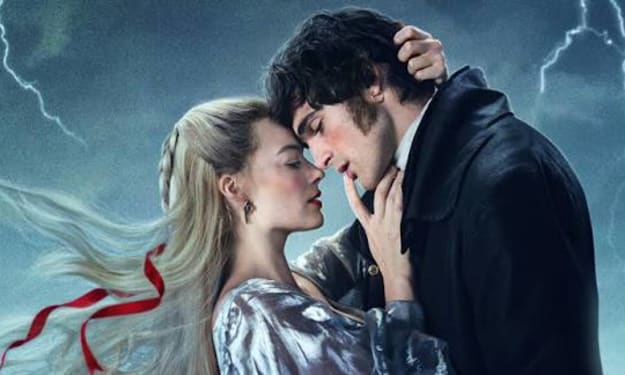
Wuthering Heights Movie Review
Over a century after its release, Emily Bronte’s Wuthering Heights remains a classic of English literature; it has been adapted many times on the big screen, reaching across many cultures and filmmaking styles. The latest attempt goes for a modern approach and style, but it’s a rotten production from top to bottom.
By Robert Cain16 days ago in Geeks
Signal sniffer’ in Nancy Guthrie search used to detect pacemaker. AI-Generated.
Investigators in the recent case involving Nancy Guthrie reportedly deployed a device described as a “signal sniffer” during the search of her property, a tool capable of detecting electronic signals emitted by medical devices such as pacemakers. Sources familiar with the investigation confirm that the device was used to locate specific electronic implants, raising questions about investigative protocols, privacy implications, and the potential applications of emerging technology in criminal inquiries. The Role of the Device The so-called signal sniffer is designed to detect radio frequency emissions from certain electronic devices, including cardiac pacemakers and other implanted medical equipment. While pacemakers are primarily intended to regulate heart rhythms, many modern devices contain wireless functionality, allowing clinicians to monitor patients remotely. Investigators reportedly used the signal sniffer to determine whether Guthrie had any implanted devices that might reveal movements, locations, or other medically relevant data. While officials have not disclosed the exact purpose of the search or whether the device yielded actionable results, the use of technology capable of detecting medical implants has drawn attention both for its investigative potential and the privacy concerns it raises. Legal and Privacy Considerations The deployment of a signal-detecting device in criminal investigations introduces a complex legal and ethical dimension. Pacemakers and similar devices emit signals that, in many jurisdictions, are considered part of a patient’s private health information. Unauthorized monitoring or use of such signals could potentially conflict with healthcare privacy laws such as HIPAA in the United States, although law enforcement agencies often operate under different standards when investigating criminal matters. Legal experts caution that investigators must carefully balance the need for information with individuals’ right to privacy. “Using a device to detect medical implants touches on sensitive health data,” said a privacy attorney familiar with electronic monitoring cases. “It’s critical that protocols are clear and that any evidence collected complies with legal standards.” Investigative Context Nancy Guthrie has been at the center of a high-profile inquiry, with authorities seeking to clarify circumstances surrounding a pending investigation. Details about the probe remain largely confidential, but law enforcement officials have reportedly pursued multiple avenues, including traditional searches, electronic surveillance, and forensic examination. The introduction of the signal sniffer reflects a broader trend in investigative techniques, in which technology designed for medical or commercial purposes is repurposed for law enforcement. Devices that were once limited to healthcare or scientific research now provide investigators with new ways to detect, locate, and interpret signals emitted by electronic equipment. Technical Aspects The signal sniffer used in Guthrie’s search operates by detecting electromagnetic emissions at frequencies typically associated with wireless-enabled pacemakers and medical monitoring devices. According to technical sources, these devices emit short bursts of data when communicating with medical programmers or monitoring stations. Investigators can, in theory, detect these emissions from within a certain range, potentially confirming the presence and location of an implant. While the device cannot access private medical records or read patient-specific data directly, its ability to detect and triangulate signals represents a significant expansion of investigative capability. Experts note that as medical technology becomes increasingly connected, law enforcement may face ongoing challenges in balancing investigative needs with ethical considerations. Public Reaction and Ethical Debate The use of a signal sniffer in a criminal investigation has prompted discussion among privacy advocates, medical professionals, and legal commentators. Critics argue that even the detection of a pacemaker could reveal sensitive personal information, such as an individual’s presence in a particular location, patterns of movement, or health status. Supporters contend that, when used lawfully, such devices provide valuable tools in solving complex investigations and protecting public safety. The Guthrie case illustrates the tension between innovation in law enforcement and the protection of individual rights. While the device did not access personal health records, its ability to detect private medical equipment highlights the broader debate over surveillance, consent, and privacy in the age of connected technology. Looking Ahead As technology continues to advance, devices like signal sniffers may become more common in investigations. Lawmakers, courts, and law enforcement agencies will likely face ongoing questions about regulation, oversight, and ethical use. For individuals like Nancy Guthrie, these developments underscore the importance of understanding how emerging technologies can intersect with personal privacy, legal rights, and public interest. In the meantime, authorities have maintained that all investigative procedures in the Guthrie case were conducted under legal authority, and the focus remains on gathering relevant evidence to support ongoing inquiries. The deployment of advanced detection tools such as signal sniffers signals a new chapter in investigative practice, where innovation and privacy must coexist carefully.
By Fiaz Ahmed 16 days ago in Geeks
Love Is in the Big Air for Ukrainian Skier After Reaching Winter Olympics Final. AI-Generated.
Ukraine’s rising freestyle skiing star Oleksandr Novikov has captured headlines not only for his impressive performance but also for a heartwarming story that has endeared him to fans worldwide. After securing a place in the Winter Olympics big air final, Novikov revealed that his journey has been fueled not just by athletic ambition but also by a special personal connection that has inspired him throughout the season. A Breakthrough in Big Air Novikov, who has steadily climbed the ranks in international freestyle skiing, delivered a series of technically complex and high-scoring jumps in the qualifiers, earning a spot among the elite finalists. His signature style—combining speed, height, and precise rotations—has drawn comparisons to some of the top names in the sport. Analysts noted that his consistency and flair for innovation make him a serious contender for an Olympic medal. “The big air event is about timing, courage, and precision,” said a coach familiar with the sport. “Novikov has shown remarkable composure and creativity. Reaching the final is a testament to his dedication and skill.” Love as Motivation Amid the rigorous training and intense competition, Novikov has also shared that a personal relationship has played a significant role in keeping him motivated. Sources close to the athlete confirmed that the skier has been inspired by his partner, who has supported him through injuries, long training sessions, and the unique pressures of Olympic preparation. Fans have affectionately dubbed him “Ukraine’s romantic in the snow,” celebrating both his athletic and personal life. In interviews, Novikov has emphasized that the emotional support he receives has made a tangible difference in his performance. “Knowing that someone believes in you, even on the hardest days, gives you confidence,” he said. “Love isn’t just an emotion—it can be a source of strength, focus, and resilience.” Public Reaction and Media Buzz The story quickly captured the attention of fans, media outlets, and social platforms. Social media posts celebrating Novikov’s journey have gone viral, with thousands sharing messages of support and excitement. Many commentators have highlighted the human side of Olympic competition, noting that stories of personal inspiration and emotional bonds make elite sports more relatable to audiences around the world. Sports journalists also note that Novikov’s openness about his personal life breaks the stereotype that elite athletes must separate emotion from performance. His ability to balance personal and professional spheres offers an example of how mental and emotional well-being can enhance competitive success. Challenges on the Road to the Final Despite his remarkable progress, Novikov’s path to the final has not been without obstacles. Training in Ukraine during winter months can be challenging due to unpredictable weather conditions, limited access to world-class facilities, and the ongoing geopolitical pressures facing the country. Yet, his perseverance and adaptability have enabled him to compete successfully on the international stage. Experts highlight that athletes like Novikov must maintain peak physical fitness while also managing psychological stress. Big air skiing, with its high-speed jumps and aerial maneuvers, requires not only strength and skill but also mental focus to execute complex tricks under pressure. Looking Ahead As the final approaches, expectations are high. Novikov’s combination of technical ability, consistency, and emotional resilience positions him as a potential medal contender. Coaches and analysts suggest that his ability to harness personal motivation—love and support from his partner—could give him an additional edge in the high-stakes competition. “The final will be intense,” said a fellow competitor. “But athletes who can draw strength from their personal lives often perform at their best. Novikov has shown that he can rise to the occasion.” Conclusion Oleksandr Novikov’s story exemplifies the intersection of athletic excellence and personal inspiration. As he prepares for the Winter Olympics big air final, his journey reminds the world that elite athletes are human, driven not just by medals but also by the relationships and emotional bonds that give their efforts deeper meaning. In this season of icy ramps, soaring jumps, and high-flying feats, love is indeed in the big air.
By Fiaz Ahmed 16 days ago in Geeks
Power Rangers Review: "The Wedding (Part I)"
I've been wanting to do this Power Rangers review for a good bit. I admit, I did rush through the last ones I did just so I can get to this one, and how fitting that the beginning of this comes on Valentine's Day. Granted, it's not exactly a romantic story, but still. So without further ado, let's take a look back at the very memorable and landmark three-parter, "The Wedding," and this will be separated into three stories.
By Clyde E. Dawkins16 days ago in Geeks
Bethesda Pinball DLC Details Every Fan Should Know
There is something strangely comforting about the sound of a silver ball bouncing between bumpers. For many of us, pinball feels like childhood. It feels like dim arcades, glowing lights, and the quiet thrill of chasing a high score. Now imagine that feeling mixed with worlds filled with dragons, vault dwellers, and demon slayers. That is where Bethesda pinball DLC details start to matter. When familiar video game universes are rebuilt inside a pinball machine, nostalgia and skill collide. Fans are not just flipping paddles. They are revisiting stories they already love. This article explores the most important Bethesda pinball DLC details, what each table offers, and why these digital pinball experiences continue to draw attention from gamers and collectors alike.
By Muqadas khan17 days ago in Geeks
Emerald Fennell Defends Her Changes to Wuthering Heights: “You’ve Got to Make Those Hard Decisions”. AI-Generated.
Director and screenwriter Emerald Fennell has defended her creative choices in adapting the literary classic Wuthering Heights, arguing that modern film audiences require bold interpretation rather than strict loyalty to the original text. Fennell, known for her distinctive visual style and emotionally complex storytelling, has faced growing criticism from literary purists after early details emerged about her forthcoming film version of the 1847 novel. Changes to character structure, dialogue, and narrative focus have prompted debate about whether the adaptation strays too far from Emily Brontë’s dark and tragic romance. Speaking in a recent interview, Fennell said that adapting a revered novel comes with inevitable controversy. “You’ve got to make those hard decisions,” she explained. “Film is a different language. What works on the page doesn’t always work on screen, and if you want the story to live again, you have to reimagine it.” A Bold New Interpretation According to production insiders, Fennell’s version of Wuthering Heights places greater emphasis on psychological trauma and power dynamics between the central characters, rather than the traditional gothic romance tone. Some scenes have reportedly been condensed or restructured, and certain minor characters have been removed altogether. The director has also shifted narrative perspective, focusing more closely on the inner world of Catherine Earnshaw rather than relying on the layered storytelling framework of the novel, which uses multiple narrators. Fennell said this decision was essential to connect with contemporary viewers. “The novel is incredibly modern in its emotional violence,” she said. “But the way it’s told is distant and formal. I wanted to bring the audience right inside the characters’ minds — to feel their rage, obsession, and grief in a visceral way.” Critics and Fans Divided Reaction to the changes has been sharply divided. Some literary scholars argue that altering the structure risks losing the unique voice of Emily Brontë’s original work. “This is a novel built on storytelling within storytelling,” said one university literature professor. “Removing that framework may simplify the plot, but it also strips away its moral complexity.” Fans on social media have also voiced concern, particularly over rumors that certain iconic scenes have been modernized or shortened. However, others welcome the director’s willingness to take risks. “Every generation needs its own Wuthering Heights,” wrote one film critic. “If we keep remaking it exactly the same way, it becomes a museum piece instead of a living story.” The Pressure of a Classic Fennell acknowledged that adapting one of the most studied novels in English literature brings enormous pressure. “You’re standing on the shoulders of a giant,” she said. “But you’re also responsible for creating something that stands on its own. Otherwise, why make the film at all?” She compared her approach to past reinterpretations of Shakespeare and Jane Austen, arguing that fidelity to emotional truth matters more than literal accuracy. “The spirit of the book is about obsession, cruelty, and love that destroys people,” she said. “That’s what I’ve protected. The rest is scaffolding.” Casting and Visual Style The production has drawn attention for its unconventional casting choices and stark visual design. Fennell has reportedly chosen a darker, more minimalist aesthetic than previous adaptations, with bleak landscapes and intimate close-ups replacing the sweeping romantic imagery traditionally associated with the story. Sources close to the project say the film will highlight class conflict and emotional isolation, themes Fennell believes resonate strongly in today’s society. “This is a story about outsiders,” she noted. “About what happens when people are denied dignity and belonging. That feels painfully current.” A Broader Debate About Adaptation The controversy reflects a wider debate in the film industry about how much freedom directors should take when adapting literary classics. In recent years, filmmakers have increasingly reworked famous novels to reflect modern values and perspectives, sometimes provoking backlash from traditionalists. Film historian Mark Reynolds said Fennell’s defense highlights the tension between preservation and innovation. “Some viewers want historical authenticity; others want relevance,” he said. “Both are valid. The challenge is finding a balance that honors the original while speaking to a new generation.” Looking Ahead Despite the criticism, studio executives remain confident in the project, pointing to Fennell’s previous successes and her reputation for fearless storytelling. The film is scheduled for release next year and is already expected to spark intense discussion upon its debut at major film festivals. Fennell says she welcomes debate. “If people argue about it, that means they care,” she said. “That’s a good thing. Emily Brontë wrote a story that refuses to be quiet. I hope this film does the same.” As anticipation grows, the director stands firm in her belief that adaptation is an act of interpretation, not imitation. “You can’t please everyone,” she added. “But you can be honest to the story you’re telling. And sometimes that means changing things.” Whether audiences embrace her vision or reject it, Fennell’s Wuthering Heights is already proving that classic literature still has the power to provoke passion nearly two centuries after it was first published.
By Fiaz Ahmed 17 days ago in Geeks
SpongeBob Review
The SpongeBob SquarePants episode "Home Sweet Pineapple" is a memorable and entertaining installment in the series. The episode begins with SpongeBob's pineapple house being eaten away by nematodes, which are small, worm-like creatures that feed on the pineapple's flesh. As the nematodes continue to devour the pineapple, SpongeBob's home begins to shrink and eventually collapses, leaving him without a place to live. This sets off a chain of events as SpongeBob sets out to find a new home, while also trying to figure out how to get rid of the nematodes that destroyed his beloved pineapple abode. Throughout the episode, SpongeBob's optimism and resilience are put to the test as he faces various challenges and setbacks in his search for a new home. Meanwhile, his best friend Patrick Star tries to help him out, but his efforts often lead to more problems and hilarious misunderstandings. As the episode progresses, SpongeBob's desperation grows, and he begins to consider some rather unusual and humorous options for a new home, including a rock, a sandcastle, and even a plastic bubble.
By Forest Green17 days ago in Geeks
SpongeBob Review
The SpongeBob SquarePants episode "Pizza Delivery" is a thrilling and hilarious adventure that takes place in the underwater town of Bikini Bottom. The episode begins with Mr. Krabs, the greedy owner of the Krusty Krab restaurant, receiving a phone call from a customer who wants to place an order for a Krusty Krab pizza to be delivered to their location. Mr. Krabs, seeing an opportunity to make some extra money, decides to offer a delivery service and assigns SpongeBob and Squidward to be the delivery team. As they set off on their journey, they are given a map to follow, which supposedly leads them to the customer's location. However, things quickly take a turn for the worse as Squidward, who is already annoyed at being tasked with delivery duty, becomes frustrated with SpongeBob's constant enthusiasm and chatter, which he finds annoying and distracting. Meanwhile, SpongeBob is excited to be on his first delivery mission and is eager to please the customer and make the delivery a success.
By Forest Green17 days ago in Geeks
Social Media ‘Killed Our Children’. With Prince Harry’s Help, We’re Taking Them to Court. AI-Generated.
For a growing number of bereaved families, grief has turned into determination. Parents who lost their children to suicide and self-harm now say that social media platforms played a decisive role in pushing vulnerable young people toward irreversible decisions. With the backing of Prince Harry, these families are preparing to take technology companies to court, accusing them of knowingly designing products that exploit psychological weaknesses in children and teenagers. The campaign brings together families from both sides of the Atlantic who believe that harmful online content—ranging from self-harm imagery to algorithm-driven echo chambers—contributed directly to their children’s deaths. Their central claim is stark: that social media platforms failed in their duty of care and placed profit above safety. Parents describe discovering, after their children’s deaths, extensive histories of online exposure to material promoting despair, eating disorders, and suicide. Many say they had no idea what their sons and daughters were consuming through their phones at night. In several cases, platform algorithms repeatedly pushed the same dangerous content, reinforcing feelings of isolation and hopelessness. Prince Harry’s involvement has given the campaign international visibility. Through his mental health advocacy work and foundation initiatives, he has long warned about the dangers of unregulated digital spaces. He has described social media as an environment that “preys on vulnerability” and has argued that companies must be held accountable when their products cause real-world harm. Legal experts supporting the families say the case could mark a turning point. Rather than framing these deaths solely as personal tragedies, the lawsuits aim to establish corporate responsibility for psychological injury. The strategy mirrors earlier legal battles against tobacco companies, which were eventually forced to acknowledge that they understood the addictive nature of their products while continuing to market them aggressively. Technology firms have consistently denied responsibility for individual outcomes. They argue that billions of users interact safely with their services and that they invest heavily in content moderation and mental health resources. Platforms point to tools such as reporting systems, warning labels, and crisis hotlines as evidence of their commitment to user wellbeing. Families counter that these measures are superficial and reactive. They claim companies already possess internal research showing the damaging effects of their algorithms on young minds. Former employees from major technology firms have testified publicly that engagement-driven design choices prioritized time spent on apps over emotional safety. According to the parents, this proves that the risks were known but ignored. The legal action also highlights the lack of effective regulation. While some governments have introduced online safety laws, enforcement remains inconsistent and slow. In the meantime, children continue to be exposed to unfiltered digital environments that operate across borders, beyond the reach of any single national authority. Mental health professionals increasingly support the families’ concerns. Studies have linked heavy social media use with rising levels of anxiety, depression, and self-harm among adolescents. Psychologists warn that young users are particularly susceptible to algorithmic feedback loops that amplify negative emotions and normalize destructive behaviors. For the parents, the court case is not only about compensation but about recognition. They want public acknowledgment that their children were harmed by systems designed to keep users engaged at any cost. Several families have said that financial settlements would mean little compared to meaningful reform: transparent algorithms, stronger age verification, and legal obligations to remove harmful content before it spreads. Prince Harry has framed the issue as a moral challenge for the digital age. He has argued that society cannot allow powerful corporations to operate without responsibility when their platforms shape the emotional lives of millions of children. His support has helped transform individual stories of loss into a collective demand for justice. Critics caution that proving a direct causal link between social media use and suicide will be legally complex. Mental health outcomes are influenced by many factors, including family environment, school pressures, and pre-existing conditions. Technology companies are expected to argue that responsibility lies with parents and communities rather than platforms. Yet the families insist that complexity does not excuse negligence. They believe that when algorithms repeatedly direct vulnerable users toward harmful content, responsibility must be shared. Their lawsuit seeks to establish that digital design choices can have lethal consequences. As the case moves forward, it could redefine how society views technology companies—not merely as neutral platforms, but as powerful actors with ethical and legal duties toward their youngest users. Whether the courts agree remains uncertain, but for the parents involved, silence is no longer an option. “Our children are gone,” one mother said. “But if this case forces change, then their deaths will not have been in vain.”
By Fiaz Ahmed 18 days ago in Geeks
Steven Spielberg, Dawson Leery’s Idol, Donates $25,000 to James Van Der Beek Fundraiser. AI-Generated.
When Steven Spielberg quietly donated $25,000 to a charity fundraiser organized by James Van Der Beek, it became more than just a generous financial gesture. For fans of the television series Dawson’s Creek, the moment carried symbolic weight: Spielberg was the lifelong hero of Dawson Leery, the aspiring filmmaker Van Der Beek portrayed so memorably for six seasons. The fundraiser was launched to support a children’s mental health and cancer research initiative, causes that Van Der Beek has actively promoted following personal family struggles and his broader advocacy for health awareness. Spielberg’s donation was revealed by organizers as one of the largest individual contributions, instantly drawing attention from both Hollywood insiders and longtime fans of the actor’s work. For Van Der Beek, the donation felt deeply personal. During Dawson’s Creek, his character frequently referenced Spielberg as the ultimate inspiration, modeling his dreams of filmmaking on the legendary director’s career. Dawson Leery’s bedroom walls were famously lined with movie posters, and his dialogue often echoed Spielberg’s influence on American cinema. Seeing that influence come full circle in real life added an emotional dimension to what might otherwise have been a routine charity contribution. In a brief statement shared by the fundraiser’s organizers, Van Der Beek expressed gratitude for the unexpected support. He described Spielberg’s contribution as “an incredible honor” and said it represented “a moment where fiction and real life beautifully intersect.” While Spielberg has not made extensive public comments about the donation, sources close to the campaign noted that he was aware of the cultural connection and appreciated the symbolic resonance. The fundraiser itself was created to raise money for pediatric care programs and research into childhood illnesses. Van Der Beek has used his public platform to draw attention to the emotional toll families face when navigating serious health challenges. By inviting fans and colleagues to contribute, he hoped to turn personal hardship into collective action. Spielberg’s donation also highlights a long tradition of philanthropy in his career. Beyond filmmaking, he has supported education, historical preservation, and medical research for decades. His involvement in this campaign reflects a broader Hollywood trend in which established figures lend their influence and resources to initiatives championed by younger or mid-career actors. The story resonated strongly online, with fans of Dawson’s Creek sharing clips and quotes from the show that referenced Spielberg. Many noted how Dawson Leery once dreamed of meeting his idol, and now, years later, that idol had stepped forward to support the actor who brought him to life. Social media reactions described the moment as “full circle” and “unexpectedly moving,” blending pop culture nostalgia with real-world generosity. Media analysts say such moments demonstrate the enduring cultural impact of television storytelling. A fictional character’s admiration for a real director created a narrative thread that continued long after the show ended. Spielberg’s donation did not just support a cause—it revived a shared memory for an entire generation that grew up watching Dawson chase his filmmaking dreams. The donation has also boosted the fundraiser’s visibility. Within hours of the announcement, contributions reportedly increased, as fans were encouraged by Spielberg’s endorsement of the campaign. Organizers noted that celebrity involvement often acts as a catalyst, transforming modest fundraising efforts into national conversations. For Van Der Beek, the gesture reaffirmed the idea that entertainment can inspire meaningful connections beyond the screen. He has spoken in interviews about how portraying Dawson Leery shaped his own understanding of ambition and vulnerability. Receiving support from the very person his character idolized seemed to blur the boundary between role and reality. While $25,000 is only a fraction of Spielberg’s vast wealth, its impact lies in symbolism as much as in funding. It underscores how figures from different eras of Hollywood can unite around shared values of compassion and responsibility. In an industry often criticized for excess, moments of genuine generosity can reshape public perception. Ultimately, the donation stands as a reminder that stories do not end when the credits roll. The fictional admiration of Dawson Leery for Steven Spielberg has evolved into a real-world act of kindness—one that benefits children in need and connects two generations of entertainment history. What began as a character’s dream has become a tangible expression of solidarity, proving that inspiration, when carried forward, can result in meaningful action.
By Fiaz Ahmed 18 days ago in Geeks
Britney Spears’s Back-Catalogue Sale Signals a Music Industry Turning Inward. AI-Generated.
The recent sale of Britney Spears’s back catalogue has become more than just another high-profile financial transaction. It stands as a revealing symbol of a music industry increasingly focused on recycling its past rather than building its future. As one of pop music’s most influential artists of the last three decades, Spears’s decision to sell the rights to her recorded music and publishing assets underscores a broader shift in how value is created and preserved in the modern entertainment economy. Catalog sales have surged in recent years, driven by investment firms eager to acquire reliable revenue streams from established hits. For companies facing uncertainty in touring income and volatile streaming payouts, owning proven music assets offers financial security. Spears’s catalogue, which includes global anthems such as …Baby One More Time and Toxic, represents a stable and predictable source of income through streaming platforms, advertising, and licensing deals. Yet the sheer scale of these transactions highlights an industry that appears increasingly dependent on yesterday’s successes. The move comes at a time when the music business is grappling with structural challenges. Streaming has transformed consumption habits but has also concentrated profits among a small group of top artists and rights holders. While platforms boast billions of users, the average musician earns little from digital plays alone. This imbalance has led to an environment where legacy catalogs—already famous and algorithm-friendly—are far more attractive to investors than untested new music. Spears’s sale also reflects changing priorities for artists themselves. After years of legal battles over control of her career and finances, monetizing her catalogue provides both financial independence and emotional closure. For performers who endured intense public scrutiny and rigid contracts in earlier eras, selling rights can be seen as reclaiming agency in an industry that historically favored record labels over creators. However, critics argue that the growing obsession with back catalogues is a sign of creative stagnation. Instead of funding emerging talent or experimenting with new sounds, corporations are pouring billions into music that has already proven profitable. This inward collapse risks narrowing the cultural space for innovation, as marketing budgets and radio exposure continue to prioritize familiar songs over fresh voices. There is also a cultural cost. Music has long functioned as a mirror of social change, reflecting new identities, struggles, and movements. When investment strategies dominate artistic strategy, music risks becoming a financial instrument first and an expressive medium second. The industry’s fixation on nostalgia may provide short-term returns but could weaken its long-term relevance to younger audiences seeking authenticity and originality. At the same time, the phenomenon reveals how music has become a financial asset class. Songs are now treated like real estate or stock portfolios, valued for their ability to generate recurring revenue rather than emotional connection alone. Spears’s catalogue sale joins a growing list of similar deals by iconic artists, reinforcing the idea that pop history is being consolidated into corporate ownership. Yet the implications go beyond business. For fans, these transactions can feel unsettling, as the emotional legacy of an artist becomes controlled by anonymous investment groups. Decisions about licensing, remixes, and branding are increasingly driven by profitability rather than artistic intent. The risk is that music once shaped by personal struggle and creative vision may be repackaged endlessly to suit advertising campaigns and film soundtracks. Britney Spears’s catalogue sale is therefore not just a financial headline—it is a cultural signal. It reveals an industry seeking safety in its own archive, wary of risk and uncertain about the future. Whether this trend represents a temporary phase or a lasting transformation will depend on whether record labels and investors eventually rediscover the value of nurturing new talent alongside preserving old hits. For now, the deal stands as a powerful reminder: the music industry may be moving forward technologically, but economically and creatively, it appears to be turning inward—relying on the past to secure its future.
By Fiaz Ahmed 18 days ago in Geeks