humanity
For better or for worse, relationships reveal the core of the human condition.
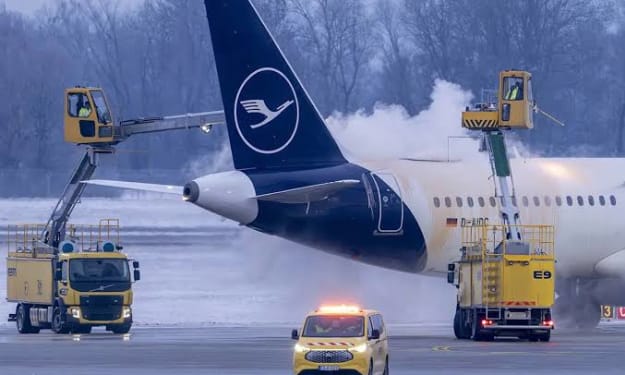
500 Passengers Forced to Spend Night on Grounded Planes After Heavy Snow Cancels Flights and Airport Staff Go Home. AI-Generated.
Severe winter weather wreaked havoc at Manchester Airport over the weekend, leaving more than 500 passengers stranded on grounded planes as flights were canceled and airport staff were sent home. The incident highlights the vulnerability of air travel during extreme weather and the challenges airlines face in ensuring passenger safety and comfort. The snowstorm, which swept across the north of England, brought freezing temperatures, icy runways, and visibility conditions deemed unsafe for takeoffs and landings. Airlines quickly canceled dozens of flights, but the rapid escalation left hundreds of travelers caught between the tarmac and terminals. Passengers described long waits on stationary planes, sometimes exceeding six hours, without access to food, blankets, or adequate heating. Families with young children and elderly travelers faced particular hardship, prompting complaints on social media and calls for better contingency planning. “I couldn’t believe it,” said one traveler. “We were on the plane, the engines off, windows frosted over, and staff kept apologizing but saying there was nothing they could do. People were freezing and anxious — it was frightening.” Airline and Airport Response Airport authorities and airline representatives confirmed the cancellations, citing safety as the top priority. “We understand the inconvenience to passengers,” said a spokesperson for one major carrier. “However, pilot safety assessments and airport operating conditions dictated that flights could not proceed. The weather was unprecedented in its intensity and impact.” Critics argue that contingency plans fell short. Many flights were left at gates with limited support for passengers, while airport staff numbers were insufficient to manage the situation effectively. Some travelers reported that buses and shuttle services to nearby hotels were unavailable, as the airport directed personnel to safety or allowed them to leave after extended hours. In response, the Civil Aviation Authority noted that airlines are responsible for providing assistance under UK passenger rights regulations, including access to meals, refreshments, and accommodations when delays extend overnight. Investigations are ongoing to determine whether protocols were fully followed. Passenger Experiences For many, the ordeal was more than inconvenient — it was physically and emotionally taxing. Some passengers improvised makeshift blankets from jackets, while others tried to sleep upright in cramped airplane seats. Parents struggled to keep children calm, and individuals with medical conditions reported stress and discomfort. Social media posts from those affected quickly went viral, sparking a broader debate about airport preparedness and the adequacy of staff training for extreme winter conditions. Passenger rights groups called for airlines to improve emergency communications and to guarantee accommodations for anyone stranded by severe weather. “This was a logistical failure, not just a weather problem,” said one advocate. “Passengers should not be forced to spend the night on planes without basic amenities. Airports and airlines need better crisis management protocols.” Looking Forward Airports across the UK are reviewing their emergency procedures following the incident. Lessons learned are expected to inform policies for staff allocation, passenger care, and communication strategies during extreme weather events. Airlines are also assessing scheduling and staffing flexibility to minimize passenger hardship during similar conditions in the future. Despite the disruptions, no injuries were reported, and all passengers were eventually accommodated in nearby hotels or rescheduled for flights the following day. Still, the experience has left a mark, raising questions about how the aviation industry can better prepare for increasingly frequent and severe winter storms. For travelers, the incident serves as a stark reminder to plan for weather-related delays, carry essential supplies, and remain patient when nature intervenes. For airlines and airports, it is a call to action to ensure that passenger welfare remains a priority, even when flights cannot take off.
By Fiaz Ahmed 12 days ago in Humans
It helps with loneliness’: grief, play and the power of lifelike dolls - photo essay. AI-Generated.
In quiet living rooms, therapy centers, and private bedrooms across the world, lifelike dolls are serving a role that goes far beyond mere playthings. Known as “reborn dolls,” these hyper-realistic figures are providing comfort, companionship, and a sense of connection for individuals grappling with grief, loneliness, and social isolation. For some, the dolls are a tool to process the loss of a child, sibling, or parent. For others, they help alleviate the profound isolation that comes with aging or mental health struggles. Each doll is crafted with meticulous attention to detail — down to veins, eyelashes, and hand-painted nails — creating a near-lifelike presence that evokes emotional response. Healing Through Touch Grief counselors and psychologists note that caring for a lifelike doll can provide a therapeutic outlet for those who feel stuck in sorrow. “Touch is a critical part of human emotion,” says Dr. Samantha Yates, who specializes in bereavement therapy. “For people who have lost a child or a partner, holding a doll that resembles their loved one can provide a controlled space to express affection, sadness, or longing.” Many parents who have experienced infant loss describe a unique connection with these dolls. One mother, who asked to remain anonymous, shared: “I know it’s not my child, but cradling her, feeding her, even just holding her brings a sense of peace I didn’t think was possible. It’s a small bridge between grief and acceptance.” Combating Loneliness The appeal extends beyond grief. Seniors living alone or individuals struggling with social anxiety often form attachments to dolls, using them as companions during meals, walks, or daily routines. Online communities for lifelike doll enthusiasts have grown rapidly, with forums, social media groups, and virtual meetups where owners share care techniques, photographs, and personal stories. “It helps with loneliness in a way that talking to a screen can’t,” says James O’Connor, who lives alone in rural Oregon. “You can’t replace human connection entirely, but there’s comfort in being needed, even by a doll.” Artistry Meets Emotion The craft behind reborn dolls is a meticulous art form. Artists spend weeks creating a single doll, layering silicone or vinyl, hand-painting skin tones, adding rooted hair, and sometimes embedding weighted elements to replicate the feel of a real baby. The end result is a figure that can evoke deep emotional responses from its owner — from joy to sorrow. Photographers and documentarians have begun capturing these intimate interactions in visual essays. Close-up images of a doll nestled in someone’s arms, hands gently touching soft skin, or a quiet scene at a bedside, reveal both the artistry of the dolls and the profound human need for connection. These photo essays invite viewers to consider the nuanced ways people seek comfort and care when conventional relationships are absent or interrupted by loss. A Controversial Comfort Not everyone understands the practice, and some critics question whether reliance on dolls might interfere with processing grief or forming real-world relationships. Psychologists note that while dolls can be helpful, they are most effective when integrated into broader emotional support systems, including counseling, family, and social networks. Yet for many, the dolls are more than objects — they are companions, allies, and symbols of hope in a world where isolation and loss are widespread. “People need to feel connection,” says Dr. Yates. “Whether it’s through a friend, family, or a lifelike doll, the need for empathy and touch is universal.” As this quietly growing phenomenon gains visibility, it challenges conventional ideas of play, therapy, and emotional support. These dolls may not solve loneliness or heal grief entirely, but they offer solace, a tangible sense of presence, and, for those who hold them close, a measure of peace in difficult times.
By Fiaz Ahmed 12 days ago in Humans
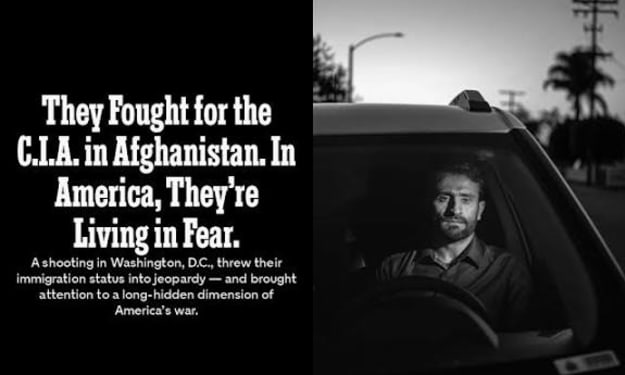
They Fought for the C.I.A. in Afghanistan. In America, They’re Living in Fear.. AI-Generated.
For years, Afghan nationals risked their lives working alongside the Central Intelligence Agency in Afghanistan, conducting surveillance, protecting operatives, and gathering intelligence against Taliban forces. Their service was critical to U.S. operations, yet today, many of these former allies are living in the United States under the shadow of fear, uncertainty, and bureaucracy. These men, often trained in paramilitary tactics and intelligence operations, were targeted by insurgents precisely because of their work with American forces. Following the fall of the Afghan government in 2021, several thousand fled the country under emergency programs, arriving in the United States with hopes of safety and stability. Instead, many describe a life marked by anxiety, isolation, and legal uncertainty. “I fought for them,” said one former operative, who asked not to be named for security reasons. “I saved lives. I protected officers. And now, I feel like I am fighting again — for my own survival.” Legal Limbo and Vulnerability Unlike interpreters who worked with the U.S. military, CIA partners often lack the documentation required for visas such as the Special Immigrant Visa (SIV) program. Many arrived on temporary humanitarian parole, which does not guarantee permanent status or lawful work. Without proper documentation, former operatives cannot secure housing easily, access benefits, or travel safely. Their families, some still overseas, remain targets for reprisal attacks by the Taliban. Legal advocates emphasize the unique vulnerability of these individuals. “These are not ordinary refugees,” said Sarah Henderson, a human rights attorney in Virginia. “They were embedded with U.S. operations, trained to hunt insurgents. Returning them, even inadvertently, would almost certainly be fatal.” The psychological toll is severe. Years of combat and covert operations have left many with untreated trauma, compounded by anxiety over family members left behind. The sense of isolation is intensified by the secrecy surrounding their work; they cannot publicly discuss their missions, even as they attempt to integrate into American society. Threats Follow Them Abroad Despite resettlement, some former operatives report being targeted online and receiving threats from Taliban sympathizers. Social media platforms, encrypted messaging apps, and even email have become avenues for intimidation. One man recounted receiving a message that included photos of his family in Afghanistan, warning that they would be harmed unless he ceased contact with American authorities. “The danger never ends,” said another former operative. “You survive one war, only to fight another in a country that promised you protection.” Government Response and Advocacy U.S. officials acknowledge the difficulties but cite security and verification procedures as limiting factors in offering permanent solutions. Lawmakers from both parties have introduced measures to expedite visas for intelligence partners and extend protections to their families. Advocacy groups argue that failure to act not only endangers individuals but undermines America’s credibility with future allies. In response, several non-profit organizations have begun providing legal support, mental health counseling, and community resources to help these families navigate life in the U.S. “We cannot undo the past,” said Henderson, “but we can prevent further harm by ensuring they have safety and stability.” A Quiet Plea for Recognition For the men who once risked everything in the mountains and deserts of Afghanistan, life in the United States is bittersweet. They are grateful to be alive, yet haunted by the consequences of their service. “We believed in a mission,” one operative said. “Now, we just want the promise kept — that the country we fought for will protect us.” Their plight is a stark reminder of the human cost of covert operations and the long-term responsibilities that follow. These are men who fought for the U.S., yet today, in America, they are still fighting — this time for safety, recognition, and the ability to live without fear.
By Fiaz Ahmed 12 days ago in Humans
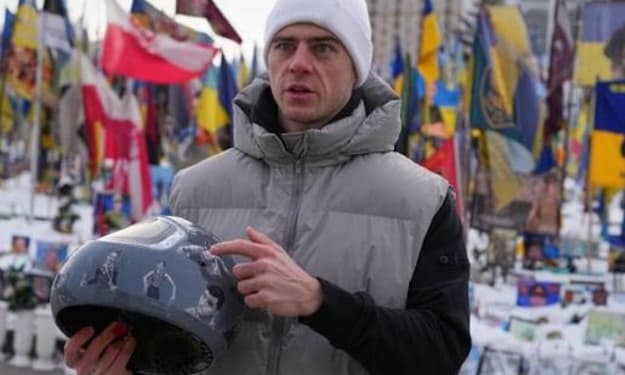
I Want to Come Back, to Win Gold”: Banned Ukrainian Determined to Race for Glory in Helmet of Memory. AI-Generated.
Despite being sidelined by an unexpected ban, Ukrainian athlete Vladyslav Morozov is fuelled by a singular goal: to return to competition and win Olympic gold while wearing a symbolic “helmet of memory” that honours the sacrifices of his country. Morozov’s journey is part story of athletic ambition, part testament to resilience in the face of personal and national adversity. Once one of Ukraine’s fastest speed skaters, Morozov was preparing for what many expected to be his peak performance year when a regulatory decision abruptly halted his participation in international events. The ban — imposed by an international sports federation following a technical violation related to equipment standards — came just months before a major world championship, derailing years of training. “I was devastated,” Morozov said in a recent interview. “Not because I was banned, but because I felt I was letting down everyone who believed in me — my family, my teammates, and my country.” From Peak to Pitfall Morozov’s career began in childhood, training on frozen lakes near his hometown in western Ukraine. Early success earned him national recognition and a chance to train with Ukraine’s best, where he developed into a sprinter with Olympic potential. His rise was marked by discipline and quiet confidence, traits that endeared him to coaches and fellow athletes. In late 2025, Morozov qualified for the World Speed Skating Championships but was informed that his racing helmet did not meet a newly updated safety certification required by the international governing body. Although the issue was deemed a bureaucratic oversight rather than malicious intent, the penalty was firm: he could not compete until his equipment met the revised standards. “It was excruciating,” he recalled. “I had trained for countless hours, and something as small as a certification on my helmet stopped me from racing. But this is sport — rules matter.” Racing With Memory and Meaning Rather than retreating from the sport, Morozov chose to embrace the situation as a moment of reflection and purpose. He began training harder, adjusting his techniques, and collaborating with helmet manufacturers to design an updated model that not only met safety standards but also carried personal and national symbolism. The result was the “helmet of memory” — a custom-designed racing helmet adorned with imagery honoring Ukraine’s resilience and the lives lost during years of conflict. The design includes subtle engravings of candlelight and national symbols, representing remembrance and hope. “For me, this helmet is more than protection,” Morozov said. “It is a tribute. Every time I put it on, it reminds me why I race — not just for medals, but for the spirit of my people.” Support and Solidarity Word of Morozov’s story spread quickly through Ukrainian media and international sports networks, attracting support from fans, fellow athletes, and advocacy organizations. Many see his journey as emblematic of Ukraine’s broader struggle: a quest for recognition and triumph despite formidable obstacles. Several European speed skaters have reached out with messages of solidarity, praising his resilience and expressing hope that he will compete again soon. “He’s an inspiration,” said one peer from the Netherlands, a country known for its speed skating pedigree. “Anyone who can turn a setback into something meaningful deserves a place on the starting line.” Looking Toward Redemption Morozov is now focused on meeting the equipment requirements and returning to competition as soon as possible. He has set his sights on the upcoming World Cup circuit and, ultimately, the next Winter Olympics — where he hopes to “come back, to win gold” while wearing his helmet of memory. “It’s not just about me anymore,” he said. “It’s about giving people something to believe in. When I race, I carry all those who can’t be here. That is my strength.” For a country seeking moments of hope and unity amid hardship, Morozov’s determination resonates far beyond the ice. His story is a powerful reminder that athletic ambition and personal conviction can become symbols of national identity and collective resilience — even in the face of setback and exclusion.
By Fiaz Ahmed 12 days ago in Humans
Constitution Hill’s Win at Southwell Showed the Way to a Brighter Future for Racing. AI-Generated.
The return of Constitution Hill at Southwell was more than just another victory on the results sheet. It was a moment of reassurance for British racing, a reminder of the sport’s power to inspire hope, attract new audiences, and restore confidence after a period of uncertainty and disruption. On a cold afternoon at Southwell Racecourse, racing witnessed something close to revival theatre. For much of the past year, the sport has wrestled with falling attendance, rising costs, and debates about animal welfare and safety. The absence of its brightest star due to injury had only deepened concerns. When Constitution Hill finally returned to the track, expectations were high but tempered by anxiety. Could he still be the champion who once seemed unbeatable? The answer came swiftly and decisively. From the moment the tapes rose, Constitution Hill moved with the authority of a horse that had never lost his rhythm. His jumping was fluent, his stride smooth, and his response to pressure unmistakable. By the final turn, the race had already taken on an air of inevitability. He surged clear in the closing stages, not merely winning but reasserting dominance. The significance of the victory went beyond the margins. Racing thrives on heroes, and in Constitution Hill it has found one capable of bridging the gap between hardened racing followers and casual sports fans. Social media lit up with clips of the performance, while television audiences swelled as word spread that something special was unfolding. For a sport often criticised for failing to modernise its appeal, this was proof that elite performance still has magnetic power. Trainers and officials were quick to emphasise the careful management that allowed the champion to return safely. After a long layoff caused by injury, the temptation might have been to rush him back into the biggest races. Instead, his connections chose patience, selecting Southwell as a testing but controlled environment. The result vindicated that strategy and offered a blueprint for how racing might handle its top assets in the future: with caution, transparency and respect for the horse’s wellbeing. This approach resonates with the broader challenge facing the sport. Racing’s future depends not only on thrilling competition but also on public trust. The image of Constitution Hill easing past rivals with power and grace served as a counterweight to concerns about equine safety. It suggested that excellence and responsibility can coexist. The Southwell crowd sensed the importance of the occasion. Many had come not just to watch a race but to witness a comeback. Applause followed Constitution Hill back to the winner’s enclosure, and there was a sense of shared relief among spectators, jockeys and stable staff alike. In a sport often fragmented by controversy and commercial pressure, this was a rare unifying moment. Industry leaders hope the performance can spark renewed enthusiasm among younger audiences. Racing competes with countless entertainment options, from football to streaming platforms, and needs narratives that transcend betting markets. A champion returning from adversity provides exactly that: drama, resilience and excellence in one package. Looking ahead, Constitution Hill’s victory opens doors to bigger stages and tougher challenges. Festivals and championship races now loom with added anticipation. More importantly, the win has restored belief that racing can still produce moments that capture national attention and remind people why the sport matters. In a single afternoon, Southwell delivered more than a result. It delivered a message. Racing’s future will depend on safeguarding its stars, telling their stories, and creating events that resonate beyond the track. Constitution Hill’s triumph showed how powerful that formula can be when everything aligns. For a sport searching for direction, the lesson was clear: nurture greatness, protect it carefully, and let performance do the talking. If racing can follow that path, the future may indeed be brighter — and Constitution Hill’s return could be remembered as the moment when optimism began to outrun doubt.
By Fiaz Ahmed 12 days ago in Humans
The Legible Child
A particular form of exhaustion arises from performing unseen tasks, distinct from the fatigue of overwork. It settles slowly, over months or years, until one day a teacher stands at a photocopier early in the morning, watching pages collate, and notices she no longer knows why she chose this profession. She gathers her papers, walks to her classroom, and begins another day of documentation.
By Tim Carmichael12 days ago in Humans
Mayday Mayday
She, Amanda, Sr. Administrator, walks into the server room and notices that the report server is down. She has not even put her purse up or sat at her desk. Her first order of business was to troubleshoot the major fire. Which had shut down the report server over the weekend.
By Jacqueline Elaine Hudson12 days ago in Humans
10 Common Signs You're Experiencing a Past Life Memory.
The concept of reincarnation, the idea that our souls live on and are reborn into new lives, has captivated humanity for centuries. While scientific proof remains elusive, many individuals across cultures and throughout history have reported experiencing vivid glimpses into what they believe are past lives. But how do you differentiate between a fleeting daydream, a powerful imagination, or a genuine past life memory? While not definitive proof, recognizing these common signs can provide clues and offer a fascinating journey of self-discovery.
By Wilson Igbasi12 days ago in Humans
Unveiling Your Soul's Blueprint: Understanding, Identifying, and Completing Soul Contracts.
Have you ever felt an undeniable pull towards someone, a deep sense of connection that transcends logic? Or perhaps you’ve faced recurring challenges in a specific area of your life, feeling trapped in a karmic loop? These experiences might point to something deeper than just chance encounters or unfortunate circumstances. They might be whispers of your soul contracts, pre-agreed agreements made before birth to guide your evolution and propel you towards specific lessons and growth.
By Wilson Igbasi12 days ago in Humans
Heat Therapy Is a Game-Changer for Your Health
For centuries, cultures around the world have embraced the power of heat. From traditional Finnish saunas to modern infrared rooms, heat therapy has long been associated with relaxation, cleansing, and overall well-being. Today, saunas are more than just a luxury at spas—they’re becoming a staple in health routines for athletes, entrepreneurs, and wellness enthusiasts alike.
By AnthonyBTV12 days ago in Humans