social media
Social Media targeted pieces, for influencers and trending topics in the Journal workplace digital universe.
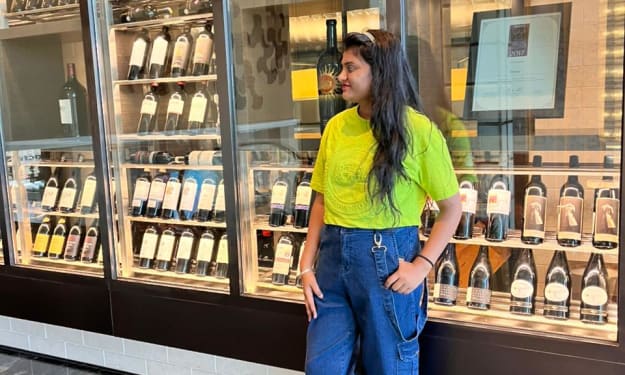
Minakshi Shardul: Biography, Age, Education, Career, and Complete . AI-Generated.
Minakshi Shardul and the Quiet Discipline Behind Digital Branding In an online world driven by speed, trends, and constant visibility, building a meaningful digital presence has become increasingly challenging. While many chase viral moments, there is a growing recognition that credibility and trust cannot be manufactured overnight. This shift has created space for professionals who approach digital branding with patience and structure. Minakshi Shardul’s work reflects this quieter, more intentional side of the digital landscape.
By Uktimesliveabout a month ago in Journal
US-Iran talks: A percentage assessment of the chances of success, failure and partial success. AI-Generated.
The high-level talks between the United States and Iran, held today in Muscat, the peaceful and beautiful capital of the Sultanate of Oman, are a very sensitive and historic stage in global diplomacy, where the eyes of the whole world are fixed on this table because these talks are not only for the relations between the two countries, but also for the Middle East and the entire international community to guarantee peace, security and economic stability. In the current delicate and complex geopolitical context, the increasing tension between the United States and Iran, economic sanctions, the risks of military conflict, and the balance of power in the region have ensured that a safe, neutral and credible place is needed for the talks, and the Sultanate of Oman, as always, has provided this platform under its historical traditions, high-level and impartial mediation policy, in which the Omani leadership not only highlighted its key role of hospitality but also implemented its consistent policy of finding a peaceful solution in the region. The calm atmosphere of Muscat and Omani mediation are extremely important in balancing the positions of the United States and Iran on Iran's nuclear program and economic sanctions. are playing a role, and analytically, this time, a clear “strategic flexibility” is expected from the US because Washington is preferring a de-escalation arrangement rather than a direct confrontation in the region, under which partial return of Iran’s frozen assets and some humanitarian relief of sanctions can be provided, while Iran is also showing potential flexibility to not exceed the 60% limit in uranium enrichment and limit international monitoring in view of public pressure, demands for economic improvement, and the internal policy of the new administration of President Masoud Pazishkian. As a result, the chances of success of the negotiations are appearing to be 60 to 70% in the current circumstances, because both countries have now run out of room to maintain the status quo, and in case of success, an interim deal is possible that will provide the basis for a permanent solution in the future. However, there are also risks of failure, because the internal political Pressure, regional adversaries, and the political demands of global power can affect it. Oman's foreign policy has always been based on goodwill, neutrality, and the promotion of world peace, which Sultan Qaboos bin Said established and the current Sultan Hisham bin Tariq has taken it to new heights, establishing the Sultanate of Oman as an exemplary diplomatic center on the global stage. Oman also played a key role in the process of the historic nuclear deal in 2013 and the same dedication to world peace remains today. Technical issues such as Iran's nuclear program, enrichment levels, cooperation with the International Atomic Energy Agency (IAEA), and complex issues of monitoring would not have been possible to resolve without Oman's mediation. These negotiations are also the focus of other powerful countries in the region, including Saudi Arabia, Israel, and the United Arab Emirates, where Saudi Arabia and the United Arab Emirates seek stability and see Oman's mediation in the wider interest of the region. While despite Israel's strategic concerns, the attention of the international community is focused on Muscat's peaceful corridors, the global politics of oil and Given the importance of the Strait of Hormuz, the success of these negotiations is essential for the entire world. Muscat's geographical importance and Oman's impartial mediation are like the backbone for the security of this waterway, the restoration of the global energy supply chain, and long-term stability in the region. The details of the delegations involved in the negotiations are also important; The US delegation is led by Brett McGurk, a highly experienced White House official and expert on Middle East affairs, and is accompanied by Acting Special Envoy Abram Paley. The Iranian delegation is led by Abbas Araghchi and Ali Bagheri Kani. All of these experienced diplomats are advancing the negotiations in light of global tensions, economic pressures, and security threats in the region. The impartial facilitation provided by Oman has been appreciated not only by Washington and Tehran, but also by the United Nations and the European Union. Oman has proven that it is not a country but a neutral and effective diplomatic institution for the international community that is capable of protecting human life and global security from threats. The success of the negotiations will provide solid support to Iran's economy and will also be a success in foreign policy for the United States, which will have a positive impact on the global energy market, investment opportunities, regional security, and international relations. There will be, while the failure of the negotiations could lead to military tension in the region, economic uncertainty, and global instability. In short, these negotiations held today in Muscat are not just talks between two countries, but the foundation of a new global diplomatic system, where wisdom, dialogue, and negotiations take precedence over the use of force. Oman's mediation has once again played its historic role in turning the tide of world history towards peace, and it is hoped that this process will provide new horizons of lasting peace, cooperation, and balance for the region and the international community. — Malik Sarfaraz Hussain Awan
By Malik Sarfraz Hussain Awanabout a month ago in Journal
Beyond Zillow: The Rise of "Agentic AI" in Miami Real Estate
I spent an afternoon last week on a balcony in Edgewater, looking out at the turquoise stretch of Biscayne Bay. It’s a view that sells itself, but the developer I was with wasn't talking about the scenery. He was talking about a "digital twin" of the building that was currently negotiating its own energy contracts and pre-vetting potential tenants while we drank our coffee.
By Mike Pichaiabout a month ago in Journal
The 777 rules for couples: The kitchen chair
my husband walked past me in the kitchen. Didn't say anything. Just... walked past. Like I was a chair. I looked down at my phone. We'd been in the same house for 4 hours. The only words exchanged? "Did you pay the electricity bill?" and "There's no milk."
By Understandshe.comabout a month ago in Journal
Why Needham Warns That Meta Platforms Stock Could Be Headed for 10%-15% Downside. AI-Generated.
Meta Platforms (META) stock is once again commanding the spotlight. Following a report of stellar earnings results, shares have surged near record highs. Yet, while Wall Street largely celebrates Meta’s accelerating revenue growth and aggressive artificial intelligence (AI) plans, not everyone is convinced the rally is sustainable.
By Ann D. Burchabout a month ago in Journal
Vasco da Gama: The Founder of Barbarity and Colonial Terrorism in the Garb of Discovery . AI-Generated.
Vasco da Gama is often presented in the pages of history as a great adventurer and conqueror of the seas, but the reality is quite the opposite because his arrival was no less than a human disaster for the Indian subcontinent that changed the destiny of the region. He was actually a fanatical religious plunderer and colonialist whose heart was filled with the ancient hatred of the Crusades for Muslims and immense colonial arrogance for Indians. When he left Lisbon in 1497 on the orders of King Manuel I of Portugal, the red cross symbols on his ships reflected his intentions that this journey was not just for trade but to end the dominance of Christianity and the maritime trade monopoly of Muslims by force. He left traces of his brutality in the coastal cities of Mombasa and Malindi in Africa. After leaving, when he reached Calicut in May 1498, his behavior towards the local ruler, Raja Zamorin, was contrary to any diplomatic etiquette. His most shocking incident occurred during his second voyage in October 1502, when he stopped the ship 'Miri' in the Arabian Sea, which was returning from the Hajj pilgrimage from Mecca, with more than four hundred innocent passengers on board. In addition to respectable merchants, these passengers also included women and innocent children. When the Portuguese ships surrounded them, the captain and passengers of the ship handed over twenty-two thousand gold coins and valuable goods to Gama in exchange for their lives, but this savage man refused to spare their lives even after looting all the property and belongings. British historian R.S. Whiteway writes in his book "The Rise of Portuguese Power in India" that Gama ordered the ship's ammunition depot to be set on fire, during which The scenes were heartbreaking because mothers were holding their little children in their arms and showing them to the Portuguese soldiers that perhaps they would take pity on these innocents and save them. But Gama strictly ordered his gunners to shoot and kill any passenger who jumped into the sea. In this way, the ship continued to burn in the middle of the sea for four days, including the suffering people, until all 400 people were burned alive. Gama's brutality was not limited to Muslims, but he adopted inhumane tactics to intimidate the Hindu Raja of Calicut. When Raja Zamoran sent a respected and elderly Brahmin priest as an ambassador to Gama for negotiations, the brutal Portuguese arrested the old priest and cut off his lips and ears. Then he slaughtered a dog and sewed its ears on the priest's head and returned it with an insulting letter. Sent to the Raja, this incident is mentioned with pride by the Portuguese historian Gaspar Correa himself in his work "Lendas da Índia" which exposes the Portuguese mentality of that time. During the same voyage, Gama captured about eight hundred unarmed fishermen and small local traders on the coast of Calicut and cut off their hands, noses and ears and loaded them into a large boat and put dry leaves on top of it and set it on fire and pushed this burning boat towards the shore so that the people of the city would be terrified to see the severed limbs of their loved ones. He sent a message to the Raja to cook curry for himself from these severed human limbs. These are the gruesome historical facts that the Western narrative has always hidden in the beautiful words of "transition of civilization". Gama introduced a forced permit system called "Cartaz" for the first time in the peaceful trade of the Indian Ocean using cannons and guns, under which every ship was required to be given to the Portuguese. They had to pay extortion, otherwise they would be declared pirates and drowned. In this way, he strangled the independent economy of the subcontinent and laid the foundation for centuries of colonial plunder here. Renowned modern historians like Sanjay Subramaniam make it clear in his book "The Career and Legend of Vasco da Gama" that Gama was not just an adventurer but a violent person to the point of a psychopath who enjoyed playing Holi with the blood of innocents. The stories of his atrocities are also found in the writings of French historian Geneviève Bouchon and Indian researcher K.M. Panicker, which prove that Vasco da Gama's discovery actually brought a message of slavery, religious prejudice and economic destruction to South Asia. Unfortunately, the imprint of the colonial era still remains in our educational curriculum and Pakistan studies books, where Vasco da Gama is taught as a hero and a great man who discovered the way, while a criminal silence is maintained on the massacres committed by him. Due to this curricular gap, our The new generation is unable to recognize its real enemies and friends. It is time to make these historical truths part of the curriculum and force the international community to remove the statues of war criminals like Vasco da Gama from their squares, because these statues are a humiliation to humanity and a source of suffering to the souls of millions of innocent Indians and Muslims whose blood was shed by this brutal man just to obtain gold and spices. The story of Vasco da Gama is the story of a plunderer who stained the seas with blood and history will never forgive him until his true face is fully revealed to the world. And we, as independent journalists, pledge to continue to unmask the distorted faces of history so that future generations can distinguish between truth and falsehood and recognize our true national heroes. Research and writing: Journalist Malik Sarfaraz Hussain Awan
By Malik Sarfraz Hussain Awanabout a month ago in Journal
My job status went from on-call to laid off
I was let go because the boss didn't want a woman washing dishes in the kitchen. While I'm relieved to be gone from that workplace, I'm still angry. The only boss who supported me left after an argument with the owner. After he quit, the main boss took over, acting superior and making the environment unbearable. On 10/16, I started my shift at 4:00 PM and found the dish pit already overflowing because the morning shift was eliminated, and only closers were scheduled. I started cleaning, but the other cook, admitted they were only washing what they needed, leaving the rest for me.
By stephanie borgesabout a month ago in Journal
Anne Marie Angelil: The Untold Story of Céline Dion’s Stepdaughter
Anne Marie Angelil: Inside the Life, Family Legacy, and Quiet Influence Behind Céline Dion’s World When people think of Céline Dion, they think of legendary vocals, sold-out arenas, and a love story that became part of music history. But behind that global fame is a blended family whose story is rarely told in full. One of the most intriguing figures in that family is Anne Marie Angelil — a woman who has lived close to extraordinary fame while choosing a life largely away from the spotlight.
By Vincent Otiriabout a month ago in Journal