
4 Surprising Truths About Nanoparticles In Your Soda
Current research reveals that many of the foods and drinks we consume may contain engineered or unintentionally formed particles so small they are invisible to the naked eye.

The Unseen World in Your Grocery Cart
Imagine grabbing a can of soda or a packaged snack from your pantry. It's a simple, everyday act. Yet, hidden within that familiar fizz and sweetness is a technological frontier most of us never consider: the world of nanomaterials. Current research reveals that many of the foods and drinks we consume may contain engineered or unintentionally formed particles so small they are invisible to the naked eye. This article will explore four of the most surprising and impactful facts we are learning about nanotechnology in our food system, based on current research and analysis.
1. Nanoparticles Aren't Sci-Fi—They're Already on Supermarket Shelves
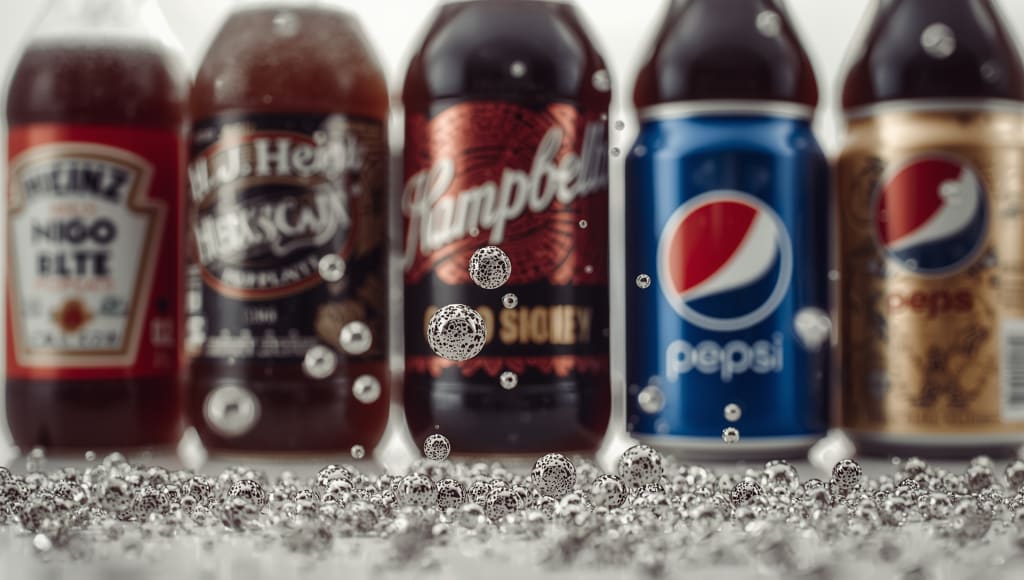
While nanotechnology might sound like something from a futuristic movie, it's already a quiet component in hundreds of consumer products. The Center for Food Safety has identified over 300 foods and food packaging materials that likely contain engineered nanomaterials. Far from being a niche technology, its application is backed by major industry players. Some of the world's leading food companies, including H.J. Heinz, Nestle, Hershey, Campbell’s, Kraft, and PepsiCo, have invested heavily in nanotechnology. For instance, nano titanium dioxide is applied as a coating on baked goods to enhance appearance, while nanoclays are embedded in the plastic of fizzy drink bottles to prevent carbon dioxide from escaping. This silent integration into our daily lives stands in stark contrast to the public perception of nanotechnology as a technology of the future.
2. They Can Be Accidental Byproducts of Making Your Favorite Drinks
The nanoparticles found in beverages like Coca-Cola and Pepsi may not be intentionally added ingredients at all. Research suggests they are "foodborne nanoparticles," specifically fluorescent carbon dots, that can form unintentionally as a result of the complex chemistry and high-energy production processes involved in making soft drinks. The mixture of phosphoric and citric acids, carbonation, sugars, and naturally occurring trace metals can trigger what some researchers call "uncontrolled chain reactions." When combined with industrial processes like high-speed mixing and exposure to heat, these reactions can break down larger molecules and form new, nano-sized particles. Furthermore, studies indicate that nanoparticles can migrate from packaging materials, such as plastic bottle linings, into the beverage over time. What's particularly insightful is that our ability to detect these particles is what's new, suggesting these foodborne nanoparticles may have been present in our food and drinks for a long time without our knowledge.
3. Their Size is Their Superpower: They Can Go Where Other Particles Can't
The defining feature of a nanoparticle is its incredibly small size—one billionth of a meter which gives it unique physical and biological properties. This allows nanoparticles to travel to parts of the human body that larger particles cannot access. After being ingested, their size allows them to circulate through the body and reach potentially sensitive target sites. According to the Center for Food Safety, these sites can include the "bone marrow, lymph nodes, the spleen, the brain, the liver, and the heart." Most alarmingly, studies show that nanoparticles can cross the blood-brain barrier, a protective membrane that shields the brain from foreign substances. This capability has been directly observed in animal studies involving popular soft drinks.
A 2018 study on Coca-Cola and Pepsi found that ingested nanoparticles "were able to cross the blood-brain barrier and dispersed in the brain," a finding that one science teacher described as something that "can't be good."
4. The Big Question: Are They Harmful? Science Doesn't Have a Clear Answer
Whether these nanoparticles pose a health risk is a major area of scientific debate with conflicting and incomplete findings. On one hand, the 2018 study that found nanoparticles from Coke and Pepsi in the brains of mice also reported that after a single high dose, "No obvious organ damage or apparent histopathological abnormality was observed in the tested mice." This crucial detail a single dose stands in stark contrast to the potential effects of chronic, long-term exposure from daily consumption. On the other hand, a wider body of research raises significant health concerns. Animal studies on other types of nanomaterials, such as nano silver and nanotitanium dioxide, have linked them to potential cancer, organ damage, and lung diseases. Chinese researchers have even claimed that inhaled nanoparticles used in industrial printing processes have killed workers. Because the presence of nanoparticles is not disclosed on labels and comprehensive, long-term research is still ongoing, consumers are, as the Center for Food Safety puts it, "unknowing guinea pigs of this little-tested technology."
Let's Conclude: An Invisible Revolution with Unseen Consequences
Nanotechnology is no longer a theoretical concept; it is an active and growing part of our modern food system, present in everything from packaging to the drinks themselves. Yet our scientific understanding of its long-term impact on human health is lagging far behind its commercial use, creating a profound tension between unchecked innovation and public safety. This gap leaves consumers and regulators navigating a new frontier with an incomplete map.
As innovation continues to reshape what's on our plates and in our cups, how do we balance the promise of new technology with the urgent need for transparency and caution?
About the Creator
The INFORMER
Source for in-depth news, investigations, whistleblower leaks, and insightful analysis you won't find anywhere else, produced by independent journalists exploring the fringes of society, technology, and culture.
Keep reading
More stories from The INFORMER and writers in Longevity and other communities.
Dementia Cases Have Skyrocketed 400% in 50 Years.
Dementia is a topic of growing public awareness and concern. Headlines and personal stories paint a picture of a condition on the rise, affecting millions of families worldwide. This perception is backed by data, but the story behind the numbers is more complex and surprising than many realize.
By The INFORMER3 months ago in Longevity



Comments
There are no comments for this story
Be the first to respond and start the conversation.