grief
Grief is a natural and healthy response to death and loss of all kinds. Learn how to cope with the emotional pain, move forward and reclaim your happiness.
Death or Life
Death. It’s such a deafening word that needs no introduction. Just hearing the word death elicits emotions from people. Did it make you think of someone? Did it cause you to feel uncomfortable? It’s sad. People never recover from it; and losing someone you love to death is the ultimate tragedy. Because no one tells you it will randomly creep up on you and you’ll just start bawling in the middle of watching a movie or when you’re trying to eat dinner. Or worst, in a grocery store where onlookers stare at you in embarrassment. It’s hard to imagine a beautiful life who shaped yours so much is now gone from the world. It’s not fair. It sucks. But more importantly, it’s the memories with this cherished person who you will never get to hold again or see again that eats at you.
By Pamela Vang5 years ago in Longevity
For Barb
"Good morning!" I said the my favorite patient, Mrs. Anthony. It was December 22, 2020. I felt so bad she would have to be away from her family during the holidays, alone in the cold, stark room with only a single window looking to the outside world.
By susannah harris5 years ago in Longevity
Downfalls High (Real Experience)
The year was 2007. I was a typical fifteen year old girl. I went to school, I hung out with my two best friends Kyle and Stephanie every day, and my life was on the right track. In the summer of 2007 the three of us were inseparable. Stephanie and I were friends since we were ten. I met Kyle when I was twelve years old. We had lost contact with Kyle for a few years up until High School. We had reunited and became the Three Musketeers. Nobody could come between the three of us.
By Rebecca Loretta Arbic5 years ago in Longevity
Grief and Loss
It seems to me that “Grief” can appear in two parts of your psyche — one part is where you present to the world as being totally rational, totally together, no problems really while your second inner part is completely hidden and is screaming inside with soundless pain.
By a.a.gallagher5 years ago in Longevity
I Am Woe
Night falls. It is warm for mid-May, here in my apartments, yet I feel a chill. Somewhere outside, an owl screeches. I have ever been afraid of them, their ghostly white faces in the darkness too otherworldly. It is not that they kill; I know they keep our fields and stables free of mice and other such creatures. And I have loved hawking since I was old enough, even choosing a falcon as my badge when I was crowned queen. A noblewoman does not fear those who kill if it is in her service. But the owl… it is not trained, it hunts not in the day, and its face holds too many secrets. Some also say it is an ill omen to hear its cry. I need no owl to tell me that I will die on the morrow, my husband the King has commanded it and so I shall.
By Randi O'Malley Smith5 years ago in Longevity
Apathy: Is This My Superpower?
At 26 years young, I genuinely believe that I have the rest of my life ahead of me, and that 50 is a young age to die. Due to this gratuitous belief, coupled with my goal to die a wise old grandma, I have dedicated my life to the pursuit of learning somethannngs. One of those... things... I've been aware of for some time now is that I emotionally regulate well. So well actually, that I can compartmentalize my emotions into millions of nuanced boxes and virtually eliminate any moments of emotional distress.
By Desiree Kepper5 years ago in Longevity
The bully leader
My childhood was over before it began. We are picking up in kindergarten, where I tend to wonder "why me" at multiple times a day. There are about six boys in my class, all of which have a deepening lust one would never come to expect from someone so young, and I was the outlet for these emotions. I'm still not sure how I found myself cornered by them in the first place, let alone on a daily basis.
By L.D. Malachite 5 years ago in Longevity
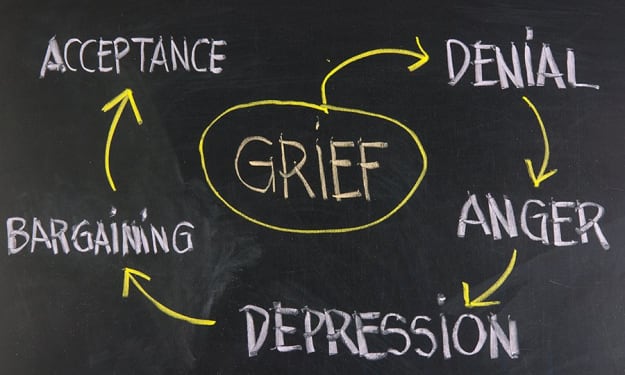
The Five Stages of Grief
Kubler-Ross Elizabeth Kubler-Ross massively contributed to the world of psychology. Her most important work is named, the Five Stages of Grief, and was originally designed to help terminally ill patients cope with their certain death. This theory has a set of patterns that explain what people go through after a dramatic event. Many professionals implement the stages of grief to their patients and even themselves. In some cultures, this theory does not apply because they already have another way to look at death when this pattern in applied in a terminal disease setting. This theory can still be generalized and be applied to different situations in order to analyze behavioral changes in people and employees.
By Alan De La Torre5 years ago in Longevity