social media
Social Media targeted at influencers and trending topics in the Longevity digital universe.
Moltbook. AI-Generated.
In the fast-moving world of the internet, new terms often appear suddenly, spark curiosity, and then spread across search engines and social platforms. Moltbook is one such name. It has begun to surface in online discussions, prompting people to ask what it is, where it came from, and why it is gaining attention.
By Saboor Brohi about a month ago in Longevity
U.S. Trade Deficit. AI-Generated.
The U.S. trade deficit has long been a central topic in economic debates, shaping discussions about globalization, domestic production, and financial stability. At its simplest, a trade deficit occurs when a country imports more goods and services than it exports. For the United States—one of the world’s largest economies—this imbalance reflects both structural strengths and ongoing challenges within the global marketplace.
By Saboor Brohi about a month ago in Longevity
What If Truth Is Rejected Even When It Is Lived Well
It’s easy to assume that if something is true, and if it is communicated clearly, reasonably, and with goodwill, it will eventually be accepted. This assumption sits quietly beneath a lot of effort, especially in faith. We speak carefully. We try to be fair. We explain ourselves patiently. Somewhere beneath all of that is the hope that clarity and sincerity will be enough. But what if that hope misunderstands how truth actually moves through the world.
By Peter Thwing - Host of the FST Podcastabout a month ago in Longevity
Truth Is Often Rejected Because It Demands Change
There is a widespread assumption, rarely spoken but deeply believed, that truth will eventually be accepted if it is communicated clearly, patiently, and with genuine goodwill. When resistance appears, the instinct is to search for error in tone, framing, or explanation. The underlying belief is simple: if the truth were presented well enough, rejection would disappear. This belief is comforting, but it is false. History, Scripture, and lived experience all point in the same direction. Truth is often rejected not because it is unclear, but because it is costly.
By Peter Thwing - Host of the FST Podcastabout a month ago in Longevity
Preservation for Eternal Impact
It is easy to feel as though most of what is said disappears. Words are spoken, written, posted, argued over, and then quickly buried beneath the next wave of noise. Attention moves on. Platforms refresh. What once felt urgent becomes invisible. In that environment, a quiet but persistent question emerges. What actually lasts. And more uncomfortably, what is worth preserving when so much seems to vanish without consequence.
By Peter Thwing - Host of the FST Podcastabout a month ago in Longevity
Amazon Layoffs. AI-Generated.
Over the past few years, Amazon has been widely recognized as one of the world’s most influential technology and retail companies. From cloud computing through Amazon Web Services (AWS) to global e-commerce and digital entertainment, the company has touched nearly every corner of modern consumer life. However, despite its massive scale and continued relevance, Amazon has also faced a challenging period marked by multiple rounds of layoffs. These workforce reductions have raised questions about the company’s long-term strategy, the health of the tech industry, and the broader future of work. Why Amazon Implemented Layoffs The primary reason behind Amazon’s layoffs can be traced to rapid expansion during the pandemic years. As online shopping surged and remote work became the norm, Amazon significantly increased its workforce to meet growing demand. Warehouses expanded, corporate teams grew, and new projects launched at an accelerated pace. When global conditions shifted—marked by inflation, rising interest rates, and changing consumer behavior—Amazon, like many tech giants, was forced to reassess its spending. Demand stabilized, operational costs increased, and investors began pushing for greater efficiency. Layoffs became a strategic response aimed at balancing growth with long-term sustainability rather than a sign of immediate financial distress. Departments Most Affected Amazon’s layoffs were not limited to a single area. Several divisions experienced workforce reductions, including human resources, recruiting, devices, retail operations, and even parts of AWS. Corporate roles were hit more heavily than frontline warehouse positions, reflecting a broader trend in the tech industry where administrative and project-based teams were scaled back. This approach allowed Amazon to maintain its core logistics and fulfillment operations while trimming roles considered less essential to immediate revenue generation. While this decision made sense from a business perspective, it had a significant emotional and professional impact on employees who had contributed to the company’s growth. Impact on Employees For many workers, Amazon layoffs came as an unexpected and difficult experience. Employees reported feelings of uncertainty, stress, and disappointment, especially those who had relocated or made long-term career plans around their roles. Although Amazon offered severance packages, extended benefits, and job placement support in many cases, the transition was still challenging. Layoffs also affected company morale. Remaining employees faced increased workloads and concerns about job security, leading to discussions around workplace culture and communication. Transparency became a key expectation, with workers seeking clearer explanations about future restructuring and leadership decisions. How Amazon Responded Publicly Amazon leadership framed the layoffs as a necessary adjustment following years of extraordinary growth. Executives emphasized the importance of operating more efficiently and prioritizing projects that directly serve customers and long-term innovation. Public statements highlighted that difficult decisions were made to protect the company’s future and maintain competitiveness in a rapidly changing market. At the same time, Amazon acknowledged the human cost of layoffs and expressed gratitude for employee contributions. This balance between corporate responsibility and business realism was central to the company’s messaging. The Bigger Picture: Tech Industry Trends Amazon’s layoffs were not an isolated event. Major technology companies across the globe implemented similar workforce reductions during the same period. The broader tech industry faced a correction after years of aggressive hiring, fueled by low interest rates and high investor confidence. This shift revealed a new reality: sustainable growth matters more than rapid expansion. Companies began focusing on profitability, operational efficiency, and strategic clarity. In this context, Amazon’s layoffs reflected a larger industry recalibration rather than a unique internal crisis. Effects on Innovation and Growth One concern surrounding layoffs is their potential impact on innovation. Amazon has long been known for experimentation and long-term thinking, often investing in projects that may not generate immediate returns. Reducing staff can limit risk-taking and slow creative development. However, Amazon continues to invest heavily in artificial intelligence, cloud infrastructure, automation, and logistics optimization. By reallocating resources toward high-impact areas, the company aims to remain innovative while operating within tighter financial constraints. What This Means for Job Seekers For professionals in the tech sector, Amazon layoffs serve as a reminder that even the most successful companies are not immune to change. Job seekers are increasingly prioritizing adaptable skills, such as data analysis, cloud computing, cybersecurity, and AI development. Additionally, workers are placing greater value on flexibility, remote opportunities, and diversified career paths. The era of lifelong employment at a single tech giant is fading, replaced by a more dynamic and skills-focused labor market. Looking Ahead: Amazon’s Future Workforce Strategy Despite layoffs, Amazon remains one of the world’s largest employers and continues to hire in key areas. The company’s future workforce strategy appears focused on targeted hiring rather than broad expansion. Roles that support core services, emerging technologies, and customer experience are likely to see continued demand. Amazon’s leadership has indicated that workforce decisions will remain data-driven, with an emphasis on long-term resilience. This suggests that while layoffs may continue periodically, they will be part of a more disciplined approach to growth. Conclusion Amazon layoffs represent a complex intersection of economic reality, corporate strategy, and human impact. While difficult, these decisions reflect a broader shift in how major companies approach growth in an uncertain global environment. For employees, job seekers, and industry observers, Amazon’s experience offers valuable lessons about adaptability, transparency, and the evolving nature of work. As Amazon moves forward, its ability to balance efficiency with innovation—and business goals with employee well-being—will shape not only its own future but also the direction of the global tech industry.
By Saboor Brohi about a month ago in Longevity
Essence, Embodiment, and Relational Reality
The Failure of Reduction and the Need for Synthesis There is a persistent failure in many modern attempts to explain what a human being is. Some frameworks reduce the person entirely to matter, insisting that identity, consciousness, morality, and meaning are nothing more than emergent properties of physical processes. Other frameworks move in the opposite direction, detaching spirit from reason and grounding belief in intuition alone, often at the cost of coherence or accountability. Both approaches fail because both misunderstand essence. One denies that essence exists at all. The other treats it as something vague and undefinable.
By Peter Thwing - Host of the FST Podcastabout a month ago in Longevity
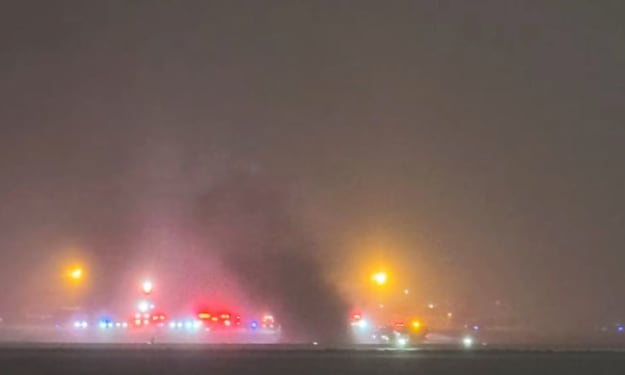
Plane Crashes in Bangor, Maine. AI-Generated.
Bangor, Maine, is not only known for its scenic beauty and small-city charm, but also for its strategic role in aviation. Home to Bangor International Airport, the city has long served as a critical refueling and diversion point for both domestic and international flights. Because of this, any plane crash in Bangor, Maine quickly draws national attention, even when details are limited or early reports are still developing. Over the years, plane crashes Bangor Maine has become a search term associated with rare but serious aviation incidents, including business jet accidents involving Bombardier aircraft. While commercial air travel remains statistically safe, even a single Bangor plane crash raises important questions about aircraft design, pilot decision-making, weather conditions, and emergency response. Bangor’s Role in Aviation Bangor International Airport is unique. Originally built as a military airfield, it now handles a mix of passenger flights, cargo operations, and private aviation. Its long runways and location make it a frequent stop for transatlantic aircraft, including business jets such as the Bombardier Challenger 600 and Bombardier Challenger 650. Because Bangor serves as an alternate landing site during emergencies, not every aviation incident reported in Bangor, Maine results in injuries or fatalities. However, when a plane crash Bangor does occur, investigators treat it with the same seriousness as accidents at larger hubs. Business Jets and Bangor Plane Crash Investigations Several reports over the years have linked Maine plane crash investigations to private or chartered aircraft rather than large commercial airlines. One aircraft registration that has drawn attention in aviation discussions is N10KJ, associated with a Challenger-series jet. Aircraft ownership entities such as KTKJ Challenger LLC are commonly used in private aviation and do not imply wrongdoing, but they often become part of official documentation following an accident. When a plane crash maine involves a business jet, the investigation typically focuses on multiple factors, including: Weather conditions during approach or departure Aircraft maintenance records Pilot experience and training Air traffic control communications The Bombardier Challenger line is widely respected in the aviation industry, making any accident involving these aircraft especially notable. Investigators emphasize that even reliable aircraft can be affected by human error or environmental challenges. Bangor Maine Plane Crash Today: Why Early Reports Can Be Misleading Searches for “Bangor Maine plane crash today” or “plane crash today” often spike after emergency landings or runway incidents that do not result in a full crash. Social media can amplify confusion, sometimes labeling hard landings or aborted takeoffs as an airplane crash Bangor airport before officials confirm the facts. Authorities urge the public to wait for verified updates from the Federal Aviation Administration (FAA) or the National Transportation Safety Board (NTSB). In past cases, early headlines suggested a Bangor Maine plane crash, only for later reports to clarify that all passengers were safely evacuated. Legal and Safety Implications Whenever a plane crash Bangor Maine results in injuries or fatalities, legal questions inevitably follow. Aviation law firms such as Arnold and Itkin are known nationally for representing victims of transportation accidents, including aircraft incidents. Their involvement does not determine fault but highlights the complexity of aviation liability, which may include manufacturers, operators, or maintenance providers. In accidents involving aircraft like the Bombardier Challenger 650, investigators also examine whether mechanical issues or design factors played any role. Manufacturers typically cooperate fully, as safety findings often lead to updated procedures or technical advisories across the industry. Learning From Past Plane Crashes in Maine Although aviation accidents in Maine are rare, each plane crash contributes to broader safety improvements. Past incidents near Bangor have led to: Enhanced pilot training for winter weather operations Improved emergency response coordination at Bangor International Airport Better communication protocols during diversions and emergency landings These lessons extend far beyond the state, influencing aviation safety standards nationwide. Public Awareness and Responsible Reporting The phrase plane crash Bangor can quickly spark concern among residents and travelers alike. Responsible reporting is essential to avoid unnecessary panic. Local authorities in Bangor, Maine, consistently emphasize transparency while also protecting the integrity of ongoing investigations. Aviation experts note that modern aircraft, including Bombardier models, are designed with multiple layers of redundancy. When accidents occur, they are usually the result of a chain of factors rather than a single failure. Conclusion While the idea of a Bangor Maine plane crash is unsettling, it’s important to remember that aviation incidents in the region are uncommon and thoroughly investigated. From business jets like the Bombardier Challenger 600 to newer models such as the Bombardier Challenger 650, every aircraft involved in a plane crash maine undergoes intense scrutiny to improve safety standards. Bangor’s role as a key aviation hub ensures that emergency response systems are well-prepared, and lessons learned from each incident help make flying safer for everyone. As investigations continue and official reports are released, accurate information remains the most valuable tool for public understanding and trust.
By Saboor Brohi about a month ago in Longevity
Resistance Is Not the Enemy
Iron sharpens iron. Brakes save lives. Friction preserves form. Modern culture treats resistance as failure. Anything that slows momentum is framed as obstruction, anything that introduces friction is assumed to be opposition, and anything that interrupts progress is labeled a setback. But this instinct misunderstands how both physical systems and human growth actually work. Resistance is not inherently hostile. In many cases, it is the only thing preventing collapse.
By Peter Thwing - Host of the FST Podcastabout a month ago in Longevity