
Surviving Strike, Shamkhani Resumes Central Role in Iran’s ‘War Room’
Subtitle: Veteran security adviser Ali Shamkhani, who survived an Israeli strike on his Tehran home, has returned to a central role coordinating Iran’s defence and diplomatic strategy amid rising tensions.

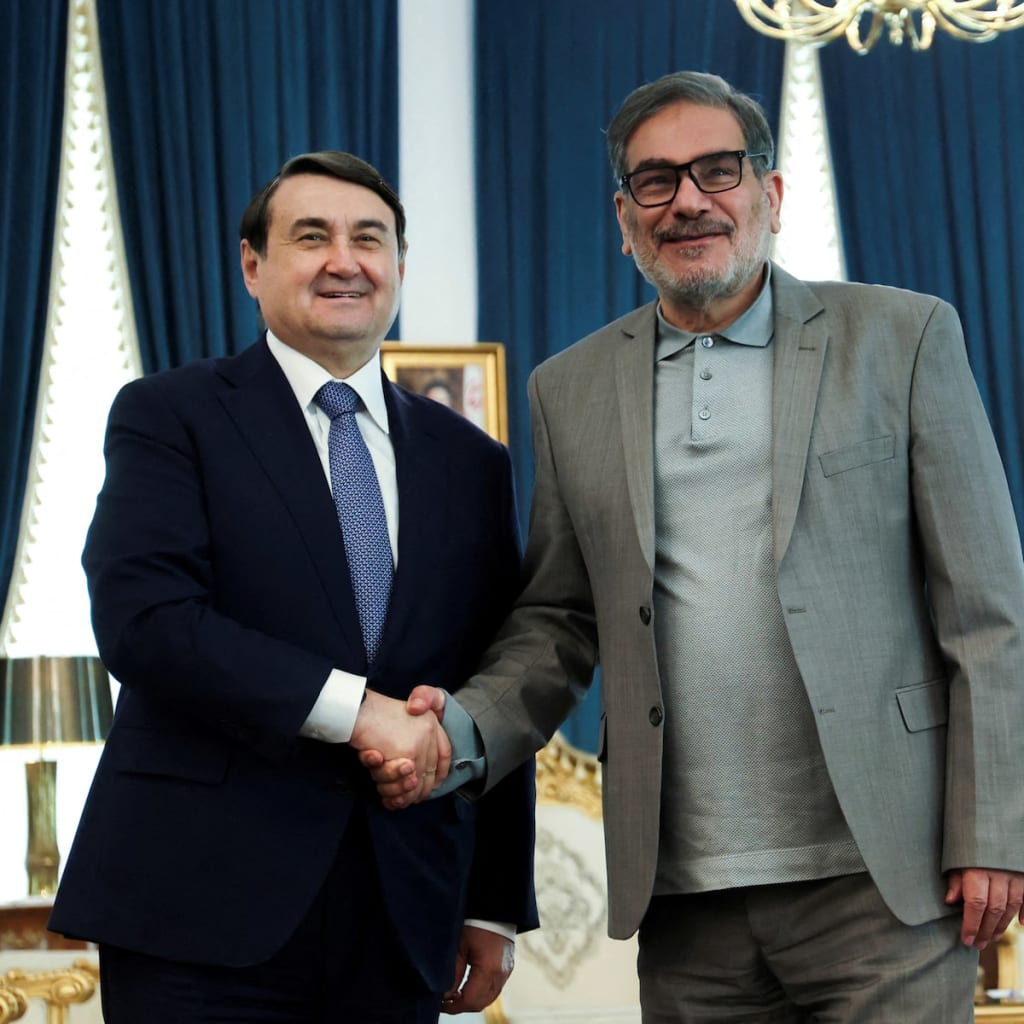
Ali Shamkhani, a veteran Iranian security figure who survived an Israeli strike on his home in Iran last year, has returned to a central role in Tehran’s strategic decision-making apparatus, illustrating both his resilience and the Islamic Republic’s reliance on experienced hands amid escalating tensions with the United States and Israel.
At 70, Shamkhani is one of Iran’s most enduring security policymakers, a trusted adviser to Ali Khamenei, and now secretary of the newly established Defence Council — a body tasked with coordinating Tehran’s response to current geopolitical challenges, including potential U.S. military actions if diplomacy over Iran’s nuclear programme falters.
Return to the Heart of Security Policy
Shamkhani’s comeback follows a dramatic ordeal in June 2025, when an Israeli strike destroyed his Tehran home. He was pulled alive from the rubble, later publicly taunting the attackers with the words “Bastards, I am alive,” likening his escape to the prison-break hero of the film Papillon in an interview with Iranian filmmaker Javad Mogouei.
Despite the physical and psychological trauma of that strike, Shamkhani has re-emerged at the core of Iran’s strategic leadership during what is widely seen in Tehran as a pivotal standoff with Washington. His appointment to head the Defence Council — created after last year’s brief but intense 12-day conflict involving military strikes by Israel and the U.S. on Iranian nuclear and military targets — reflects Tehran’s confidence in his counsel.
A Career Forged in Conflict
Born in 1955 into an ethnic Arab family in Iran’s southwestern Khuzestan, Shamkhani’s career began in earnest during the brutal Iran-Iraq War (1980–1988), where he served with distinction and rapidly advanced within the ranks of the Islamic Revolutionary Guard Corps (IRGC).
Shamkhani’s diverse portfolio over four decades has spanned military command, strategic negotiation, and diplomacy. After the Iran-Iraq War, he led both IRGC and regular naval forces, emphasising asymmetric tactics to counter conventionally superior adversaries. In the late 1990s and early 2000s, he served as Iran’s defence minister, where he led a landmark visit to Saudi Arabia — the first by an Iranian defence official since the 1979 revolution — in a bid to ease bilateral tensions.
More recently, Shamkhani played a significant role in re-establishing diplomatic ties with Saudi Arabia in 2023 under Chinese mediation, ending an eight-year rupture following the storming of the Saudi embassy in Tehran by demonstrators.
Nuclear Talks and Strategic Direction
Shamkhani has also been a key figure in nuclear negotiations. During the implementation of the 2015 nuclear agreement with world powers, he was involved in shaping Iran’s negotiating positions and later navigated policy after the U.S. withdrawal in 2018. While his exact role in current Geneva talks remains behind the scenes, his influence on Iran’s strategic posture is seen as significant.
In recent months, he has issued stern warnings on social media against any U.S. military action, saying that even limited strikes would be viewed as acts of war and could trigger “immediate, all-out” responses, including retaliation against Tel Aviv and supporting states.
Controversies and Sanctions
Shamkhani’s prominence has also brought scrutiny. He and his family have faced allegations of involvement in networks facilitating the movement of sanctioned oil, including accusations that his son’s operations helped Tehran and Moscow evade Western sanctions — charges Shamkhani has not publicly addressed. U.S. Treasury sanctions have targeted both Shamkhani and his son.
While his return to power underscores his resilience and prestige, it also highlights internal tensions in Iran’s political-military elite, where loyalty, strategic vision, and experience are weighed against perceptions of corruption and elite privilege — the latter illustrated by public criticism over his daughter’s lavish wedding in 2025.
A Central Role in a Critical Moment
As U.S. pressure mounts — including threats outlined by President Donald Trump of possible military action if negotiations fail to curb Iran’s nuclear ambitions — Tehran appears determined to consolidate a security leadership that blends experience with ideological loyalty. Shamkhani’s renewed prominence signals that Iran’s leadership values seasoned insiders who can navigate both military confrontation and complex diplomacy.
Whether his influence helps steer Iran toward a stable outcome or hardens its posture remains a key question for policymakers and analysts monitoring one of the most consequential flashpoints in Middle Eastern geopolitics.
About the Creator
Fiaz Ahmed
I am Fiaz Ahmed. I am a passionate writer. I love covering trending topics and breaking news. With a sharp eye for what’s happening around the world, and crafts timely and engaging stories that keep readers informed and updated.
Keep reading
More stories from Fiaz Ahmed and writers in The Swamp and other communities.
Members of Iran’s Elite Accused of Hypocrisy Over Children’s Lives in the West
Top members of Iran’s political and clerical elite are facing sharp criticism from opposition activists and ordinary citizens for what critics describe as “brazen hypocrisy”: while preaching strict Islamic values, economic self-sacrifice, and resistance to Western influence, many senior officials’ children reportedly live comfortable, Western-based lives funded in part by state wealth. At the heart of the debate are allegations that families of high-ranking regime figures have used their political influence and access to state resources to secure education, careers, and residences in countries such as the United States, United Kingdom, Canada, and Australia, fueling public anger among Iranians facing economic hardship and political repression at home. Elite Education and Wealth Abroad Among the most cited cases is that of Ali Larijani, Iran’s top national security adviser and a veteran cleric and former parliamentary speaker. His daughter, Fatemeh Ardeshir Larijani, has been living and working in the United States, where she served as an assistant professor at a major medical school until recently — a position she lost after an online petition called for her deportation. Opposition websites also highlight relatives of other senior officials. These include the son of former foreign minister Mohammad Javad Zarif, who has been reported to have lived in a multi-million-dollar Manhattan home, and the daughter of a former energy minister who remains based in the U.S. In the United Kingdom, nephews of Larijani are said to reside and work in Scotland and England, while other elite families — including relatives of former presidents and revolutionary commanders — reportedly hold roles in international finance and academia. Critics have dubbed these children and grandchildren of the regime’s elite “aghazadeh,” a Persian term meaning “offspring of the powerful,” and argue that their lifestyles in Western cities sharply contradict the harsh narratives their parents advance back home. Public Anger and Accusations of Hypocrisy Many Iranians see this phenomenon as emblematic of wider double standards among the ruling class. While the state enforces strict dress codes, curbs on personal freedoms, and harsh punishments for perceived moral violations, elite families appear to enjoy personal liberties and economic opportunities that are denied to the general population. “This is not just privilege,” said one Iranian writer based in Europe. “It’s hypocrisy — a ruling order that for decades preached austerity, resistance to the West, and moral discipline now sees its children prospering in the very societies they criticized.” Social media campaigns and petitions calling for the deportation of elite children from Western countries have gained traction in recent weeks, though practical avenues for enforcement remain limited. Western governments have shown reluctance to target individuals solely because of family ties, with some officials suggesting that such figures might possess valuable intelligence connections. Domestic Context: Hardship and Repression The controversy over elite privileges unfolds against a backdrop of broad public frustration in Iran. Economic difficulties — including inflation, unemployment, and fuel price hikes — have strained families across the country. Meanwhile, government crackdowns on dissent, which have sometimes involved lethal force against protestors, have deepened public anger. Human rights groups have documented numerous cases of youths and protesters killed during demonstrations in recent years, adding to the sense among many Iranians that ordinary citizens suffer while the powerful remain insulated. Critics argue that when senior figures criticize Western society or advocate for strict social norms while their children enjoy freedom abroad, it erodes the legitimacy of the Islamic Republic’s moral and political message. For many Iranians, these contrasting realities underscore a broader disconnect between rhetoric and lived experience. International and Diplomatic Dimensions Western governments have generally refrained from punitive action against individual children of foreign officials on ideological grounds, emphasizing legal protections for residency and education. Some analysts argue that their presence abroad allows Western intelligence and academic communities access to insights about the Iranian elite — access that authoritarian regimes sometimes seek to exploit. To opponents of the regime, however, this only adds another layer to what they view as entrenched privilege: children benefit from Western institutions while ordinary citizens face economic pressure and political reprisals at home. A Flashpoint in Broader Discontent The spotlight on elite hypocrisy may not by itself shake the foundations of Iran’s political system, but it encapsulates deepening fissures in Iranian society. As economic grievances grow and public disillusionment with governance rises, critics say these stark contrasts between the lifestyles of the powerful and the plight of ordinary people could well become a sustained rallying point for reformers and dissidents alike.
By Fiaz Ahmed about 12 hours ago in The Swamp
The Saddest Thing - The Billionaires Who Rule America Aren't Even Enjoying Themselves
This single post says more about our ruling class than a thousand policy papers. The saddest thing about today's system is that the men robbing the rest of us - sabotaging our economic prospects, our pensions, our access to affordable healthcare - are not even happy.
By Scott Christenson🌴19 days ago in The Swamp
India Tells University to Leave AI Summit After Presenting Chinese Robot as Its Own, Sources Say
What was meant to be a celebration of technological progress turned into a public relations headache after an Indian university was reportedly asked to leave a major artificial intelligence summit for presenting a Chinese-made robot as its own invention.
By Sajida Sikandar6 days ago in The Swamp




Comments
There are no comments for this story
Be the first to respond and start the conversation.