basketball
The world of Basketball detailed by the voices of the unathletic. Discussing play, culture, and, of course, who's the best. Trust the Process.
Pearl River Attack is too much for the Wolves
Please scroll to end for JV (Nanuet) and Varsity Photos On Monday December 15, John Jay hosted Pearl River and came out strong. Two quick layups and the Wolves strut looked sharp. But Pearl River maintained the early pace, and basketball skills abound, the Pirates attack was no illusion.
By Rich Monetti26 days ago in Unbalanced
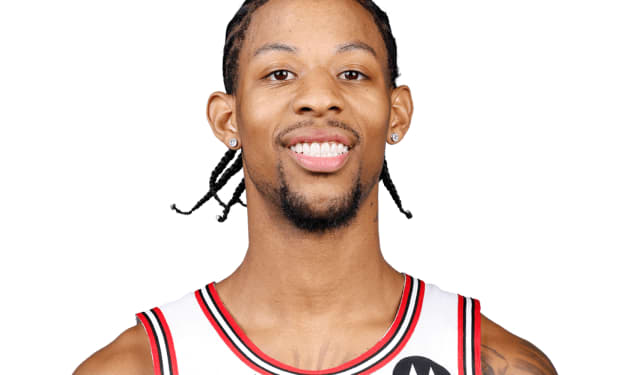
Dalen Terry. AI-Generated.
In a league increasingly defined by star power and instant impact, players like Dalen Terry often develop outside the spotlight. His NBA journey so far reflects a different but equally important side of team building—one rooted in versatility, patience, and long-term growth. While he may not dominate headlines, Terry’s role within evolving rosters shows how modern franchises value adaptability as much as scoring. Dalen Terry entered the NBA with a reputation as a high-energy, defense-first wing. Drafted for his size, athleticism, and basketball intelligence, Terry was viewed as a player who could contribute in multiple ways without needing high usage. That profile made him appealing to teams looking to strengthen depth rather than chase immediate star production. From the start, Terry’s game has been defined by effort and awareness. He moves well without the ball, defends multiple positions, and shows a willingness to do the smaller tasks that often go unnoticed. These traits are especially valuable on teams with established scorers, where complementary players help maintain structure and balance. As Terry continues to develop, league-wide trade discussions have occasionally placed him in speculative conversations. Trade rumors are a natural part of the NBA ecosystem, especially for young players on teams evaluating direction and roster flexibility. While no confirmed deal has emerged, discussions around a potential Knicks trade have highlighted how teams like New York assess depth and upside. The New York Knicks, known for prioritizing toughness and defensive accountability, often look for players who can fit into a physical, disciplined system. In that context, Terry’s skill set becomes relevant. He may not be a primary offensive option, but his defensive instincts and willingness to embrace a role align with what many teams seek in rotational wings. Trade conversations frequently involve balancing youth with experience, and this is where comparisons to players like Guerschon Yabusele emerge. Yabusele, a physically strong forward with international experience, represents a different developmental path. His career has included time overseas, national team success, and a return to NBA consideration through growth and refinement. While Terry and Yabusele play different positions, the comparison highlights how versatility and adaptability are valued across basketball cultures. Yabusele’s strength and inside presence contrast with Terry’s perimeter defense and movement, but both players embody the idea of contributing without dominating possessions. Teams evaluating roster needs often look for such balance when considering potential trades. Yabusele’s journey also underscores the importance of patience. Not every player develops on a linear timeline, and some find their best version after adjusting roles or environments. Terry’s career remains in its early stages, and his value may increase as teams gain clarity on how best to use his skill set. For young players like Terry, being mentioned in trade speculation does not necessarily signal failure or dissatisfaction. Instead, it reflects interest. Teams explore options constantly, and a player who can defend, run the floor, and accept coaching will always have a place in those conversations. A Knicks trade scenario, for example, would likely focus on fit rather than star power. Offensively, Terry continues to work on consistency. His shooting remains an area of development, but his willingness to attack closeouts and make the extra pass fits well within team-oriented systems. Coaches often prioritize decision-making over volume, especially for players carving out roles in competitive rotations. Defensively, Terry’s impact is more immediate. His length and lateral movement allow him to guard guards and wings, and his energy often lifts team intensity. In a league where switching defenses are common, that flexibility is increasingly valuable. The broader NBA landscape shows a growing appreciation for players who connect lineups rather than dominate them. Stars drive success, but role players sustain it. Terry’s profile fits that philosophy, making him a useful piece for teams focused on cohesion. Meanwhile, players like Yabusele remind teams that development can take many forms. Whether through overseas experience or gradual NBA minutes, growth is rarely uniform. Comparing these paths helps contextualize how teams evaluate readiness and long-term value. As trade deadlines approach each season, names like Terry’s naturally surface. Knicks trade rumors, or any similar speculation, should be viewed as part of a larger process rather than a verdict on a player’s future. For Terry, the focus remains on improvement, opportunity, and consistency. Dalen Terry’s NBA story is still unfolding. He represents the kind of player who may not grab headlines but earns trust over time. In a league driven by constant movement, that reliability can be just as important as star potential. Whether he remains where he is or becomes part of a future deal, Terry’s value lies in his versatility—and that is something every team needs.
By Saboor Brohi 27 days ago in Unbalanced
Kristaps Porzingis. AI-Generated.
Kristaps Porzingis has spent much of his NBA career being evaluated through two lenses at the same time. On one hand, he is one of the league’s most skilled big men, capable of scoring from the perimeter while protecting the rim. On the other, his long-term value is often questioned because of health concerns and the financial commitment attached to his contract. As a result, Porzingis remains a frequent subject of trade discussions and roster analysis across the league. Standing over seven feet tall, Porzingis brings a rare combination of size and shooting ability. His skill set allows teams to space the floor while maintaining interior defense, a balance that few players can provide. When he is on the court, his presence changes how opponents defend and attack. However, his availability has consistently shaped how teams view his overall impact. Questions such as “is Porzingis injured” often arise when he misses games, reflecting how closely his health is monitored by fans and analysts. While not every absence is due to injury, his history has created a narrative that follows him throughout the season. This uncertainty plays a major role in shaping trade rumors and long-term planning. In recent months, Golden State Warriors trade rumors have drawn attention to Porzingis as a possible frontcourt option. The Warriors have relied heavily on smaller lineups, and their depth chart has often lacked size and rim protection. Adding a player like Porzingis would dramatically alter their approach, giving them a legitimate interior presence without sacrificing spacing. From a basketball standpoint, Porzingis could fit within Golden State’s system. His ability to shoot from distance would allow perimeter players such as Buddy Hield to operate with more room. Defensively, his length could help cover weaknesses inside. Still, any potential Warriors trade would require careful consideration of financial constraints and roster balance. The Porzingis contract remains a central issue in any trade scenario. His salary reflects his upside, but teams must decide whether that investment aligns with their competitive timeline. For Golden State, already managing payroll challenges, acquiring Porzingis would likely require moving key assets. Jonathan Kuminga is often mentioned in Warriors trade discussions because of his age, athleticism, and future potential. Including him in a Kuminga trade tied to Porzingis would signal a clear shift toward short-term contention. Such a move would carry risk, especially given Kuminga’s development trajectory. Elsewhere in the league, teams such as the Atlanta Hawks have also appeared in broader trade speculation involving Porzingis. The Hawks continue to explore ways to strengthen their frontcourt while maintaining flexibility. While no confirmed talks have emerged, their situation makes them a logical team to monitor. National coverage from ESPN NBA frequently highlights Porzingis as a player whose value depends heavily on context. When healthy, he can elevate a team’s ceiling. When unavailable, he becomes a financial and strategic challenge. This dual reality keeps his name active in trade conversations even when no deal is imminent. Health remains the defining variable in Porzingis’s career. Reports mentioning illness or short-term absences often lead to increased scrutiny, even when the issues are minor. The focus on Porzingis illness reflects how important availability has become in evaluating modern NBA players. Despite these concerns, Porzingis has shown growth in his approach to the game. He has become more efficient offensively and more disciplined defensively, adapting his style to reduce physical strain. These adjustments suggest a player committed to extending his career and maximizing his impact when active. For teams like the Warriors, the question is not simply whether Porzingis is talented, but whether he fits the broader plan. Warriors trade news often centers on balancing experience with youth, and Porzingis represents a high-reward option that requires confidence in health management. Kristaps Porzingis remains one of the NBA’s most complex evaluations. He is neither a guaranteed solution nor an expendable piece. Instead, he represents the challenge of modern roster building, where talent, durability, and financial flexibility must align. Whether he remains with his current team or becomes part of a future trade, Porzingis continues to shape conversations about risk and reward in the league.
By Saboor Brohi 27 days ago in Unbalanced
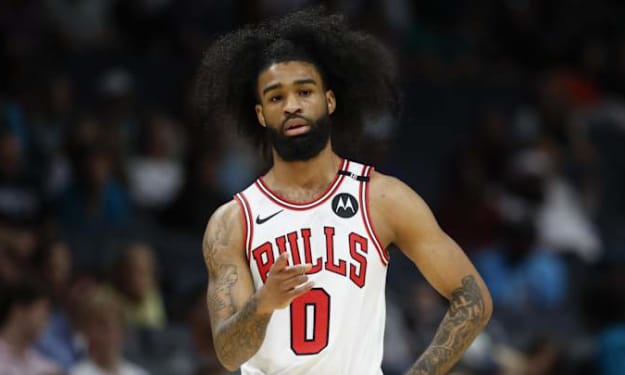
Coby White. AI-Generated.
The Chicago Bulls have spent the last few seasons searching for clarity. Between injuries, inconsistent results, and shifting expectations, the franchise has often felt caught between rebuilding and competing. In the middle of that uncertainty stands Coby White, a player whose journey with the Bulls reflects both the challenges and the promise of the team’s direction. Once viewed mainly as a spark-plug scorer, White has steadily reshaped his game, earning greater responsibility and sparking ongoing conversations about his future in Chicago. Drafted seventh overall in 2019, Coby White arrived with a reputation as a fearless shooter and fast-paced guard. Early in his career, his role fluctuated, often coming off the bench and asked to provide instant offense. While flashes of brilliance were common, consistency proved harder to find. Defensive lapses, streaky shooting, and limited playmaking raised questions about whether he could become a long-term building block for the Chicago Bulls. Over time, those questions have started to fade. White’s development has been one of the more encouraging storylines for the Bulls. He has improved his decision-making, tightened his handle, and grown into a more reliable on-ball defender. Perhaps most importantly, he has shown a willingness to adapt. Whether starting or coming off the bench, White embraced the role given to him, focusing less on raw scoring and more on efficiency and team impact. This growth has not gone unnoticed around the league. As the Bulls weigh their options, Coby White trade discussions have naturally surfaced. Trade rumors are a reality for any mid-market team hovering around playoff contention, and Chicago is no exception. Front office decisions often come down to asset value, and White’s upward trajectory has increased his appeal to other teams. One comparison often made in guard discussions is Collin Sexton. Like White, Sexton entered the league as a high-energy scorer with defensive limitations. Over time, Sexton refined his game, becoming a more balanced offensive threat. Teams looking for backcourt scoring with upside frequently mention Sexton as a reference point, and Coby White fits into a similar category. The key difference is White’s increasing comfort as a secondary playmaker, something that could raise his ceiling in the right system. Veteran guards also offer useful context. Mike Conley Jr represents the opposite end of the developmental spectrum: a steady, experienced leader who thrives on control and basketball IQ rather than raw athleticism. While White is not expected to become a Conley-type floor general overnight, studying that model highlights what long-term guard development can look like. Conley’s career shows the value of patience, something the Bulls have had to consider carefully with White. Trade speculation has also linked Chicago to teams seeking young guards, including whispers of a potential Hornets trade scenario. Charlotte, often in need of backcourt stability and scoring, could theoretically view White as a complementary piece alongside their core. On the Bulls’ side, such a deal would only make sense if it addressed larger roster needs, such as frontcourt depth or future draft assets. As with any rumor, context matters, and no single trade idea defines the market. More broadly, the idea of a Bulls trade involving Coby White reflects the franchise’s crossroads. Chicago must decide whether to double down on its current group or pivot toward a younger timeline. White’s age and contract situation make him flexible in either approach. He can be part of a retooling effort or serve as a valuable trade chip in a larger reshaping of the roster. What complicates the decision is White’s on-court chemistry and leadership growth. Teammates have praised his work ethic and willingness to accept coaching. Coaches, in turn, have trusted him in late-game situations more than in past seasons. These intangibles are difficult to measure but matter greatly when evaluating a player’s long-term fit. From a fan perspective, Coby White represents hope mixed with uncertainty. Bulls supporters have watched him endure criticism, role changes, and trade rumors, yet continue to improve. His story mirrors that of many modern NBA players: development is rarely linear, and patience can pay off. Whether he remains in Chicago or becomes part of a future deal, his impact on the Bulls’ recent seasons is undeniable. Looking ahead, the Bulls’ front office faces tough choices. If the team commits to building around its younger core, White’s continued growth could make him a centerpiece rather than a trade asset. If the organization chooses a different path, his value on the market may never be higher. Either way, Coby White has moved beyond the label of a one-dimensional scorer. In the end, Coby White’s journey is still being written. His evolution from a raw prospect to a more complete guard has given the Chicago Bulls options, something the franchise has often lacked. Trade rumors may come and go, comparisons to players like Collin Sexton or veterans like Mike Conley Jr will continue, and speculative Hornets trade ideas will circulate. What remains clear is that White has earned respect across the league—and whatever uniform he wears in the future, his development stands as a testament to growth, resilience, and opportunity in today’s NBA.
By Saboor Brohi 27 days ago in Unbalanced
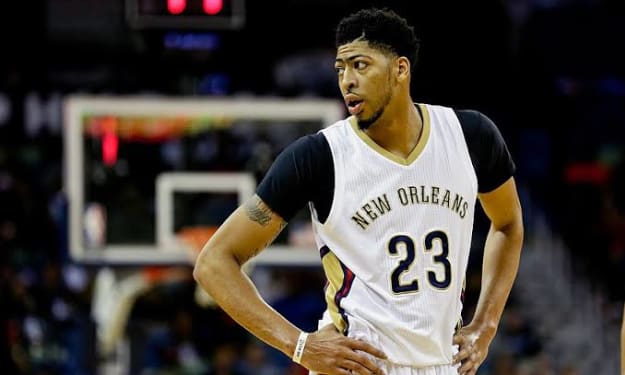
Anthony Davis. AI-Generated.
Few NBA players attract attention quite like Anthony Davis. As a dominant two-way force and a proven championship contributor, Davis remains one of the league’s most closely watched stars. Recently, renewed discussion around a potential Anthony Davis trade has stirred debate among fans and analysts alike, with teams such as the Washington Wizards and the Dallas Mavericks unexpectedly entering the rumor cycle. While no deal has been confirmed, the growing volume of speculation highlights how quickly narratives can shift in today’s NBA. Why Anthony Davis Is Always in Trade Talks Anthony Davis represents a rare blend of elite defense, interior scoring, and versatility. When healthy, he can completely alter the outcome of a game. Because of that impact, his name frequently surfaces whenever teams consider reshaping their futures. Questions like “did Anthony Davis get traded?” or “is AD traded?” tend to trend even without official developments. In a league increasingly driven by star movement, even stable situations can change rapidly. Front offices are constantly evaluating timelines, cap flexibility, and long-term upside, which keeps players of Davis’s caliber linked to major trade discussions. The Washington Wizards and a Rebuild Strategy The Washington Wizards have been quietly restructuring their roster with a long-term vision in mind. After years of inconsistent results, the organization has focused on asset accumulation and flexibility. This approach has led to speculation around a potential Wizards trade involving a high-profile star. The idea of Anthony Davis to the Wizards may seem ambitious, but it reflects Washington’s search for a clear identity. A move of that magnitude would instantly elevate the franchise’s profile while providing leadership for a developing roster. Hypothetical frameworks often include younger players such as AJ Johnson, Malaki Branham, or Marvin Bagley III, whose contracts and potential fit the rebuilding model. AJ Johnson basketball observers see him as a guard with developmental upside, while Branham offers scoring ability and Bagley brings frontcourt depth. Together, these types of assets are commonly discussed in theoretical trade packages—not as predictions, but as illustrations of how complex an Anthony Davis trade to Wizards scenario would be. Mavericks Trade Rumors and Championship Aspirations Alongside Washington, the Dallas Mavericks are another team frequently mentioned in trade speculation. The Mavericks are firmly built around Luka Dončić, and the front office has consistently explored ways to strengthen the roster around its superstar. Any major Dallas Mavericks trade discussion inevitably involves elite players who can complement Dončić’s offensive brilliance. A potential Mavs trade for Davis would be complicated but intriguing. Pairing an interior defensive anchor with one of the league’s best playmakers could transform Dallas into a more balanced contender. Players such as Jaden Hardy, Dante Exum, or veterans like Khris Middleton are sometimes referenced in speculative scenarios due to contract structure rather than expectation. Importantly, talk of an Anthony Davis to the Mavericks deal does not imply a Luka trade. On the contrary, Dallas views Dončić as untouchable, and any Mavericks trade would aim to enhance—not disrupt—the team’s core. Sorting Rumor From Reality Despite widespread discussion, reports of Anthony Davis traded remain unsubstantiated. There has been no official confirmation of an Anthony Davis trade, whether to Washington, Dallas, or elsewhere. Still, the persistence of these conversations shows how closely fans track star movement. In the modern NBA, speculation often begins with strategic curiosity rather than concrete negotiation. Teams routinely explore scenarios internally, which can quickly leak into public discourse. That dynamic fuels headlines asking “did Anthony Davis get traded?” even when no transaction has occurred. The Role of Young Talent in Major Deals One reason these rumors gain traction is the league’s emphasis on youth and flexibility. Players like Malaki Branham, AJ Johnson, and Jaden Hardy are viewed as developmental pieces who can help balance immediate competitiveness with future growth. Meanwhile, experienced role players such as Marvin Bagley III and Dante Exum provide rotational stability. These combinations often form the backbone of large-scale trades. Whether it’s a Wizards trade or a Dallas Mavericks trade, franchises must align talent, contracts, and draft assets to make blockbuster moves feasible. What an Anthony Davis Trade Would Mean If an Anthony Davis trade to Wizards were ever finalized, it would signal a bold shift in Washington’s direction. The team would gain an elite defender and proven leader, potentially accelerating its rebuild. A move involving the Mavericks would reshape Western Conference dynamics by strengthening Dallas’s defensive identity. Even without a deal, the possibility of Anthony Davis to the Wizards or another franchise forces teams to reassess their competitive positions. That alone demonstrates Davis’s continued influence across the league. Final Perspective For now, Anthony Davis remains one of the NBA’s most discussed stars, not because of confirmed movement, but because of his undeniable impact. Whether it’s speculation about AD traded, a potential Mavericks trade, or the ambitious idea of Anthony Davis to the Wizards, these conversations reflect a league defined by constant evaluation and change. Until an official announcement is made, these discussions remain hypothetical. Still, they underscore a familiar truth in professional basketball: when elite talent is involved, the entire league pays attention.
By Saboor Brohi 27 days ago in Unbalanced
John Jay Enters Passing Lanes in 71-62 Win
Scroll down for photos On Friday January 9, John Jay welcomed Hen Hud to the high school for some Friday night basketball and kicked off the festivities by taking an early 8-3. But the scoreboard wasn’t as telling as the style of play.
By Rich Monetti27 days ago in Unbalanced
When Recovery Becomes a Violation
When Paul George was asked how he managed to recover from one of the most devastating injuries an NBA player can suffer, his answer was refreshingly honest. Speaking about the long road back and offering advice to teammates dealing with similar physical wear and tear — including Joel Embiid — George said plainly that “drugs helped me” during his recovery.
By Logan M. Snyder29 days ago in Unbalanced
Australia’s Youngest Winter Olympian Indra Brown: ‘I Just Love the Feeling of Flying’. AI-Generated.
When Indra Brown launched off the icy ramp at her first Olympic training run, she felt something few teenagers ever experience: the sensation of defying gravity on the world’s biggest sporting stage. At just 15 years old, Brown became Australia’s youngest-ever Winter Olympian, a milestone that reflects not only extraordinary talent but also an uncommon maturity and dedication. “I just love the feeling of flying,” Brown said in a recent interview. “When you’re in the air, everything else disappears. It’s just you and the moment.” Brown competes in freestyle skiing, a discipline that demands fearless precision, explosive strength, and technical finesse. Her journey from a curious child on the slopes to an Olympic athlete has been shaped by early passion, family support, and relentless training in a sport still growing in Australia. From Local Slopes to Global Stage Born and raised in Victoria, Brown was introduced to skiing almost as soon as she could walk. Family holidays to alpine regions sparked her interest, but it wasn’t long before casual skiing turned into structured training. By the age of nine, she was already competing in junior freestyle events, showing a natural aptitude for aerial tricks and jumps. Coaches quickly noticed her balance and spatial awareness. “She had an instinct for movement in the air,” said one of her early trainers. “That’s something you can’t really teach.” Australia is not traditionally known for producing Winter Olympic athletes at scale, but recent investment in snow sports programs has helped young talents like Brown access elite coaching and facilities. Much of her development took place overseas, particularly in North America and Europe, where she trained alongside more experienced competitors. “It was intimidating at first,” Brown admitted. “Everyone was older and stronger. But I learned so much just by watching and trying to keep up.” Balancing School and Sport Behind the glamour of Olympic competition lies a demanding daily routine. Brown balances schoolwork with hours of physical conditioning, technical drills, and travel. Her education has shifted to a flexible learning program to accommodate training camps and international competitions. “There are days when I train in the morning and study on planes or in hotel rooms,” she said. “It’s not easy, but I really enjoy learning and I don’t want to give that up.” Her parents have played a critical role in helping her manage pressure and expectations. They insist on maintaining structure and normalcy, ensuring she remains connected to friends and family despite her growing public profile. “She’s still a teenager,” her mother said. “We want her to enjoy this experience, not feel like everything depends on results.” The Mental Challenge of Flight Freestyle skiing is as much a mental test as a physical one. Athletes launch themselves into the air at high speed, performing spins and flips that leave little margin for error. For a 15-year-old, managing fear is part of the learning process. Brown admits she still feels nervous before big jumps. “If you’re not scared at all, something’s wrong,” she laughed. “But I trust my training. Once I’m in the air, it feels natural.” Sports psychologists working with young Olympians emphasize the importance of emotional resilience. They focus on visualization techniques, breathing exercises, and routines that help athletes stay grounded amid intense competition. “Indra has shown remarkable composure,” said a team official. “She listens, adapts, and learns quickly. That’s rare at her age.” Representing a New Generation Brown’s Olympic appearance has already made her a role model for young athletes across Australia. Social media has amplified her story, inspiring children who might not have considered winter sports a realistic path. “I get messages from kids saying they want to ski like me,” Brown said. “That’s really cool. I hope they just have fun with it first.” She is careful not to frame her success as the end goal but as part of a longer journey. Her immediate focus is improving technique and gaining experience rather than chasing medals. “I’m here to learn,” she said. “If I do my best run, I’m happy.” Looking Ahead While the Olympics mark a historic moment in her career, Brown sees them as the beginning rather than the peak. Her long-term ambitions include competing in multiple Olympic cycles and helping raise the profile of freestyle skiing in Australia. “I want to keep pushing myself and see what I can do,” she said. “There’s so much more to learn.” Coaches caution against rushing development. Physical growth, injury prevention, and emotional well-being remain priorities. “We want her to have a long career,” said her head coach. “Not burn out too early.” More Than Medals What sets Brown apart is not just her age or her technical ability, but her joy in the sport. She speaks about skiing with enthusiasm rather than pressure, framing competition as an opportunity rather than a burden. “When I jump, it feels like freedom,” she said. “That’s why I love it.” In a sporting world often defined by results and rankings, Indra Brown’s story stands out as one of curiosity, courage, and youthful wonder. As Australia’s youngest Winter Olympian, she represents both the future of her sport and the timeless thrill of pushing boundaries. Whether she finishes on the podium or not, her message is simple and powerful: sometimes success is not about winning, but about daring to fly.
By Fiaz Ahmed 30 days ago in Unbalanced
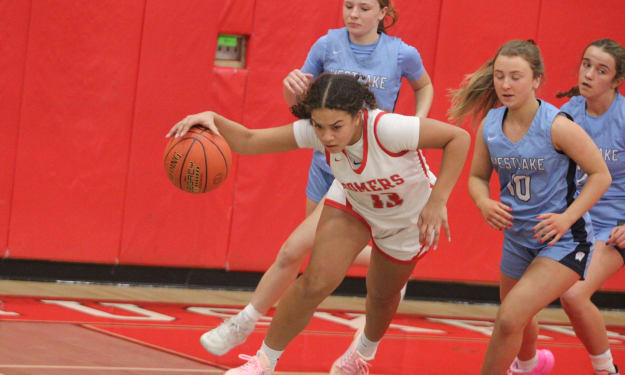
Somers Presses on the Gas in 46-35 Victory over Pleasantville
See Photos at end of article. (At home vs Pleasantville now included) On Wednesday December 10, Somers got on the bus and traveled south to Pleasantville. Arriving, the elephants maintained their stomp and never let up on the gas.
By Rich Monettiabout a month ago in Unbalanced
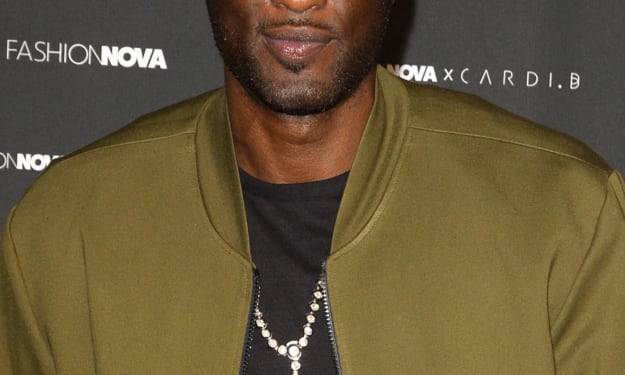
Lamar Odom DUI Arrest Article – Complete
Sober driving is the only rational way to drive on the roadways. NBA two-time champion Lamar Odom was picked up for driving under the influence, violating lane changing protocol, and for not maintaining his vehicle in his own lane.
By Skyler Saundersabout a month ago in Unbalanced