Fiaz Ahmed
Bio
I am Fiaz Ahmed. I am a passionate writer. I love covering trending topics and breaking news. With a sharp eye for what’s happening around the world, and crafts timely and engaging stories that keep readers informed and updated.
Stories (1323)
Filter by community
Three in Four Women Unaware Menopause Can Trigger New Mental Illness, Poll Finds. AI-Generated.
A new poll has revealed a striking gap in public understanding of menopause and mental health, with nearly three in four women unaware that the hormonal transition can trigger the onset of new mental illnesses. The findings highlight a growing concern among health experts that psychological symptoms linked to menopause are being underestimated, misdiagnosed, or ignored altogether. Menopause is commonly associated with physical symptoms such as hot flashes, night sweats, and sleep disruption. However, medical professionals stress that the hormonal changes occurring during perimenopause and menopause can also have a profound impact on the brain. Fluctuating estrogen levels influence neurotransmitters like serotonin and dopamine, which regulate mood and emotional stability. For some women, this can result in anxiety, depression, panic disorders, or even more severe psychiatric conditions emerging for the first time in midlife. According to the poll, a majority of respondents believed menopause only worsens existing mental health issues rather than creating new ones. This misconception is worrying, experts say, because it delays diagnosis and treatment. Women experiencing sudden mood swings, intrusive thoughts, or prolonged low mood may not associate these symptoms with menopause and instead blame stress, work pressure, or family responsibilities. Mental health specialists report an increase in middle-aged women seeking help for symptoms that began during perimenopause. Many describe feeling unlike themselves for the first time in their lives, experiencing unexplained anxiety, emotional numbness, or depressive episodes. In some cases, women who had never previously struggled with mental illness suddenly find themselves needing therapy or medication. The stigma surrounding both menopause and mental illness adds another layer of difficulty. Many women hesitate to discuss emotional changes openly, fearing they will be dismissed as “overreacting” or told it is simply part of aging. As a result, they may suffer in silence for months or even years before seeking professional support. Healthcare providers also face challenges. General practitioners are often trained to focus on physical menopausal symptoms, while mental health symptoms may be treated separately without considering hormonal causes. This fragmented approach can lead to misdiagnosis. A woman might be prescribed antidepressants without being offered hormone therapy, or vice versa, even though a combined treatment plan could be more effective. Campaigners argue that menopause education needs urgent reform. Schools, workplaces, and healthcare systems should treat menopause as both a physical and psychological transition. Employers are also being encouraged to recognize menopause-related mental health struggles, especially as more women remain in the workforce into their 50s and 60s. Reduced concentration, fatigue, and emotional distress can significantly affect job performance if left unsupported. The poll also revealed generational differences in awareness. Younger women were slightly more informed about menopause and mental health than older respondents, suggesting that social media and online health campaigns are beginning to shift perceptions. However, experts warn that online information can be inconsistent and sometimes misleading, reinforcing the need for reliable public health guidance. Treatment options are available, and outcomes can be positive when menopause-related mental illness is identified early. Hormone replacement therapy (HRT), talking therapies, lifestyle changes, and in some cases medication can work together to stabilize mood and improve quality of life. Regular exercise, better sleep habits, and stress management are also known to ease symptoms. Ultimately, specialists say the findings should serve as a wake-up call. Menopause is not just a physical milestone but a complex biological transition that can reshape mental wellbeing. Recognizing this reality could prevent unnecessary suffering and help women access the care they need sooner. As awareness grows, advocates hope conversations around menopause will become more open and medically informed. Understanding that new mental health conditions can emerge during this stage of life is a crucial step toward removing stigma and ensuring that women are supported through every aspect of this significant change.
By Fiaz Ahmed a day ago in Longevity
Admission of Weakness by the World’s Most Powerful Navy? The U.S. Navy Scales Back Ambitions for Its Future Amphibious Armada. AI-Generated.
The United States Navy has long been regarded as the most powerful maritime force in history, projecting strength across every ocean and maintaining a global presence unmatched by any rival. Yet recent decisions to scale back plans for its future amphibious fleet have sparked debate among defense analysts: is this a pragmatic adjustment to new realities, or an admission that even the world’s strongest navy is facing limits to its ambitions? For years, the U.S. Navy and Marine Corps envisioned a large and modern amphibious armada capable of deploying Marines rapidly across contested regions. These ships—designed to transport troops, vehicles, and aircraft—are essential for operations ranging from humanitarian relief to high-intensity conflict. However, rising costs, shipyard delays, and shifting strategic priorities have forced planners to reconsider how many such vessels the fleet truly needs and what role they should play in future wars. At the heart of the shift is a changing view of warfare. Traditional amphibious assaults, once a central pillar of U.S. military doctrine, are increasingly seen as risky in an era dominated by long-range missiles, drones, and advanced surveillance systems. Potential adversaries can now detect and target large ships far from shore, making massive beach landings far more dangerous than in past conflicts. As a result, military leaders are exploring smaller, more agile platforms that can disperse forces rather than concentrate them in vulnerable formations. Budget pressures have also played a major role. Building and maintaining large amphibious ships is enormously expensive. Each vessel can cost billions of dollars and requires a skilled workforce and long construction timelines. With competing demands from submarine programs, aircraft carriers, and next-generation destroyers, the Navy has had to make difficult choices. Reducing the size of the amphibious fleet allows resources to be redirected toward technologies viewed as more relevant to future conflicts, such as cyber warfare, unmanned systems, and missile defense. The Marine Corps has been particularly affected by the new strategy. Traditionally dependent on amphibious ships for rapid deployment, the Marines are now restructuring around a concept known as “distributed operations.” This approach emphasizes smaller units operating across wide areas, supported by lighter and more flexible naval platforms. While proponents argue this makes forces harder to target and more adaptable, critics worry it could weaken the Marines’ ability to respond to large-scale crises. Supporters of the Navy’s decision say the shift reflects realism rather than weakness. They argue that modern threats demand innovation, not adherence to Cold War-era fleet structures. By investing in fewer but more technologically advanced ships—and pairing them with unmanned vessels and long-range strike capabilities—the Navy aims to maintain dominance without relying on vulnerable, high-profile assets. Still, concerns remain. Amphibious ships play a crucial role not only in war but also in diplomacy and disaster response. They provide visible reassurance to allies and serve as floating bases for humanitarian missions after earthquakes, hurricanes, and tsunamis. Scaling back their numbers could limit America’s ability to respond quickly to crises in distant regions, potentially reducing its global influence. International observers are watching closely. Rivals may interpret the move as a sign that the U.S. is overstretched, while allies could worry about reduced support in times of need. At the same time, some see the changes as part of a broader evolution toward a leaner, more technologically sophisticated navy better suited to 21st-century challenges. Whether this represents an “admission of weakness” depends largely on perspective. The U.S. Navy is not abandoning amphibious warfare altogether; it is redefining it. The goal is to balance traditional power projection with survivability and cost-effectiveness in a world of rapidly advancing military technology. What is clear is that even the world’s most powerful navy must adapt. The decision to scale back its amphibious ambitions reflects a recognition that future conflicts will not look like those of the past. In this sense, the shift may be less about retreat and more about transformation—an effort to ensure that American sea power remains credible in an increasingly complex and contested global environment.
By Fiaz Ahmed a day ago in The Swamp
British Military Base in Cyprus Targeted in Suspected Drone Attack. AI-Generated.
A British military base in Cyprus has been targeted in what authorities believe was a suspected drone attack, raising serious concerns about regional security and the vulnerability of strategic installations in the eastern Mediterranean. The incident marks a rare but alarming development involving one of the United Kingdom’s most important overseas military facilities. The base, located within the British Sovereign Base Areas on the island, reportedly detected an unidentified aerial object approaching its perimeter before defensive measures were activated. While no casualties were reported and damage appears to have been limited, the event has triggered an immediate security review and heightened alert levels across British forces stationed in the region. British officials have not publicly confirmed the origin of the drone or whether it was armed, but defense sources described the incident as a “serious security breach attempt.” Investigations are underway to determine who launched the device and whether it was part of a coordinated action linked to broader regional tensions. The eastern Mediterranean has recently seen increased military activity due to instability in the Middle East, making the incident particularly sensitive. The British bases in Cyprus play a vital role in intelligence gathering, air operations, and regional surveillance. They support missions related to counterterrorism, humanitarian relief, and the protection of shipping routes. Because of their proximity to conflict zones in the Middle East, these installations are considered strategically invaluable for the United Kingdom and its allies. Local authorities in Cyprus confirmed that airspace around the area was temporarily restricted following the incident. Residents in nearby communities reported hearing unusual sounds and seeing military helicopters patrolling the skies shortly afterward. While the Cypriot government emphasized that there was no immediate threat to civilians, it acknowledged that the attempted attack highlighted the growing risks posed by drone technology. Security analysts say the suspected drone attack reflects a broader trend in modern warfare. Unmanned aerial systems have become cheaper, more accessible, and increasingly capable of bypassing traditional defenses. Even heavily fortified military installations can be challenged by small, fast-moving drones that are difficult to detect with conventional radar systems. “This is a reminder that the nature of threats has changed,” one defense expert noted. “It no longer takes a missile or aircraft to test a base’s security. A small drone can cause disruption, gather intelligence, or deliver explosives with relatively low cost and high impact.” The timing of the incident has also drawn attention. It comes amid heightened tensions in the Middle East and increased Western military involvement in regional security operations. British forces have been active in monitoring airspace, supporting allies, and ensuring the protection of international shipping routes. Any attempt to target a UK base could be interpreted as a warning signal or an effort to probe defenses. Officials stressed that contingency plans worked as intended and that personnel followed established protocols. The base remains operational, and there has been no disruption to ongoing missions. However, the Ministry of Defence is expected to introduce additional counter-drone measures, including enhanced surveillance systems and electronic jamming equipment. Diplomatic channels are also being engaged. The UK government is reportedly coordinating with Cypriot authorities and allied intelligence services to assess whether the incident was linked to state actors, militant groups, or rogue operators. If evidence points to an organized attack, it could carry serious political consequences and further strain already fragile regional stability. For Cyprus, the event underscores its delicate position as a host to foreign military bases in a volatile neighborhood. While the island has long served as a hub for international security operations, it also faces the risk of becoming entangled in conflicts beyond its borders. As investigations continue, the suspected drone attack serves as a stark illustration of how modern threats are evolving. The episode has reinforced the need for advanced defense systems and close international cooperation to protect critical military infrastructure. In an era when drones can cross borders silently and strike with precision, even long-established bases are no longer immune. The incident in Cyprus is likely to prompt renewed debate over military preparedness, regional security, and the growing challenge posed by unmanned aerial warfare.
By Fiaz Ahmed a day ago in The Swamp
Kuwait Shoots Down U.S. Jets in Friendly-Fire Incident, U.S. Central Command Says. AI-Generated.
The chief executive of Rolls-Royce has signaled openness to Germany joining the United Kingdom’s next-generation fighter jet program, a move that could reshape Europe’s defense industrial landscape and strengthen transatlantic collaboration. The comments come amid ongoing discussions about the Tempest program, the UK-led initiative to develop a stealth-capable, sixth-generation combat aircraft intended to replace the Eurofighter Typhoon in the 2030s. Rolls-Royce, responsible for designing and producing the jet’s engines, plays a critical role in the program’s development. The CEO emphasized that greater European participation could bring technical expertise, shared financial responsibility, and stronger interoperability between allied air forces. “We are always open to collaboration with our European partners,” he said, noting that the Tempest program could benefit from additional industrial and technological contributions. Germany, a leading European military power and a key Eurofighter Typhoon partner, has previously focused on its own fighter modernization initiatives. However, rising costs, technological complexity, and the evolving geopolitical environment have sparked renewed interest in multinational cooperation. Defense analysts suggest that Germany’s participation could also help ensure that the Tempest program achieves full-scale production more efficiently while reinforcing Europe’s independent aerospace capabilities. The UK government has made clear that the Tempest program remains a strategic priority. The project is part of the broader Future Combat Air System (FCAS) concept, which envisions a networked approach to air dominance, integrating manned aircraft, unmanned systems, and advanced sensors. Rolls-Royce is responsible not only for propulsion but also for working on adaptive engine technologies that will improve performance, reduce emissions, and enable the aircraft to operate in highly contested environments. Joining the program would allow Germany to leverage Rolls-Royce’s expertise and contribute its own advanced aerospace capabilities, including avionics, stealth technology, and systems integration. Proponents argue that pooling resources across European nations can reduce duplication, accelerate development timelines, and mitigate the financial burden associated with cutting-edge military aviation projects. However, multinational collaboration is not without challenges. Differences in procurement policies, budget cycles, and defense priorities have complicated previous European defense projects. Industrial and political negotiations will be needed to ensure equitable participation and protect national interests. Some observers caution that integrating German firms into the Tempest program may require complex agreements on intellectual property, workshare, and export controls. Despite these hurdles, the strategic rationale is compelling. Europe faces a rapidly evolving security landscape, with renewed military assertiveness from Russia and rising global tensions. A collaborative approach to developing next-generation fighter jets could enhance NATO’s overall air combat capabilities while demonstrating that European nations can maintain technological independence from non-European suppliers. Rolls-Royce’s CEO also highlighted the benefits of collaboration for the domestic aerospace sector. By expanding the pool of partners, the program could create more opportunities for UK suppliers and engineers while fostering international knowledge exchange. This could bolster the UK’s position as a leader in advanced aerospace technologies, ensuring that British industry remains competitive in the global defense market. Defense officials in both the UK and Germany have yet to comment officially on potential collaboration, but the announcement from Rolls-Royce underscores the growing interest in multinational approaches to complex defense projects. Analysts expect that discussions between governments and defense contractors will intensify in the coming months, particularly as timelines for the first prototypes accelerate. In conclusion, Rolls-Royce’s openness to German involvement signals a potentially transformative moment for European defense cooperation. By combining technological expertise, financial resources, and industrial capacity, a UK-Germany partnership on the Tempest program could set a new standard for next-generation fighter development. While challenges remain, the move reflects a broader recognition that multinational collaboration may be the most viable path to maintaining Europe’s strategic and technological edge in aerial warfare.
By Fiaz Ahmed a day ago in The Swamp
Mark Carney meets Narendra Modi in historic trip to reset ties with India. AI-Generated.
In a significant move aimed at strengthening economic and financial relations, former Bank of England governor Mark Carney recently met with Indian Prime Minister Narendra Modi in New Delhi. The meeting, described by officials as historic, comes amid efforts to deepen cooperation between India and the international financial community, promote sustainable investment, and explore opportunities for economic collaboration on a global scale.
By Fiaz Ahmed a day ago in The Swamp
I used to report from the West Bank. Twenty years after my last visit, I was shocked by how much worse it is today – podcast. AI-Generated.
Two decades ago, I walked the streets of the West Bank as a young journalist, trying to make sense of a conflict that has long defied easy solutions. At that time, I witnessed checkpoints, tensions, and uncertainty, but there was also a sense that dialogue, however fragile, was still possible. Returning twenty years later for a recent visit, I found a landscape and a reality that was far more severe, starkly illustrating how the conflict has deepened over time. The first thing that struck me was the sheer scale of militarization. Israeli checkpoints, once sporadic, now dominate much of the West Bank’s main thoroughfares. Soldiers in armored vehicles and heavily fortified positions are a constant presence. Roads are divided, access restricted, and Palestinian towns and villages are encircled by fences and barriers. What had been a tense but navigable environment in the early 2000s now feels like a territory under occupation in full lockdown. Settlement expansion is another transformation impossible to ignore. Over the past twenty years, Israeli settlements have grown both in number and size, cutting through the Palestinian landscape. Once-contiguous Palestinian communities are now separated by walls, roads reserved for settlers, and security zones, fragmenting society and severely limiting freedom of movement. Farmers I spoke to lamented that land they had cultivated for generations is now inaccessible, reducing both livelihood and morale. The human dimension of these changes is heartbreaking. Palestinians I met spoke of frustration, fear, and despair, and many feel trapped in a system that restricts education, healthcare, and economic opportunity. Youth, in particular, face a future clouded by uncertainty. I heard accounts of families struggling just to move between cities, access hospitals, or attend school. Even basic daily life is complicated by bureaucracy, permit requirements, and the constant threat of military intervention. Violence remains a pervasive and destructive element. I encountered neighborhoods where buildings bore scars from clashes, shootings, or tear gas. Communities are haunted by the memory of lost loved ones, and the cycle of retaliation and suppression continues. Two decades ago, there was still a cautious optimism in some quarters that negotiations and international intervention might stabilize the region. Today, that optimism seems increasingly elusive. One of the most profound changes is the psychological toll. Twenty years ago, I saw resilience, hope, and determination. Now, I saw fatigue, cynicism, and resignation among people who have lived under repeated waves of restriction and conflict. Children have grown up knowing little else than checkpoints and military presence. The pervasive sense of entrapment and lack of agency is palpable, and it is reshaping society in ways that will have long-term consequences. Technology and media have amplified awareness of the situation. Social media now allows Palestinians to document daily hardships, human rights violations, and violent incidents in real time. International attention has increased, yet meaningful political change remains limited. Global actors often respond with statements rather than substantive action, leaving the local population to endure the day-to-day hardships largely on their own. As a journalist, returning to the West Bank has been both sobering and deeply instructive. It reminded me of the human cost behind the headlines, the slow erosion of rights, and the impact of entrenched political structures on ordinary lives. The contrast between my experiences twenty years ago and today illustrates that, despite international diplomacy and countless initiatives, the reality on the ground has worsened. This visit reinforced a vital truth: understanding the West Bank is not merely about politics or borders—it is about people, communities, and their lived experiences under persistent conflict. For anyone interested in the future of the region, it is crucial to recognize that without tangible changes in policy, protection of human rights, and genuine engagement, the West Bank will continue to face escalating hardship. The urgency to act has never been greater.
By Fiaz Ahmed a day ago in The Swamp
Is Indonesia the Next Rising Power in the Indo-Pacific?. AI-Generated.
As competition intensifies across the Indo-Pacific, attention is increasingly turning to one country that has long preferred quiet diplomacy over loud power politics: Indonesia. With the world’s fourth-largest population, a rapidly growing economy, and a strategic position astride vital sea lanes, Indonesia is emerging as a potential pivotal power in a region shaped by rivalry between the United States and China. Indonesia’s geographic advantage is impossible to ignore. Stretching across more than 17,000 islands, it sits between the Indian and Pacific Oceans and controls access to some of the busiest maritime chokepoints in the world, including the Malacca, Sunda, and Lombok straits. These waterways carry a large share of global trade and energy shipments, giving Jakarta quiet leverage over the movement of goods between Asia, the Middle East, and Europe. In an era when supply chains and shipping security have become geopolitical priorities, Indonesia’s location alone elevates its strategic importance. Economically, Indonesia is gaining momentum. It is now Southeast Asia’s largest economy and has shown resilience despite global slowdowns. Driven by manufacturing, digital services, and resource exports such as nickel and copper, the country is positioning itself as a hub for electric vehicle supply chains and green technology. Government policies aimed at downstream processing of raw materials have begun to attract foreign investment and reduce dependence on exporting unprocessed commodities. Analysts increasingly view Indonesia as one of the few emerging markets with the scale and stability to influence regional economic trends. Politically, Indonesia has cultivated an image as a neutral and pragmatic actor. It is a founding member of ASEAN and has long promoted regional unity and non-alignment. Rather than choosing sides between Washington and Beijing, Jakarta has sought to maintain balanced relations with both. This “free and active” foreign policy allows Indonesia to act as a bridge-builder in a fragmented region. It has hosted major diplomatic forums and has been vocal in calling for dialogue in disputes ranging from the South China Sea to conflicts in Myanmar. Military modernization is another sign of Indonesia’s growing ambitions. While it does not seek to match the major powers in firepower, it is steadily upgrading its navy and air force to better patrol its vast maritime territory. Recent investments in submarines, fighter jets, and coastal defense systems signal a desire to protect sovereignty and deter encroachment. The focus is less on projecting power abroad and more on ensuring that Indonesia can defend its waters and contribute meaningfully to regional security cooperation. Yet challenges remain. Indonesia still faces internal development gaps between urban centers and rural provinces. Infrastructure, education, and healthcare require sustained investment to support long-term growth. Corruption and bureaucratic inefficiency continue to test governance reforms. Moreover, managing relations with both China and the United States will demand diplomatic skill, especially as great-power rivalry deepens and pressure mounts for smaller states to align more clearly. Climate change is another factor shaping Indonesia’s future role. As one of the world’s most climate-vulnerable nations, it must confront rising sea levels and extreme weather while transitioning toward cleaner energy. Success in this area could enhance its reputation as a responsible regional leader, while failure could strain economic and social stability. So, is Indonesia the next rising power in the Indo-Pacific? The answer depends on how power is defined. It is unlikely to become a military superpower like the United States or China. However, as a demographic giant, economic engine, and diplomatic broker, Indonesia is well positioned to become a central stabilizing force in the region. Its influence will come not from dominance but from connectivity—linking markets, mediating disputes, and shaping norms through ASEAN and other multilateral platforms. In a region often described as a chessboard for larger players, Indonesia is quietly becoming one of the most important pieces. If it can sustain growth, strengthen institutions, and preserve its balanced foreign policy, it may well emerge as the Indo-Pacific’s most influential middle power—one whose voice carries weight precisely because it avoids confrontation and champions cooperation
By Fiaz Ahmed a day ago in The Swamp
Shane Lowry’s two-hole tailspin gives Nico Echavarria the Cognizant Classic win". AI-Generated.
Shane Lowry’s collapse over the final two holes handed victory to Nico Echavarria in a dramatic finish at the Cognizant Classic, turning what seemed like a routine closing stretch into one of the most talked-about moments of the PGA Tour season. Lowry, the 2019 Open Championship winner, had controlled much of the final round and appeared poised to secure another PGA Tour title. Playing with confidence and precision throughout the day, the Irishman built a narrow but steady lead as he approached the closing holes. His ball-striking had been reliable, and his putting solid enough to keep challengers at arm’s length. But golf’s unforgiving nature was on full display when pressure peaked at exactly the wrong moment. Everything changed on the par-3 17th hole. Lowry’s tee shot drifted just off line, leaving him with a delicate recovery from thick rough. His chip failed to stop close to the pin, and he missed the par-saving putt. The resulting bogey immediately tightened the leaderboard and brought Nico Echavarria firmly back into contention. Lowry still held a share of the lead heading to the final hole, but momentum had shifted. The par-4 18th delivered a crushing blow. Lowry found trouble off the tee, forcing him into a defensive approach shot that left a long and awkward putt for par. Under intense pressure, he could not convert. Another bogey dropped him behind Echavarria, who had calmly completed his round with a steady par finish. In the space of two holes, Lowry went from likely champion to runner-up, a stark reminder of how quickly fortunes can change in professional golf. For Echavarria, the victory was a defining career moment. The Colombian golfer showed remarkable composure in the closing stretch, especially after watching Lowry stumble. Rather than forcing aggressive shots, Echavarria relied on smart course management and consistent putting. His performance over the final few holes highlighted maturity beyond his years and underlined why he is considered one of the PGA Tour’s rising talents. “This win means everything,” Echavarria said after lifting the trophy. “I stayed patient, trusted my game, and waited for the opportunity. Golf is unpredictable, and today it went my way.” The Cognizant Classic has built a reputation for dramatic finishes, and this year’s tournament added another chapter to that history. Played under warm Florida conditions with swirling winds in the afternoon, the course demanded accuracy and mental strength. Several contenders struggled as pin positions became more difficult late in the round, but none felt the pressure more acutely than Lowry. Despite the painful ending, Lowry’s overall performance was far from a failure. He ranked among the leaders in greens in regulation and showed the consistency that has defined his career. However, his closing collapse will linger as a lesson in the fine margins that separate victory from disappointment. Golf analysts noted that Lowry’s conservative choices on the final holes may have contributed to his downfall, allowing tension to creep into his swing and decision-making. Fans reacted with a mixture of sympathy and shock. Social media quickly filled with clips of the final two holes, with many praising Echavarria’s calm demeanor while lamenting Lowry’s misfortune. Fellow players also expressed respect for both competitors, acknowledging the mental toughness required to seize such an unexpected opportunity. The win provides Echavarria with valuable FedEx Cup points and further secures his status on the PGA Tour. More importantly, it gives him confidence heading into the heart of the season, where he will now be viewed as a genuine contender rather than an outsider. For Lowry, the focus will turn to recovery and reflection. Champions are defined not just by victories but by how they respond to setbacks. With major tournaments still ahead, the Irishman will aim to convert this disappointment into motivation. In the end, the Cognizant Classic delivered a finish that captured the essence of professional golf: pressure, unpredictability, and the thin line between triumph and heartbreak. On a day when Shane Lowry faltered at the last hurdle, Nico Echavarria stepped forward and claimed a victory that may shape the trajectory of his career.
By Fiaz Ahmed a day ago in Unbalanced
UK mounts operation to support thousands of Britons in Middle East. AI-Generated.
The United Kingdom has launched a major contingency operation to support and protect thousands of British nationals living and working across the Middle East as regional tensions continue to rise. The move reflects growing concern in London that the security situation could deteriorate rapidly, placing civilians at risk and disrupting travel and communications links. Government officials confirmed that the operation is designed to provide emergency assistance, consular support, and potential evacuation options should conditions worsen. The initiative is being coordinated by the Foreign Office in partnership with the Ministry of Defence and regional allies. It includes deploying additional diplomatic staff, strengthening crisis-response teams, and placing military assets on standby to assist with humanitarian and logistical needs. Thousands of Britons currently reside in countries across the Gulf and wider region, many working in sectors such as energy, construction, aviation, education, and healthcare. Others are tourists or short-term visitors. Officials say the primary objective of the operation is to ensure that British citizens have access to accurate information, safe transport routes, and emergency help if required. The government has issued updated travel guidance urging British nationals to remain vigilant, register their presence with embassies, and follow local security instructions. Emergency hotlines have been expanded, and consular services are operating around the clock to handle inquiries from families concerned about loved ones abroad. Diplomatic missions have also been instructed to review shelter arrangements and evacuation plans in coordination with host governments. Military preparedness forms a key part of the operation. The Royal Air Force has reportedly positioned aircraft within reach of the region to support possible evacuation flights if civilian air travel becomes unsafe or restricted. Naval assets in nearby waters are also on heightened alert, ready to assist with transport or humanitarian relief if necessary. Officials stressed that these measures are precautionary and do not signal immediate plans for mass evacuations. Analysts note that the UK’s action mirrors similar steps taken by other Western governments concerned about the safety of their nationals. Recent weeks have seen airspace closures, shipping disruptions, and heightened military activity in parts of the Middle East, creating uncertainty for both residents and travelers. The UK’s decision to mount a coordinated operation highlights the seriousness with which it views the evolving security environment. For many British citizens in the region, the announcement has brought a mixture of reassurance and anxiety. Some welcomed the clear sign of government support, while others expressed concern that the situation may be more dangerous than previously understood. Business leaders operating in the region said they were closely monitoring developments and reviewing contingency plans for staff and operations. The Foreign Office emphasized that the operation is not solely about evacuation but also about maintaining essential services and communication. Embassies are working to ensure that Britons can access medical care, legal assistance, and emergency shelter if needed. The government has also urged employers of British nationals to review their own emergency procedures and cooperate with official guidance. Political leaders in London have called for calm and diplomacy, stressing that the UK remains committed to de-escalation and regional stability. At the same time, they have defended the operation as a responsible step to protect citizens abroad. “Our first duty is to the safety of British people,” a senior official said, adding that preparation is essential in times of uncertainty. Security experts warn that even limited regional clashes can have broad consequences for civilians, especially in countries that host large expatriate populations. Air travel disruptions, shortages of essential goods, and sudden security restrictions can quickly complicate daily life. By establishing a structured support operation, the UK hopes to avoid the confusion seen in past crises and ensure a faster, more coordinated response if conditions worsen. In conclusion, the UK’s move to mount an operation supporting thousands of Britons in the Middle East underscores the gravity of the current regional climate. While no immediate evacuation has been ordered, the government’s actions signal readiness to act if required. For British nationals in the region, the operation provides a measure of reassurance that assistance and protection plans are in place during an increasingly uncertain period.
By Fiaz Ahmed 2 days ago in The Swamp
Three Ships Attacked in Strait of Hormuz. AI-Generated.
Tensions in the Middle East escalated sharply after three commercial vessels were reportedly attacked in the Strait of Hormuz, one of the world’s most critical maritime chokepoints. The incidents, which occurred within a short span of time, have reignited global concerns over the safety of international shipping routes and the potential for wider regional conflict. Authorities confirmed that the ships suffered damage but that their crews were safely evacuated without fatalities. The Strait of Hormuz is a narrow waterway connecting the Persian Gulf to the Arabian Sea and is responsible for transporting nearly one-fifth of the world’s oil supply. Any disruption in this corridor has immediate implications for global energy markets and international trade. The attacks come amid heightened political and military tensions involving regional powers and Western allies, raising fears that maritime security in the area could further deteriorate. According to preliminary reports from maritime security agencies, the vessels were struck by explosive devices or drones while navigating international waters. Emergency response teams were dispatched to assist the ships, and nearby naval patrols increased surveillance following the incidents. While responsibility for the attacks has not been officially claimed, investigations are ongoing, and intelligence officials are examining possible links to ongoing regional conflicts. One of the vessels was reportedly carrying petroleum products, while the other two were transporting general cargo. The ships were registered under different flags, indicating that the attacks were not directed at a single nation but rather posed a threat to international commerce as a whole. Shipping companies operating in the Gulf region have since raised their security alert levels and begun rerouting some vessels to avoid high-risk zones. Regional governments expressed deep concern over the incidents. Officials in United Arab Emirates and Saudi Arabia called for restraint and urged all parties to respect international maritime law. Western governments, including the United States and several European nations, also condemned the attacks and emphasized the importance of maintaining freedom of navigation in the Strait of Hormuz. The attacks have already had an impact on global markets. Oil prices rose sharply in early trading following news of the incidents, reflecting investor anxiety over potential supply disruptions. Analysts warn that continued instability in the strait could lead to prolonged price volatility, which would affect not only fuel costs but also inflation and economic growth worldwide. Maritime security experts note that the Strait of Hormuz has long been a flashpoint due to its strategic importance and proximity to multiple conflict zones. In recent years, incidents involving tankers, drones, and naval patrols have become more frequent. These events highlight the vulnerability of commercial shipping to asymmetric warfare tactics, such as small explosive-laden boats or unmanned aerial systems, which are difficult to detect and counter. International organizations have also reacted to the situation. The International Maritime Organization issued a statement urging shipping companies to follow updated security advisories and to coordinate closely with naval forces operating in the region. Insurance providers have begun reassessing risk levels for vessels traveling through the strait, which could result in higher premiums and additional costs for shipping operators. For seafarers, the incidents have added to growing concerns about personal safety. Crews working in the region already face challenging conditions due to geopolitical tensions, and attacks on commercial ships further complicate their work environment. Maritime unions have called for stronger protective measures and clearer communication between shipping companies and naval authorities. Diplomatic efforts are now intensifying to prevent further escalation. Several countries have proposed renewed talks focused on maritime security and regional de-escalation. However, analysts caution that unless underlying political disputes are addressed, similar incidents could continue to occur, threatening not only regional stability but also the global economy. In conclusion, the attacks on three ships in the Strait of Hormuz represent a serious development with far-reaching consequences. The strait’s importance to global energy supplies and trade makes any act of aggression there a matter of international concern. As investigations continue and security measures are strengthened, the world watches closely to see whether diplomacy can prevent further violence in one of the planet’s most vital shipping corridors.
By Fiaz Ahmed 2 days ago in The Swamp
US Hockey Star Hilary Knight Hits Back at Trump’s Joke About Women’s Team During SNL Skit. AI-Generated.
U.S. women’s hockey star Hilary Knight has publicly responded to a controversial joke made about her team during a recent Saturday Night Live (SNL) skit featuring former President Donald Trump. The incident, which aired on national television, sparked widespread discussion about gender equality in sports, respect for female athletes, and the cultural influence of public figures. The skit, part of SNL’s weekly lineup, included a segment in which Trump was portrayed making remarks about the U.S. women’s hockey team’s recent successes. Critics argued that the jokes undermined the athletes’ accomplishments, portraying them as less serious or relevant compared to their male counterparts. Knight, an Olympic gold medalist and one of the most recognizable figures in women’s hockey, quickly voiced her objection, emphasizing the need to treat women’s sports with the same respect and recognition as men’s competitions. In a statement shared on social media, Knight said, “It’s disappointing when achievements of women in sports are minimized for humor. We work just as hard, train just as intensely, and represent our country with pride. Jokes at our expense perpetuate outdated stereotypes and fail to acknowledge our dedication and success.” Her comments resonated with a wide audience, drawing support from fellow athletes, fans, and advocacy groups promoting gender equality in athletics. Hilary Knight’s response also highlighted the broader cultural context in which female athletes operate. Women’s sports have historically received less media coverage, lower salaries, and fewer sponsorship opportunities than men’s sports. Although progress has been made in recent years, incidents like the SNL skit underscore how pervasive biases can remain, particularly when public figures use humor to downplay women’s achievements. Sports analysts noted that Knight’s outspoken defense of her team was consistent with her career-long advocacy for gender equity in hockey. She has been a vocal supporter of initiatives to expand professional women’s hockey leagues in the United States, improve funding for youth programs, and increase visibility for women’s competitions. By speaking out against the SNL skit, Knight reinforced her position as a leader both on and off the ice. The skit and Knight’s reaction also ignited discussions about the responsibilities of media and entertainment platforms in framing public discourse. Some viewers argued that late-night comedy shows have a long tradition of satirizing political figures, and that humor often pushes boundaries. Others countered that when jokes target marginalized groups, including women in male-dominated sports, they can perpetuate inequality and discourage young athletes from pursuing their ambitions. In addition to social media support, Knight’s teammates and coaches voiced solidarity with her stance. Several athletes took to platforms like Twitter and Instagram to share messages emphasizing respect for women’s sports and the importance of celebrating achievements rather than belittling them. This collective response helped shift the conversation from the skit itself to broader issues of equity and recognition in athletics. Political commentators noted that the incident also had implications beyond sports. Former President Trump’s public persona and frequent media appearances have long influenced cultural narratives in the United States. Jokes about women’s sports, particularly when delivered or associated with high-profile figures, can shape public perceptions and reinforce gender biases if not countered by strong voices like Knight’s. The skit ultimately served as a reminder of the ongoing challenges women face in professional sports, even at the highest levels. Hilary Knight’s direct response has been widely praised for combining assertiveness with a call for greater respect and recognition for female athletes. Many observers view her comments as a teachable moment for audiences and entertainment platforms, highlighting the need to celebrate achievement rather than diminish it. In conclusion, Hilary Knight’s reaction to the SNL skit underscores the continuing struggle for gender equity in sports and media representation. By addressing the joke head-on, she not only defended the U.S. women’s hockey team but also sparked a broader conversation about respect, recognition, and equality for women athletes across all disciplines. Knight’s advocacy demonstrates how athletes can leverage their visibility to challenge stereotypes and inspire the next generation to pursue sports without limitations.
By Fiaz Ahmed 2 days ago in The Swamp
Here Are The 10 Most Powerful Air Forces in the World in 2025 – And France Is Second to Last. AI-Generated.
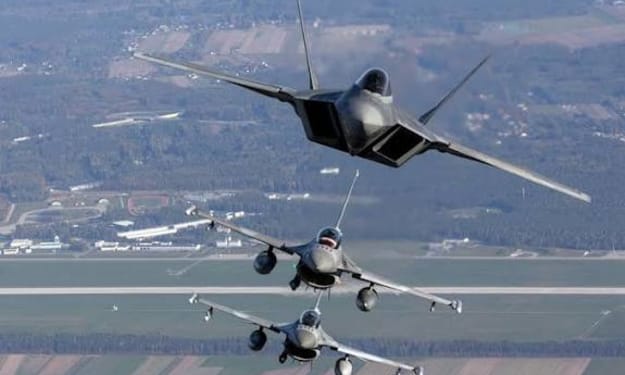
As global military technology continues to evolve, the ranking of the world’s most powerful air forces has shifted dramatically in 2025. Military analysts have assessed air forces based on a combination of fleet size, technological sophistication, readiness, operational experience, and strategic reach. The results reveal significant disparities between nations, with some long-standing military powers retaining dominance, while others, including France, surprisingly lag behind despite their historical military reputation. At the top of the list is the United States Air Force (USAF), which continues to maintain an unmatched edge in technology, global reach, and operational readiness. The USAF’s fleet of fifth-generation stealth fighters, including the F-22 Raptor and F-35 Lightning II, along with advanced bomber aircraft such as the B-2 Spirit and the B-21 Raider, provides the United States with unmatched aerial dominance. Coupled with a global network of bases, satellite reconnaissance, and rapid deployment capabilities, the U.S. remains the uncontested leader in air power. Second on the list is China, whose People’s Liberation Army Air Force (PLAAF) has grown rapidly in both size and sophistication. China has invested heavily in stealth fighters, such as the Chengdu J-20, and has expanded its strategic bomber capabilities with aircraft like the Xian H-20, reflecting the nation’s ambitions to project air power regionally and globally. The PLAAF has also developed advanced drone programs, hypersonic weapons, and integrated electronic warfare capabilities, making it a formidable opponent in any potential conflict scenario. Third place is held by Russia, which continues to maintain a strong air force with a focus on both quantity and quality. The Sukhoi Su-57 stealth fighter and modernized versions of the Su-35 provide Russia with a credible air combat capability. Additionally, Russia’s strategic bomber fleet, including the Tu-160 and Tu-95, enhances its long-range strike potential. While Russia faces challenges in logistics and modernization, its operational experience and robust defense industry keep it among the top air powers. Other countries in the top ten include India, Japan, Israel, South Korea, Turkey, and the United Kingdom, each demonstrating a mix of advanced aircraft, operational readiness, and domestic aerospace production capabilities. India and Japan have heavily invested in modern fighters and domestic production programs, while Israel is known for its highly trained pilots and integrated defense networks. South Korea and Turkey balance modern Western aircraft with indigenous upgrades, while the UK leverages its nuclear deterrent and fifth-generation fighter capabilities. Surprisingly, France, traditionally regarded as a military power with one of Europe’s most advanced air forces, ranks second to last in the 2025 assessment. Analysts point to several factors contributing to France’s low ranking. Although France possesses modern aircraft such as the Dassault Rafale, the air force suffers from limited fleet size, aging support systems, and budget constraints that restrict large-scale modernization. Additionally, France’s global deployment capacity is constrained compared to the U.S., China, or Russia, limiting its strategic reach. While operationally competent and technologically advanced, France’s air force cannot match the scale or depth of its global rivals. Several key takeaways emerge from the 2025 ranking. First, technological sophistication alone does not guarantee top ranking; fleet size, maintenance, training, and logistical support play equally important roles. Second, countries investing in domestic aerospace programs, such as China and India, are gaining strategic advantages by reducing reliance on foreign suppliers. Third, nations with limited defense budgets may struggle to maintain parity with more resource-rich powers, regardless of technological competence. Experts suggest that France’s position should not be interpreted as an immediate strategic weakness. Its air force remains capable for regional operations, NATO missions, and nuclear deterrence. However, the ranking highlights the increasing importance of scale, industrial capacity, and integrated technology in defining air power in the 21st century. In conclusion, the 2025 assessment of the world’s most powerful air forces reflects the shifting balance of global military power. While the U.S. continues to dominate, emerging powers such as China and India are rapidly advancing, and traditional European powers, including France, face challenges in maintaining competitive edge. The rankings underscore that in modern warfare, a combination of technological innovation, fleet size, strategic reach, and industrial capability determines the strength of a nation’s air force.
By Fiaz Ahmed 2 days ago in The Swamp