Climate
The Grand Canyon of Overthinking
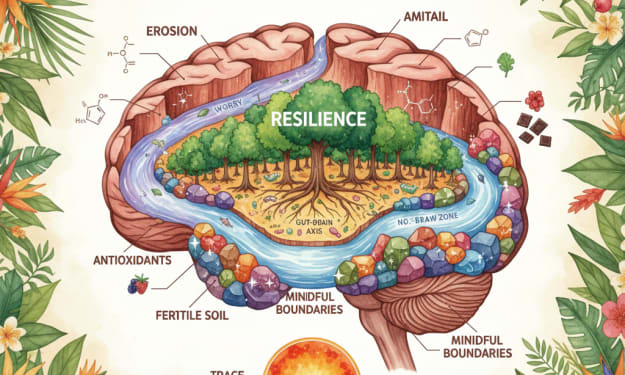
Think about the Grand Canyon. It wasn't formed by one massive event, but by millions of years of water patiently, relentlessly carving through rock. Our overthinking minds can create their own "Grand Canyons" of anxiety. Each repetitive worry, each replayed scenario, each imagined failure, is like a drop of water, slowly eroding our mental energy and sense of peace.
By Being Inquisitive6 days ago in Earth
The "Perfect" Student Mask
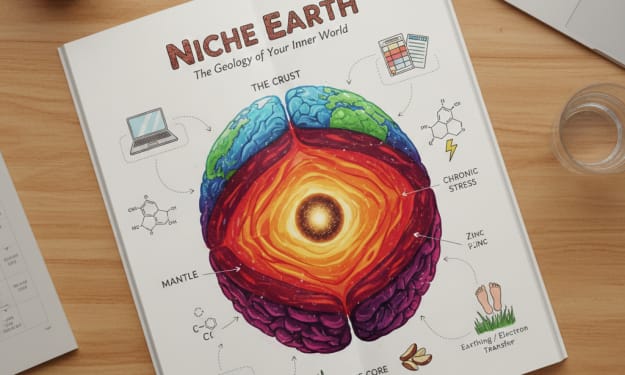
The Earth’s crust is the layer we all see—the mountains, the forests, the "aesthetic." This is the version of me that shows up to the library with a clean iPad, a color-coded planner, and a perfectly layered matcha latte. It looks solid, permanent, and unshakeable. But in geology, the crust is actually the thinnest, most brittle layer of all.
By Being Inquisitive6 days ago in Earth
The Emerald Jewel in the Cosmic Tapestry
Earth, our vibrant home, is far more than just a planet; it is a meticulously crafted masterpiece, an emerald jewel suspended in the cold, vast expanse of the cosmos. It’s a place where the improbable coalesces into the miraculous, where every element, from its celestial dance to its intricate internal rhythms, conspires to foster and sustain an astonishing diversity of life. The designation "miracle planet" isn't hyperbole; it's an understatement of a cosmic ballet performed with breathtaking precision.
By Being Inquisitive6 days ago in Earth
Honey, It's Time We Save the Bees
As you are looking outside at the flowers and trees, you might see a bee buzzing by, but did you know these common creatures are endangered? According to Greenpeace, “the number of bee colonies per hectare has declined by 90 percent since 1962” (Greenpeace, 2021). This is alarming as bees are responsible for doing so many things to keep our environment running efficiently. Ironically, we common overlook them like they are any other bug. We forget to appreciate all of the things bees do for us, and we fail to see the beauty that they bring into the world.
By Nicole Higginbotham-Hogue6 days ago in Earth
NYC Snowstorm: A Nor'easter threatens the Tri-State area with heavy snow and strong winds.
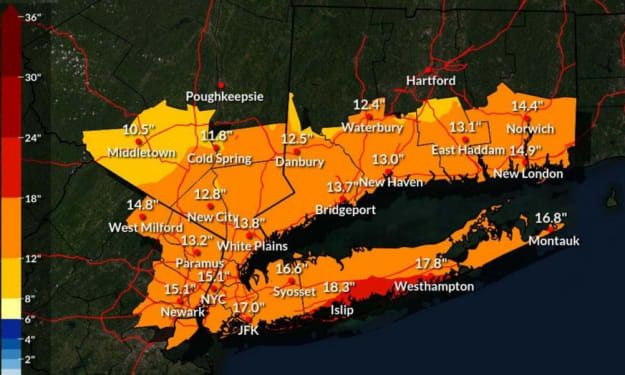
Forecasters and residents alike are once again scanning the horizon as winter continues to ensnare the Northeast, this time for more than just cold air. This weekend, a "potential coastal storm" with the potential to become a "nor'easter" is expected to affect the New York City area and a lot of the East Coast. It could bring heavy snow, strong winds, and even blizzard conditions in some places. It is anticipated that the weather system will begin to form off the coast of the Southeast before deepening as it moves north along the Atlantic seaboard. This kind of system can draw moist air from the ocean and, when cold Arctic winds are in place over land, produce significant snowfall in a relatively short period of time.
By Raviha Imran6 days ago in Earth
Central Florida is under a fire weather watch due to the increased risk of wildfires.
Late winter is a time of mild temperatures and clear skies for many Floridians, not of burning sun and wildfire danger. However, this week, a significant portion of Central and West Florida was subjected to an unusual weather threat: an "elevated fire danger" and a "red flag" warning. These are conditions that are more frequently associated with the dry plains or the mountainous West than with the Sunshine State's typically humid climate. Fire officials, meteorologists, and residents alike were taken aback by how quickly the region’s fire risk escalated. The ideal conditions for fires to start and grow included dry vegetation, persistent winds, and low humidity. Authorities urged caution in some areas due to the speed with which embers can travel in gusty conditions, transforming tiny sparks into rapidly spreading wildfires. The narrative began with a prolonged drought.
By Raviha Imran6 days ago in Earth
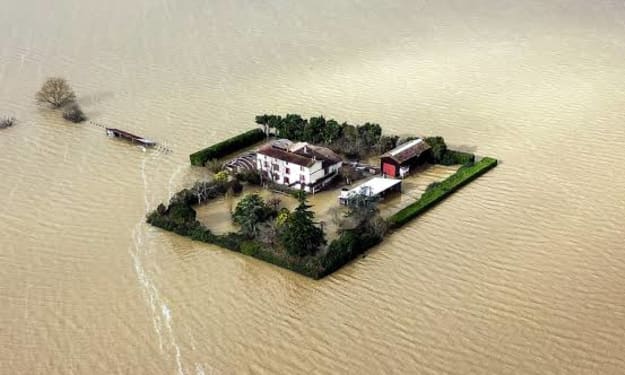
Under Water, in Denial: Is Europe Drowning Out the Climate Crisis?. AI-Generated.
Europe is facing an escalating climate crisis, yet public discourse and policy responses often appear misaligned with the scale and urgency of the challenge. Extreme weather events, flooding, and record temperatures have repeatedly tested the continent’s infrastructure and resilience, but some analysts argue that political hesitation, economic priorities, and media framing are contributing to a subtle form of denial about the severity of climate threats. Extreme Weather on the Rise Over the past decade, Europe has witnessed a notable increase in extreme weather events. From unprecedented heatwaves in southern Spain and Italy to devastating floods in Germany and Belgium, the frequency and intensity of such incidents are rising in ways scientists attribute to climate change. According to recent data from the European Environment Agency (EEA), floods and heatwaves alone have caused tens of billions of euros in damage since 2015. Despite the evidence, many European governments have struggled to translate these warnings into consistent, robust climate action. While countries like Germany and Denmark have invested heavily in renewable energy, others continue to rely on fossil fuels or fail to implement comprehensive mitigation strategies. Political Hesitation and Economic Constraints A recurring theme in European climate policy is the tension between immediate economic concerns and long-term environmental imperatives. Policymakers face pressure to maintain economic growth, protect jobs, and avoid unpopular energy price hikes. This often results in incremental measures rather than bold reforms. “The problem is not ignorance—it’s political inertia,” said a climate policy analyst in Brussels. “Even when governments acknowledge the science, short-term economic and electoral pressures dilute the urgency of their actions.” Recent debates over natural gas reliance illustrate this dynamic. While Europe has pledged to reduce carbon emissions in line with the Paris Agreement, geopolitical events and energy security concerns have led some countries to temporarily increase fossil fuel consumption, undermining broader climate objectives. Media Coverage and Public Perception Media framing also plays a critical role in shaping public awareness of climate risk. Studies show that while extreme events receive coverage, they are often presented episodically rather than as part of a systemic crisis. Headlines may highlight isolated floods or wildfires without connecting them to long-term climate trends, fostering a perception that these events are temporary or exceptional. This framing can feed a subtle denial among the public, even as scientific reports warn of accelerating environmental risks. Surveys indicate that while Europeans generally recognize climate change, there is less consensus on the urgency or the transformative actions required, suggesting a gap between knowledge and engagement. Regional Disparities and Vulnerable Communities The impact of climate change is uneven across Europe. Coastal regions, river valleys, and low-lying urban centers are particularly vulnerable to flooding, while southern areas face intensifying heatwaves and drought. Vulnerable populations, including low-income residents and migrants, are disproportionately affected, raising concerns about social equity and resilience. Cities like Venice, Rotterdam, and Hamburg have implemented flood defenses and urban adaptation measures, yet experts warn that piecemeal efforts are insufficient. Without coordinated, continent-wide strategies, localized responses may fail to protect broader populations from systemic climate risks. Looking Ahead European leaders face a critical crossroads. The continent has the resources, scientific expertise, and technological capability to lead on climate action, yet political caution, economic pressures, and fragmented communication threaten to undermine progress. Analysts emphasize that acknowledging the crisis, integrating mitigation and adaptation strategies, and fostering public engagement are essential to avoid long-term ecological and economic costs. “The question is whether Europe will confront reality before it’s too late,” said an environmental policy researcher. “We are literally under water—politically and environmentally—if we continue to treat climate change as a distant problem.” Without decisive action, Europe risks not only environmental damage but also economic disruption, social inequality, and political instability. The climate crisis is no longer a future threat—it is an immediate challenge, demanding coordinated, bold, and transparent policies across the continent.
By Fiaz Ahmed 7 days ago in Earth
The Silent Guardian in the Corner
The Spiritual and Practical Power of the Snake Plant There is something quietly powerful about a snake plant. It doesn't beg for attention. When you forget to water it, it doesn't droop dramatically. It stands tall, upright, steady, almost watchful. In a world that glorifies urgency and noise, the snake plant embodies grounded strength.
By Debbie's Reflection7 days ago in Earth