Latest Stories
Most recently published stories on Vocal.
Nvidia Stock Outlook for 2026: The AI Boom Will Drive Growth, but CapEx Concerns Will Increase Dangers
Analysts and investors are increasingly weighing its potential upside and growing risks as Nvidia Corporation continues to be a cornerstone of the artificial intelligence (AI) and semiconductor boom. Nvidia's share price has performed mixed in recent weeks, fueled by optimistic projections for AI infrastructure spending but tempered by worries about major tech companies slowing down their capital expenditures (capex) and high valuation expectations. This has sparked a debate about whether the stock will continue its strong trajectory or encounter significant headwinds.
By Raviha Imran21 days ago in Trader
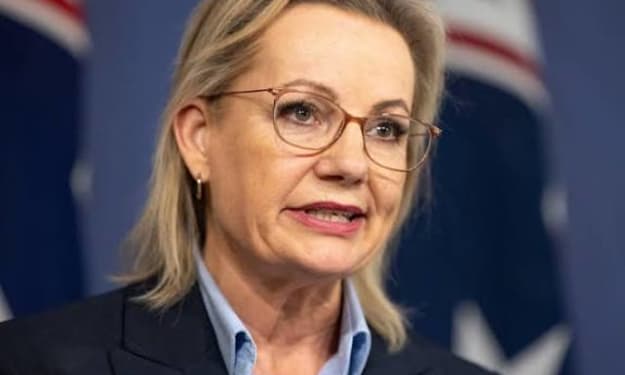
Ley’s Shadow Immigration Minister ‘Never Agreed’ to Unreleased Liberal Plan to Ban Migrants from Gaza and Somalia. AI-Generated.
Australia’s opposition Liberal Party has been plunged into internal controversy after reports emerged of an unreleased policy proposal that would have banned migrants from Gaza and Somalia. The shadow immigration minister has publicly rejected claims that he supported the draft plan, saying he “never agreed” to the proposal and was not consulted before it appeared in internal discussions. The episode has intensified scrutiny of the party’s approach to immigration and national security at a time when political debate over refugee policy, border protection, and humanitarian obligations remains highly charged. The plan, reportedly circulated internally among senior Liberal figures, suggested restricting or suspending migration pathways for people from Gaza and Somalia, citing security and vetting concerns. However, the document was never formally adopted as party policy and was not released to the public. Its contents only became known after leaks triggered criticism from within and outside the party. Opposition Leader Sussan Ley has moved quickly to distance herself from the draft proposal, describing it as an “unapproved and incomplete internal document” that did not reflect the official position of the Liberal Party. Her office emphasized that any future immigration policy would be developed through proper cabinet and party processes rather than informal drafts. The shadow immigration minister was even more explicit in rejecting the plan. In a statement, he said he had not signed off on the proposal and did not support a blanket ban targeting migrants from specific conflict regions. “I never agreed to this policy, and it was not something I endorsed or approved,” he said. “Australia’s migration system must balance national security with humanitarian responsibility. Decisions should be based on individual assessments, not broad assumptions about entire populations.” Political Fallout and Internal Divisions The leaked proposal has revealed underlying divisions within the Liberal Party over how hardline its immigration stance should be. Some members argue that stricter controls are necessary to reassure voters concerned about security risks, while others fear that targeting specific regions could be seen as discriminatory and legally questionable. Senior Liberal sources acknowledged that the draft was prepared as part of internal policy brainstorming rather than a finalized platform. However, the wording — which reportedly named Gaza and Somalia specifically — raised alarm among moderate MPs and advisers who warned it could damage Australia’s international reputation and strain relations with humanitarian organizations. Opposition figures have accused the government of exploiting the controversy for political gain, while government ministers have criticized the Liberals for what they describe as “reckless and divisive thinking” on migration. A spokesperson for the governing party said the episode demonstrated “a lack of coherence and leadership” in opposition policy development, adding that Australia’s refugee and humanitarian intake must be guided by international law and evidence-based security assessments. Humanitarian and Legal Concerns Advocacy groups and legal experts were quick to condemn the reported proposal. Refugee organizations argued that banning migrants from Gaza and Somalia would violate Australia’s obligations under international refugee conventions, which require countries to assess asylum claims individually rather than by nationality or region. Human rights lawyers noted that both Gaza and Somalia are areas affected by long-running conflict and humanitarian crises, making their populations among the most vulnerable globally. “To single out people from war zones for exclusion undermines the core principles of refugee protection,” said one legal expert. “Security checks already exist in Australia’s migration system. A blanket ban would likely face serious legal challenges.” Muslim community leaders also expressed concern that the draft policy could fuel social division and stigmatization, particularly at a time when global conflicts have heightened tensions and misinformation. Party Leadership Response In an effort to contain the damage, Ley reiterated that the Liberal Party has no current policy to ban migrants from Gaza or Somalia and that any immigration proposals would go through formal consultation before being adopted. She also stressed that the shadow immigration minister’s position remained secure and that there had been no breach of discipline. “This was not an approved policy and does not represent where we stand,” Ley said. “We remain committed to a fair, orderly, and secure migration system that reflects Australia’s values.” However, political analysts say the controversy highlights the challenges Ley faces in maintaining unity within the opposition while appealing to both conservative and centrist voters. Broader Immigration Debate The incident comes amid renewed national discussion over immigration levels, refugee intake, and border security. Rising global displacement, conflicts in the Middle East and Africa, and domestic housing pressures have all placed migration policy under intense scrutiny. For the Liberal Party, the leak has complicated efforts to present a clear alternative to the government’s approach. Critics argue that even an unreleased proposal can shape public perception, especially when it touches on sensitive issues such as religion, conflict zones, and national identity. Political observers warn that unless the party clarifies its stance quickly, the controversy could linger and be used by opponents as evidence of internal disarray. Looking Ahead While the shadow immigration minister has firmly denied supporting the draft ban, questions remain about how the document was produced and who authored it. Ley has ordered an internal review of the policy development process to prevent similar incidents in the future. For now, the Liberal Party insists the proposal is dead. But the episode has reignited debate about how Australia should balance compassion with caution in an increasingly unstable world — and whether opposition parties can avoid policy missteps while seeking to redefine their platforms. As the political fallout continues, the controversy serves as a reminder that even unpublished ideas can have powerful consequences once they enter the public arena.
By Fiaz Ahmed 21 days ago in The Swamp
Top Therapy Games for Mood & Anxiety Relief in 2026. AI-Generated.
In today’s fast-paced world, stress and anxiety have become an everyday challenge for many. While traditional methods like meditation, yoga, and journaling remain popular, the rise of therapy games offers a modern, fun, and interactive alternative for mental wellness. These games are designed not only to entertain but also to promote relaxation, improve focus, and boost mood. In this post, we’ll explore some of the best therapy games of 2026 that can help you unwind and recharge your mind.
By Micheal Turner21 days ago in Gamers
As automakers compete for U.S. market share, Ford investigates Chinese EV partnerships. Electric Vehicle Market
As Chinese manufacturers of electric vehicles (EVs) increasingly target the United States, legacy automakers like Ford Motor Company look for ways to collaborate rather than compete alone, the automotive landscape in the United States is undergoing a potentially historic shift. The debate over national security, market competition, and the best way to maintain American manufacturing dominance has been sparked by discussions between Ford's leadership and the Donald Trump administration at the beginning of 2026 regarding potential joint ventures with Chinese partners.
By Raviha Imran21 days ago in Trader
Twelve Killed in Israeli Strikes on Gaza, Including Senior Islamic Jihad Commander. AI-Generated.
Renewed violence threatens fragile ceasefire as regional tensions rise At least 12 people were reported killed following a series of Israeli Defense Forces (IDF) strikes across the Gaza Strip, according to Palestinian health officials and multiple regional reports. Among the dead was said to be a senior commander affiliated with Palestinian Islamic Jihad (PIJ), a militant group active in Gaza. The escalation marks one of the deadliest flare-ups in recent weeks and raises concerns about the stability of an already fragile ceasefire. The Israeli military stated that the strikes targeted militants involved in activities that posed an imminent threat to Israeli forces. Palestinian sources, meanwhile, reported that casualties included both combatants and civilians. As is often the case in fast-moving conflict situations, independent verification of all claims remains difficult. Targeted Strikes and Military Objectives According to Israeli officials, the operations were carried out in response to what the IDF described as violations of understandings aimed at reducing hostilities. The military said it had identified armed operatives operating near Israeli positions and took action to neutralize the threat. Among those reportedly killed was a senior Islamic Jihad commander. Israeli sources characterized him as a key figure responsible for coordinating operations and overseeing militant activities. Palestinian Islamic Jihad has not immediately released a detailed statement confirming the extent of its losses, though affiliated channels acknowledged casualties among its members. The IDF maintains that its strikes are focused on militant infrastructure and leadership, arguing that such operations are necessary to prevent attacks on Israeli civilians and soldiers. In past confrontations, Israel has emphasized intelligence-driven targeting aimed at weakening armed groups without escalating into full-scale war. Palestinian Response and Civilian Impact Palestinian officials in Gaza condemned the strikes, describing them as violations of ongoing ceasefire efforts. Health authorities reported that some of the victims were civilians, though full details about identities and affiliations have not been publicly confirmed. The humanitarian situation in Gaza remains precarious. Years of conflict, economic restrictions, and infrastructure damage have left the territory vulnerable to disruptions caused by renewed fighting. Each escalation brings additional strain to medical facilities, power systems, and essential services. Local residents described scenes of chaos following the strikes, with emergency responders rushing to affected areas. As with previous rounds of violence, civilians often bear the brunt of sudden military exchanges, particularly in densely populated neighborhoods where militant groups operate alongside residential communities. A Fragile Ceasefire Under Pressure The latest violence comes amid ongoing efforts by regional mediators to maintain calm between Israel and armed factions in Gaza. Though no formal long-term peace agreement is in place, periodic ceasefires have helped limit large-scale confrontations in recent months. However, such arrangements are frequently tested by incidents on the ground. Accusations of ceasefire violations are common, with both sides often presenting sharply different narratives about who initiated hostilities. Even limited exchanges can quickly spiral into broader conflict if not contained. Analysts note that targeted killings of senior militant figures have historically triggered retaliatory responses. Palestinian Islamic Jihad, in particular, has previously launched rocket attacks following the deaths of key leaders. Whether this latest incident leads to renewed rocket fire or broader escalation remains to be seen. The Role of Palestinian Islamic Jihad Palestinian Islamic Jihad is a smaller but highly active militant organization operating in Gaza. Distinct from Hamas, which governs the territory, PIJ maintains its own military wing and command structure. The group has been responsible for rocket launches and other attacks against Israeli targets over the years. Israel considers Islamic Jihad a terrorist organization and has repeatedly targeted its leadership and infrastructure. While Hamas often plays a dominant political and military role in Gaza, PIJ operates independently and sometimes pursues its own agenda, complicating ceasefire arrangements. The reported killing of a senior PIJ commander could significantly affect the group’s operational capacity in the short term. Leadership losses can disrupt coordination and planning. At the same time, such strikes may harden positions and fuel calls for retaliation among militants and supporters. Regional and International Reactions International observers are closely monitoring developments. Past escalations between Israel and Gaza-based groups have drawn concern from neighboring countries and global powers, particularly when civilian casualties are reported. Regional mediators, including Egypt and Qatar, have historically played key roles in de-escalation efforts. Diplomatic channels often intensify following significant incidents in an attempt to prevent wider conflict. Public statements urging restraint are likely to follow if tensions continue to rise. The broader geopolitical environment also shapes the situation. Developments in the West Bank, shifts in Israeli domestic politics, and regional security dynamics can all influence decision-making on both sides. The Broader Pattern of Escalation This latest episode fits into a long-standing pattern of cyclical violence. Targeted strikes, rocket fire, and retaliatory actions have characterized the Israel–Gaza conflict for years. Periods of relative calm are frequently interrupted by sudden flare-ups sparked by specific incidents. Military analysts suggest that both sides often seek limited engagements rather than prolonged war. However, the risk of miscalculation remains high. A strike intended to send a deterrent message can inadvertently trigger a broader confrontation. For civilians living in southern Israel and throughout Gaza, these cycles bring recurring uncertainty. Air raid sirens, emergency alerts, and sudden evacuations have become part of daily life during times of escalation What Comes Next? Whether this incident marks a brief flare-up or the beginning of a larger escalation depends on several factors. The response of Palestinian Islamic Jihad will be critical. If the group launches retaliatory attacks, Israel is likely to respond forcefully, potentially widening the scope of operations. At the same time, diplomatic efforts may intensify to contain the situation. In past crises, swift mediation has prevented further deterioration. For now, the reported deaths of 12 individuals — including a senior militant commander — underscore the volatility of the Gaza front. As both sides assess their next moves, the region stands at another uncertain crossroads. The coming days will reveal whether restraint or retaliation defines the next chapter in a conflict that shows little sign of lasting resolution.
By 😎Baلoch✨.zada😎21 days ago in Humans