Latest Stories
Most recently published stories in Longevity.
The Secret of 100 Years
Grandpa Rahim had always been a mystery to the family. He had just turned one hundred years old, yet he walked with a steady pace, his eyes sharp, and his memory clearer than most people half his age. Relatives often asked him his secret. Was it luck? Genetics? Or something else?
By Sudais Zakwanabout a month ago in Longevity
Psychiatrist Says Kennedy Was ‘Not Accurate’ in Discussing His Keto Studies. AI-Generated.
A prominent psychiatrist has publicly challenged recent claims made by Robert F. Kennedy Jr. regarding his research into the ketogenic diet, saying Kennedy’s statements about the findings were “not accurate” and risk misleading the public about the science behind nutrition and mental health. The dispute centers on Kennedy’s comments in a recent interview in which he cited his own studies to argue that the ketogenic diet could dramatically improve mental health conditions, including depression and anxiety. While Kennedy described the results as groundbreaking, a psychiatrist involved in reviewing the research said his interpretation overstated the evidence and simplified complex findings. Scientific Concerns Raised Dr. Alan Mercer, a psychiatrist and clinical researcher who examined the data referenced by Kennedy, said the conclusions presented to the public did not fully reflect what the studies actually showed. “The results were preliminary and limited,” Mercer said in a statement. “Mr. Kennedy portrayed them as definitive proof that keto diets can treat psychiatric disorders. That is simply not accurate.” Mercer emphasized that the studies involved small sample sizes and short observation periods, making them insufficient to support broad claims about mental health treatment. He warned that presenting early-stage research as settled science could encourage vulnerable individuals to abandon established medical care. What Kennedy Claimed Kennedy, a long-time advocate of alternative health approaches, said in interviews and public appearances that ketogenic diets had produced “remarkable improvements” in mental well-being among participants in his studies. He suggested that shifting the brain’s energy source from glucose to ketones could stabilize mood and reduce symptoms of mental illness. He also implied that pharmaceutical treatments for mental health were often unnecessary if patients adopted dietary changes. These remarks quickly drew criticism from medical professionals who argued that such claims require far stronger clinical evidence. A spokesperson for Kennedy responded by saying that he never intended to replace professional medical advice and that his remarks were meant to highlight “promising avenues for further research.” The Keto Diet and Mental Health The ketogenic diet, which is high in fat and extremely low in carbohydrates, has long been used to treat epilepsy in children and is increasingly popular for weight loss. In recent years, researchers have explored whether it might have benefits for certain neurological and psychiatric conditions. Some small studies suggest potential improvements in mood and cognitive function, but experts stress that these findings remain experimental. Larger, controlled trials are still needed before keto can be recommended as a mental health therapy. “Nutrition absolutely plays a role in brain health,” said Dr. Leila Harmon, a nutrition psychiatrist not involved in the dispute. “But claiming a single diet can replace therapy or medication is dangerous and misleading.” Risk of Public Misinformation Health experts worry that Kennedy’s statements could spread confusion at a time when misinformation about diet and medicine already circulates widely online. Social media platforms amplified his comments, with some users promoting keto as a cure-all for mental illness. “This kind of messaging can be harmful,” Mercer said. “People struggling with depression or bipolar disorder might stop taking their medication because they believe diet alone will fix everything. That puts lives at risk.” Mental health organizations echoed those concerns, urging the public to consult licensed professionals before making drastic changes to treatment plans. Political and Cultural Context Kennedy’s remarks also carry political weight, as he remains a controversial public figure whose statements often blur the line between science and advocacy. Critics argue that his influence gives his health claims greater reach than those of ordinary researchers. “This is not just a scientific disagreement,” said one public health analyst. “It’s about responsibility when speaking to millions of people.” Supporters, however, argue that Kennedy is encouraging innovation and questioning entrenched medical practices. They accuse mainstream psychiatry of being resistant to new ideas and overly dependent on pharmaceutical solutions. Call for Clearer Communication The psychiatrist who criticized Kennedy said the issue is not about silencing debate but about presenting research honestly. “There’s nothing wrong with saying, ‘We’re exploring this and the results are interesting,’” Mercer explained. “The problem comes when those results are portrayed as proven therapies.” Medical associations are now calling for clearer guidelines on how preliminary health research should be discussed in public forums. Some experts suggest that journalists and influencers should be more careful when translating complex scientific findings for mass audiences. What Comes Next Further studies on ketogenic diets and mental health are underway at several universities, but researchers say it will take years before firm conclusions can be drawn. Until then, doctors recommend that patients treat such claims cautiously. For now, the controversy highlights a familiar tension between scientific rigor and popular health messaging. As diets and wellness trends gain attention, the line between hope and hype becomes increasingly thin. “The science is evolving,” Mercer said. “But accuracy matters. People deserve facts, not exaggerated promises.” As debate continues, one point remains clear: while nutrition may play a supportive role in mental health, experts agree it should complement — not replace — professional psychiatric care.
By Fiaz Ahmed about a month ago in Longevity
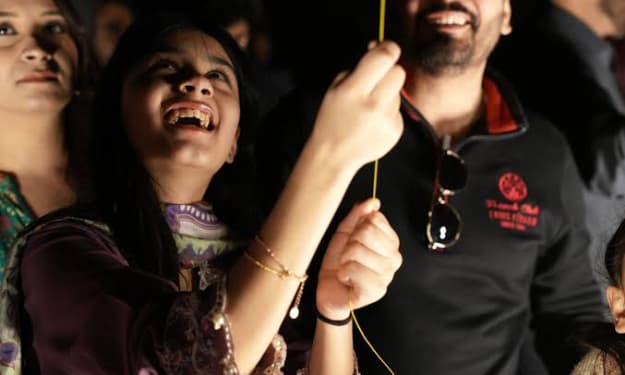
Famous but Deadly Kite Flying Festival Returns After 19-Year Ban. AI-Generated.
After nearly two decades of prohibition, one of the world’s most controversial kite-flying festivals has returned, drawing thousands of spectators while reigniting debate over public safety and cultural tradition. Authorities lifted a 19-year ban on the event, allowing it to resume under strict regulations aimed at preventing the deadly accidents that once made it infamous. The festival, long celebrated for its vibrant skies and competitive spirit, had been suspended following a series of fatal incidents linked to the use of glass-coated strings, known locally as manja. These razor-sharp strings were traditionally used to cut rival kites during competitions but also caused severe injuries and deaths among participants, pedestrians, and motorcyclists. A Tradition Revived Organizers described the return of the festival as a moment of cultural renewal. Colorful kites once again filled the sky, accompanied by music, food stalls, and crowds gathering on rooftops and open grounds. For many residents, the revival marked a reclaiming of a cherished heritage that had been lost for a generation. “This festival is part of who we are,” said one participant who traveled from another city to attend. “For 19 years, we have waited to see the sky look like this again.” Local governments permitted the festival under a framework of new safety rules. Only approved cotton strings were allowed, and the sale or use of glass-coated or metallic strings was declared illegal. Police checkpoints were established near major venues, and vendors were required to show proof that their materials met safety standards. Memories of Tragedy The original ban followed a string of deadly accidents in the early 2000s. Sharp kite strings slashed throats of motorcyclists, entangled power lines, and caused falls from rooftops. Hospitals reported dozens of injuries every year during the festival season, including children and bystanders who were not participating in kite flying. Public outrage over these tragedies forced authorities to suspend the celebrations indefinitely. Critics argued that tradition could not justify the loss of life, while supporters maintained that safer alternatives could preserve the festival without endangering the public. The return of the event has therefore been met with both excitement and anxiety. “I still remember when my cousin was injured during the old festival,” said one resident. “I’m happy it’s back, but I worry whether people will really follow the rules.” Heavy Security and New Rules This year’s revival featured unprecedented security measures. Police patrols monitored rooftops and public spaces, while emergency medical teams were placed on standby. Drones were reportedly used to watch for illegal kite strings, and violators faced heavy fines and possible arrest. Authorities also launched awareness campaigns ahead of the festival, urging citizens to avoid dangerous materials and reminding them that the goal was celebration, not competition at any cost. “This is not just about flying kites,” said a senior official involved in organizing the event. “It is about showing that we can honor tradition responsibly.” In addition, local schools and community groups organized workshops teaching children how to fly kites safely and emphasizing respect for public spaces and electrical infrastructure. Mixed Reactions From the Public Crowds who attended the festival expressed relief that the event had returned in a controlled form. Many families treated it as a picnic-like gathering, with children running across open fields and elders watching from shaded areas. Tourism officials also welcomed the revival, noting that the festival once attracted visitors from across the region. Hotels and restaurants reported increased business as travelers arrived to witness the spectacle. However, human rights groups and safety advocates urged caution. They warned that enforcement would be the real test and that even a small lapse could result in serious injury. “The risk has not disappeared,” said one campaigner. “Only strict compliance and constant monitoring can prevent a repeat of the past.” A Symbol of Balance Between Culture and Safety The return of the kite festival highlights a broader challenge faced by many societies: how to preserve cultural traditions while adapting them to modern safety standards. Similar debates have occurred around fireworks displays, animal festivals, and street celebrations worldwide. Officials insist that the new version of the festival represents a compromise — one that allows people to reconnect with heritage without exposing the public to unacceptable danger. Whether the revival will become a permanent fixture depends largely on what happens in the coming years. If the festival passes without major incidents, authorities are likely to continue permitting it. If accidents occur, the ban could be reinstated. Looking Ahead For now, the skies filled once again with color and movement, offering a powerful image of resilience and cultural pride. Many attendees described the moment as emotional, recalling stories from parents and grandparents who had once celebrated the festival freely. “This is more than just kites,” said a young participant. “It’s about proving we can learn from the past and still celebrate together.” As night fell and the final kites drifted down, the success of the festival rested not only in its beauty but in whether it truly marked a safer chapter in a once-deadly tradition. The coming days will determine whether this revival becomes a model for balancing heritage with responsibility — or a reminder of why the ban existed in the first place.
By Fiaz Ahmed about a month ago in Longevity
Learners Vs. The Learned
There is a quiet but powerful difference between people who continue learning and those who decide they are finished. It is not about intelligence, credentials, or degrees. It is about posture. One group stays open. The other closes the door.
By Destiny S. Harrisabout a month ago in Longevity
5 Habits You Should Integrate Daily For Balance, Health, and Success
Meditate. Take a walk. Get a workout in. Read a book that grows your mind. Stretch your body and take deep breaths. These five habits may look almost too simple to matter, but that is exactly why they work. They do not require special equipment, expensive memberships, or perfect conditions. They require intention and consistency. When practiced daily, they can significantly improve how you feel physically, mentally, and emotionally.
By Destiny S. Harrisabout a month ago in Longevity
5 Habits You Should Integrate Daily For Balance, Health, and Success
Meditate. Take a walk. Get a workout in. Read a book that grows your mind. Stretch your body and take deep breaths. These five habits may look almost too simple to matter, but that is exactly why they work. They do not require special equipment, expensive memberships, or perfect conditions. They require intention and consistency. When practiced daily, they can significantly improve how you feel physically, mentally, and emotionally.
By Destiny S. Harrisabout a month ago in Longevity
One Question You Should Ask Yourself DAILY
This one I got from Jay Shetty, and it resonated deeply: What did I do for myself today? Six words. No complexity. No framework. No ten-step system. Just one honest question that will expose exactly how well — or how poorly — you're treating yourself.
By Destiny S. Harrisabout a month ago in Longevity
The Fitness Habits People Regret Not Starting in Their 30s
I asked people in their 60s and 70s one question: "What do you wish you'd started doing earlier?" The answers were almost identical. Not supplements. Not specific diets. Not fancy gym routines.
By Destiny S. Harrisabout a month ago in Longevity