health
Keeping your mind and body in check - popular topics in health and medicine to maintain a long and healthy life.
China’s Yangtze River Shows Signs of Remarkable Recovery After Fishing Ban. AI-Generated.
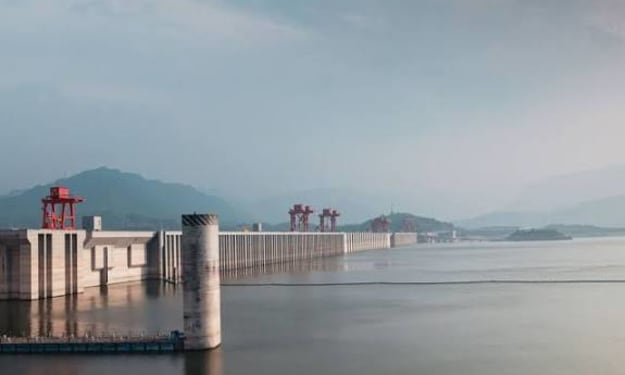
The mighty Yangtze River, long strained by pollution, overfishing, and heavy industrial use, is showing clear signs of ecological recovery following the government’s landmark 10-year fishing ban. Scientists and environmental officials report rising fish populations, improved water quality, and the return of species that had nearly vanished from large stretches of the river. The fishing ban, introduced in 2021, covers more than 300 tributaries and lakes connected to the Yangtze and affects hundreds of thousands of fishermen. It was one of the most ambitious conservation policies China has ever implemented for a single river system. The Yangtze basin supports nearly one-third of the country’s population and contributes significantly to agriculture, shipping, and hydropower, making its health crucial for both people and nature. Recent monitoring data released by China’s environmental authorities show encouraging results. Surveys conducted across multiple provinces found that the number of native fish species has increased steadily since the ban began. In some areas, biodiversity has risen by more than 20 percent compared with levels recorded before 2020. Aquatic plants have also begun to regenerate along riverbanks, helping stabilize soil and provide shelter for fish and birds. One of the most significant developments has been the partial return of rare species once pushed to the brink by decades of overfishing and dam construction. Although the Yangtze river dolphin, or baiji, is considered functionally extinct, conservationists have reported increased sightings of the Yangtze finless porpoise, another endangered species that depends on healthy fish stocks. Experts say the porpoise’s improved survival rates are a strong indicator that the ecosystem is slowly repairing itself. Water quality has also shown measurable improvement. Government testing stations along the river report lower concentrations of ammonia nitrogen and other pollutants linked to industrial waste and agricultural runoff. While pollution remains a challenge in heavily urbanized sections, the overall trend suggests that reduced fishing pressure has helped restore balance between species and improved natural self-cleansing processes within the river. Officials from the Ministry of Agriculture and Rural Affairs say enforcement of the ban has strengthened in recent years, with patrols using drones and satellite tracking to prevent illegal fishing. Thousands of boats have been removed from service, and penalties for violations have increased. Local governments have also expanded protected zones and wetland parks along key stretches of the river. The human impact of the ban has been significant. More than 230,000 fishermen were forced to give up their livelihoods, prompting concerns about unemployment and social stability. In response, authorities launched retraining programs to help former fishermen find work in tourism, environmental monitoring, and aquaculture outside protected zones. Some communities have developed river-based eco-tourism projects, offering boat tours and wildlife viewing experiences that depend on a healthy ecosystem. In cities such as Wuhan, residents have noticed visible changes. Locals report seeing more fish near riverbanks and clearer water during certain seasons. “Ten years ago, the river looked tired and empty,” said one long-time resident. “Now you can see life returning. It feels like the river is breathing again.” Environmental scientists caution, however, that recovery is still fragile. Decades of damage cannot be reversed in just a few years, and the Yangtze continues to face pressure from shipping traffic, hydropower dams, and urban wastewater. Climate change adds another layer of risk, with extreme floods and droughts threatening habitats and food chains. Experts say the fishing ban must be paired with stricter pollution controls and smarter water management to ensure long-term success. “Stopping fishing was essential, but it is only one part of the solution,” said a freshwater ecologist involved in river studies. “Industrial discharge, plastic waste, and construction along riverbanks still need to be addressed if the Yangtze is to fully recover.” International conservation groups have praised China’s approach as a rare example of large-scale river restoration driven by national policy. They note that many countries struggle to balance economic growth with environmental protection, and the Yangtze project could serve as a model for other heavily used rivers around the world. The Yangtze River has been central to Chinese civilization for thousands of years, providing water, food, and transport. Its decline in recent decades symbolized the environmental cost of rapid development. Its gradual recovery now represents a shift toward sustainability and long-term planning. While challenges remain, the early results of the fishing ban suggest that strong political commitment and scientific monitoring can bring damaged ecosystems back from the edge. For millions who live along its banks, the Yangtze’s revival is more than an environmental success story—it is a reminder that nature can heal when given the chance.
By Fiaz Ahmed 21 days ago in Longevity
Global Atherectomy Devices Market Size and Forecast 2025–2033. AI-Generated.
Introduction The global healthcare industry is witnessing a steady shift toward minimally invasive procedures, and atherectomy devices are playing a crucial role in this transformation. These specialized medical tools are designed to remove plaque from arteries, restoring blood flow in patients suffering from conditions such as coronary artery disease (CAD) and peripheral artery disease (PAD). With cardiovascular diseases remaining one of the leading causes of death worldwide, the demand for effective, less invasive treatment options continues to rise.
By shibansh kumar21 days ago in Longevity
The Missing Link in Stable Walking: Why Dynamic Stability Matters More Than Strength
When people start noticing changes in their walking, they often assume the problem is muscle weakness or aging joints. While strength plays a role, a lesser-known factor called dynamic stability is usually at the center of the issue. Dynamic stability refers to the body’s ability to stay balanced while in motion — adjusting to shifts in weight, changes in direction and uneven ground.
By AhmedFitLife21 days ago in Longevity
Yoga Balance and the Body’s Hidden Stability System
Walking, standing and changing direction may seem effortless, yet they depend on a sophisticated internal system that constantly monitors posture and motion. When stability begins to feel uncertain, many people assume the issue lies in weak muscles or aging joints. In reality, balance is deeply connected to sensory awareness and coordination.
By AhmedFitLife21 days ago in Longevity
Preservation as an Act of Care
Care is usually associated with people, not with ideas. It brings to mind attentiveness, patience, protection, and responsibility toward something fragile. Meaning rarely enters that picture. Thoughts are assumed to be abundant, replaceable, and endlessly renewable. If one is lost, another will come. This assumption feels practical, but it is wrong in a quiet and costly way. Some meanings are not interchangeable. Some insights arrive only once, shaped by a particular moment, a particular season, or a particular convergence of experience that will never repeat in the same form.
By Peter Thwing - Host of the FST Podcast21 days ago in Longevity
Country Diary: How Much Bad Weather Can One Village Take?. AI-Generated.
For the fourth time this winter, the narrow road into the village is closed by floodwater. The warning sign at the bend where the lane dips toward the river has become a permanent fixture, no longer a signal of exceptional weather but of routine disruption. Residents of this small rural community are beginning to ask a question once framed in frustration but now edged with exhaustion: how much bad weather can one village take? The rain has fallen almost without pause for weeks. Fields that once absorbed winter downpours have become shallow lakes, reflecting low grey skies. Hedges stand with their roots submerged, and the river that runs through the valley no longer looks like a river at all, but a wide brown sheet moving with quiet determination across pasture and footpaths alike. In the village centre, sandbags are stacked like bricks outside cottages whose doorsteps sit only inches above the waterline. Inside, furniture has been raised onto wooden blocks, and electric heaters hum constantly in an effort to chase away damp. Several households have endured flooding twice already this season. One resident says the smell of wet plaster has become “the scent of winter”. Older villagers remember storms and hard winters before, but few recall a year when rain arrived in such relentless succession. What makes this season different is not a single dramatic event, but the cumulative effect of storm after storm. No sooner has the water receded than another system arrives from the Atlantic, pushing rivers back over their banks and undoing weeks of repair work. The local pub, which has long served as a gathering point in times of trouble, now doubles as an informal relief centre. Volunteers brew tea for neighbours who cannot leave their homes and store donated food in the back room. Conversations revolve around weather forecasts and insurance claims, and the phrase “not again” has become a tired refrain. Farmers in the surrounding fields face their own struggle. Livestock have been moved to higher ground, and crops planted in autumn are already rotting beneath standing water. One farmer explains that machinery cannot enter saturated land without sinking, leaving him unable to prepare for spring planting. “We’ve lost time we can’t get back,” he says, scanning fields that resemble marshland more than farmland. Wildlife, too, is responding to the changed landscape. Ducks and geese gather in unusual numbers where meadows once lay dry. Fox tracks weave along the few remaining raised paths. A heron stands motionless in what was once a vegetable garden, waiting for fish displaced from the swollen river. Local authorities have deployed temporary pumps and issued repeated safety warnings, but resources are stretched across the region. Flood defences designed for rare events are now tested several times a year. Engineers speak of climate patterns shifting, of warmer seas feeding heavier rainfall, and of storms becoming slower and more persistent. For villagers, these explanations offer little comfort when facing another night of rain on already soaked ground. The psychological toll is becoming visible. Some residents admit they no longer unpack belongings stored upstairs, knowing they may soon be lifted again. Others speak of sleepless nights listening for the sound of water against their doors. Yet there is resilience here too. When the main road was cut off last week, neighbours organised boat trips to bring medicine to those stranded. Children have turned flooded fields into places of exploration, spotting frogs and floating branches. A handwritten sign near the church reads simply: “We’re still here.” As clouds gather once more over the valley, the question remains unanswered. The village endures, but patience wears thin. Bad weather has always been part of rural life, but this season feels like a test without a clear end point. Each storm leaves behind not just mud and damage, but the quiet worry that the next one is already on its way. For now, the river continues to rise and fall with the rain, and the village waits between floods, counting the days of dry ground like small victories. In the ledger of weather, this winter has written itself deeply into memory — and into the land.
By Fiaz Ahmed 21 days ago in Longevity
How a Sedentary Lifestyle Affects the Body
1. Musculoskeletal disorders The musculoskeletal system is one of the first organs to suffer. Prolonged sitting leads to tension in the neck and back muscles, weakening of the core muscles, and poor posture. Over time, this can lead to chronic pain in the lower back, neck, and shoulders, as well as the development of degenerative disc disease NJ and herniated discs.
By Amelia Grant21 days ago in Longevity
The Role of Chewing in Healthy Ageing. AI-Generated.
Chewing is something most people take for granted. Every meal begins with this simple action, yet it plays a surprisingly important role in overall health and long-term well-being. As people age, changes in teeth, jaw strength, and oral comfort can subtly affect how food is processed, impacting nutrition, digestion, and even confidence.
By Smile Sydney22 days ago in Longevity