politics
Politics does not dictate our collective cultural mindset as much as it simply reflects it; We've got to look in the mirror sometimes, and we've got one.
Former Leader Ardern Has Left New Zealand. She’s Not the Only One. AI-Generated.
A growing number of New Zealanders are leaving their homeland in search of better opportunities abroad, and even former Prime Minister Jacinda Ardern has recently joined the trend. Her relocation to Sydney highlights a broader shift as mid-career professionals increasingly choose to build their lives overseas rather than remain in New Zealand. For decades, New Zealanders heading abroad was a common tradition known locally as the “Big OE,” short for Overseas Experience. Young people in their twenties would typically travel to places such as London or Australian cities to work and explore the world before eventually returning home. But the current migration wave looks very different. Recent figures suggest that the number of New Zealanders aged between 30 and 50 leaving the country has more than doubled in the past four years. Demographers attribute the trend to rising living costs, limited career opportunities, and economic uncertainty. Instead of temporary travel experiences, many families are now relocating permanently. One example is Jacinda Thorn, a 43-year-old Wellington resident who moved with her husband and children to Melbourne. The family packed up their lives, sold most of their belongings, and relocated with only a few suitcases and their dog. Thorn said the move dramatically improved their financial situation and overall lifestyle. Her husband discovered that his salary as a data engineer would increase by roughly 50 percent in Australia. At the same time, the cost of living dropped in several areas. Grocery expenses fell significantly, fuel prices were lower, and access to healthcare appointments became easier. Economists say the shift reflects deeper economic challenges at home. According to analysts at Infometrics, the country has experienced sluggish economic growth and rising unemployment in recent years. These conditions are encouraging many professionals to look elsewhere for opportunities. Australia remains the most popular destination. Official estimates suggest around 670,000 New Zealand citizens now live there—about 12.5 percent of New Zealand’s population. Australia offers higher wages, a larger job market, and automatic work rights for New Zealanders, making relocation relatively straightforward. In addition to Australia, some migrants are moving to the United Kingdom, the United States, and parts of Europe in search of professional advancement. These moves are often motivated by the promise of larger markets, better salaries, and stronger career prospects. Economists warn that this migration pattern could have long-term consequences for New Zealand’s economy. When experienced professionals leave, they often take valuable expertise and institutional knowledge with them. Replacing that talent can be difficult, particularly as the country’s population ages. At the same time, New Zealand continues to attract migrants from countries such as India, the Philippines, and China, many of whom work in industries including construction, healthcare, and agriculture. While this influx helps support key sectors, it does not fully replace the loss of experienced mid-career workers. Despite building lives abroad, many migrants say their identity as “Kiwis” remains strong. They maintain connections to their homeland through family ties, cultural traditions, and regular visits. For many, leaving New Zealand is not about abandoning their roots but about finding new opportunities. As one migrant explained, home becomes less about geography and more about identity—something carried wherever they go.The continued departure of skilled workers raises concerns about New Zealand’s long-term economic resilience. Experts warn that if the country cannot retain its mid-career professionals, industries may face shortages of experienced leadership and technical expertise. Policymakers in New Zealand are now exploring strategies to improve wages, expand job opportunities, and encourage expatriates to return. At the same time, strong economic ties with Australia mean migration across the Tasman Sea will likely remain a defining feature of Kiwi life. For many migrants, the hope is that one day they might return home under better economic conditions and renewed opportunity.
By Fiaz Ahmed 14 minutes ago in The Swamp
New Status Quo: Germany Reaches for European Conventional Military Dominance. AI-Generated.
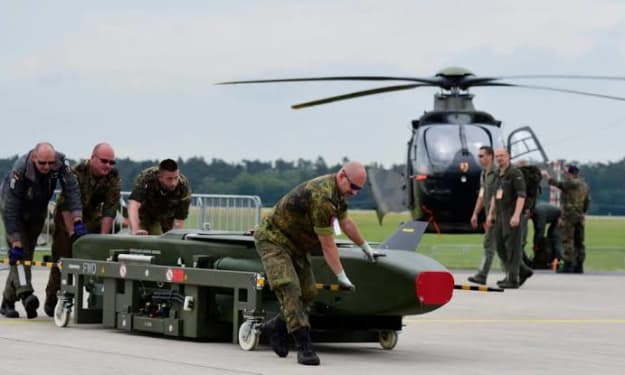
Germany is moving rapidly to transform its armed forces and assume a leading role in Europe’s conventional military balance, signaling what analysts describe as a “new status quo” for the continent’s security architecture. After decades of restraint following the Second World War, Berlin is now investing heavily in defence capabilities, seeking to position itself as the central military power within Europe. The shift gained momentum after the Russian invasion of Ukraine, which fundamentally altered Europe’s perception of security threats. The conflict prompted Olaf Scholz to announce a historic “Zeitenwende,” or turning point, in German defence policy. Under this initiative, Germany pledged to dramatically increase military spending and modernize the Bundeswehr. Massive Defence Investment Germany created a special €100-billion fund dedicated to upgrading its armed forces. The plan includes new fighter jets, armored vehicles, air defence systems, and digital battlefield technologies. Berlin has also committed to consistently meeting the defence spending target set by NATO, which requires member states to spend at least 2% of their GDP on defence. Among the major acquisitions are the advanced F‑35 Lightning II jets, which Germany intends to use to maintain NATO’s nuclear-sharing arrangements. The country is also investing in missile defence, including participation in the European Sky Shield Initiative, designed to create a continent-wide shield against missile threats. German military planners believe these investments will allow the Bundeswehr to become Europe’s most capable conventional military force. The goal is not only national defence but also the ability to lead multinational operations across the continent. Leadership Within Europe Germany’s renewed military ambitions reflect broader changes in Europe’s security environment. For decades, European defence relied heavily on the United States. However, uncertainty about future American commitments has pushed European countries to strengthen their own capabilities. Berlin is increasingly positioning itself as the leader of these efforts. Germany has expanded its role within NATO’s eastern flank, deploying troops and equipment to countries such as Lithuania to deter potential aggression. German officials have also proposed forming a permanent brigade in the region, marking one of the most significant overseas deployments in the Bundeswehr’s history. At the same time, Germany is deepening defence cooperation with partners such as France and Poland, aiming to create a stronger, more integrated European military framework. Joint projects include next-generation tanks, fighter aircraft, and advanced defence technologies. Challenges and Debate Germany’s rapid military expansion has sparked debate both domestically and internationally. Some political groups worry about the financial burden of increased defence spending, especially at a time when Europe faces economic pressures. Others argue that Germany must overcome bureaucratic hurdles and procurement delays that have historically slowed military modernization. Within Europe, reactions have been mixed. While many allies welcome Germany’s willingness to shoulder greater responsibility for regional security, some countries remain cautious about the prospect of Berlin becoming the continent’s dominant military power. Historical sensitivities still shape perceptions of German military leadership. A Changing Security Landscape Despite these concerns, the broader trend toward stronger European defence appears irreversible. Russia’s war in Ukraine and rising global tensions have convinced many policymakers that Europe must be able to defend itself more independently. For Germany, this moment represents a profound transformation. The country is shifting from a cautious security posture to a leadership role in Europe’s military structure. If Berlin’s modernization plans succeed, the Bundeswehr could emerge as the central pillar of Europe’s conventional defence capabilities. The result may be a new strategic balance across the continent—one in which Germany plays a far more prominent role than at any time since the Cold War.
By Fiaz Ahmed 19 minutes ago in The Swamp
Trump sets his sights on crisis-hit Cuba after Iran action. AI-Generated.
Following escalating tensions and military action involving Iran, Donald Trump has indicated that crisis-stricken Cuba could become the next major focus of U.S. foreign policy. His remarks have intensified speculation about Washington’s strategy in the Caribbean and raised concerns in Havana about potential economic and political pressure from the United States. Speaking during a recent interview and at a White House event, Trump suggested that the United States is currently prioritizing the situation in Iran, but hinted that attention could soon shift toward Cuba once developments in the Middle East stabilize. He predicted that the communist-run island nation, which has been grappling with a severe economic crisis, may soon face dramatic political change. “Cuba is going to fall pretty soon,” Trump reportedly said, adding that the Cuban leadership is eager to negotiate with Washington after decades of strained relations. Economic Crisis in Cuba Cuba is currently facing one of the most difficult economic periods in its modern history. The island has been dealing with chronic fuel shortages, electricity blackouts, rising food prices, and declining imports. Much of the pressure has been intensified by tighter U.S. sanctions and the disruption of energy supplies from Venezuela, a longtime ally that once provided significant oil shipments to Havana. The Business Standard Recent U.S. measures targeting fuel flows to Cuba have significantly reduced the island’s energy supplies. Without reliable oil imports, Cuba has struggled to maintain electricity production, transportation networks, and industrial activity. These economic hardships have increased social pressure inside the country and fueled speculation about political instability. Analysts say the worsening conditions have made Cuba more vulnerable to external diplomatic pressure. Washington believes the crisis could force the Cuban government to negotiate reforms or open discussions with the United States. Rubio’s Potential Role Trump has also suggested that Marco Rubio, whose family fled Cuba after the revolution, could play a central role in any negotiations with Havana. Rubio has long been one of the strongest critics of the Cuban government in U.S. politics and has advocated for policies aimed at encouraging political change on the island. The president praised Rubio’s work on Cuba-related issues and indicated he may be tasked with leading diplomatic efforts should the United States move forward with engagement or pressure strategies targeting the island’s leadership. Strategic Shift in U.S. Policy Trump’s remarks reflect a broader shift in U.S. foreign policy strategy. In recent years, Washington has taken a more assertive stance toward governments it considers adversarial, particularly in Latin America and the Middle East. Observers note that the administration appears willing to combine economic sanctions, diplomatic pressure, and strategic military actions to influence political outcomes abroad. Some analysts view Trump’s comments as part of a broader geopolitical strategy aimed at reshaping regional power dynamics. Cuba has long been a symbol of resistance to U.S. influence in the Western Hemisphere, and any major shift in its political system would have significant consequences for Latin America. Concerns and International Reaction The possibility of increased U.S. involvement in Cuba has sparked debate among international observers. Supporters argue that pressure from Washington could accelerate democratic reforms and economic liberalization on the island. Critics, however, warn that aggressive policies could worsen humanitarian conditions for ordinary Cubans or escalate tensions between the two countries. Officials in Havana have previously condemned U.S. sanctions and pressure campaigns, describing them as attempts to undermine Cuba’s sovereignty. The Cuban government has repeatedly stated it is open to dialogue but rejects any efforts to force political change from abroad. Uncertain Future For now, the United States remains focused on developments in Iran, but Trump’s remarks suggest that Cuba could soon become a major issue on Washington’s foreign policy agenda. Whether this leads to negotiations, increased sanctions, or broader geopolitical confrontation remains uncertain. What is clear is that the deepening crisis inside Cuba and shifting U.S. priorities could bring a new chapter in the long and complicated relationship between the two nations.
By Fiaz Ahmed 26 minutes ago in The Swamp
Iran is not Venezuela, despite Trump’s hopes of repeating ‘regime capture’ strategy. AI-Generated.
Some analysts say the U.S. administration under Donald Trump has hinted at using a strategy in Iran similar to its campaign in Venezuela, where officials recently ousted President Nicolás Maduro and installed a transitional leadership. But experts warningly note that Iran’s political structure, society and military are fundamentally different from Venezuela’s, and what worked — or appeared to work — in Caracas is unlikely to be replicated in Tehran. Trump’s Venezuela Analogy In early 2026, after U.S. forces and allied partners carried out operations in Venezuela that led to Maduro’s capture and removal from office, Trump publicly suggested that a similar outcome could be desirable in Iran. He framed the initial military actions against Iranian nuclear sites and leadership as an opening for Iranians to “take over their government,” implying that the United States might encourage a transition away from hardline rule. This rhetoric drew immediate attention from analysts because it seemed to borrow from the so‑called “Venezuela model” — where the top leader is removed, while much of the existing government infrastructure is kept intact to avoid full occupation and governance burdens. That approach appeared in some U.S. media analyses of the Venezuela operation earlier this year. Why the Comparison Falls Short However, experts emphasize that the analogy does not hold in practice. Iran’s regime is rooted in a highly institutionalized, theocratic system that relies on multiple centers of power — not just a single leader. The Assembly of Experts, a clerical body trained deeply in Iran’s religious governance framework, would appoint a new supreme leader long before any outside power could influence internal succession — and its interests are tightly tied to the Islamic Republic’s survival. An Iranian political analyst told Turkish Minute that unlike in Venezuela, “leadership removal alone cannot collapse the Iranian regime.” Iran’s political and military structures — particularly the Islamic Revolutionary Guard Corps (IRGC) — are deeply unified and resilient. Absent foreign troops on the ground or a clear internal push from powerful factions, regime collapse remains unlikely. Regional and Structural Differences The socio‑political landscapes of Venezuela and Iran also differ dramatically. Venezuela’s recent political crisis occurred in a small, economically struggling oil state with significant internal dissent and fractured elite cohesion. Iran, by contrast, is a populous nation of roughly 88 million with a strong ideological orientation, complex regional alliances, and a security apparatus that has remained intact despite U.S. and Israeli strikes. Tehran’s nationalist sentiment, religious legitimacy and historical focus on self‑reliance make it far less amenable to externally mediated regime restructuring. Even after the death of Supreme Leader Ayatollah Ali Khamenei, analysts say regime continuity is plausible because Iran’s power structures emphasize ideological stability over individual leadership. Trump’s Shifting Rhetoric on Regime Change Trump himself has been inconsistent about the goal of regime change in Iran. In his campaign and early presidency, he criticised open‑ended foreign interventions and said that the U.S. should avoid trying to remake other governments. But his statements after U.S. strikes in Iran — including encouraging Iranians to seize control of their government — blurred the line between weakening Tehran’s military and pushing for political change. While some U.S. officials frame the conflict as focused more narrowly on dismantling nuclear and missile capabilities, others openly discuss the possibility of new Iranian leadership that might be more conciliatory. Former CIA Director David Petraeus noted this scenario could emerge but said it would represent a dramatic departure from the current hardline leadership’s ideological commitments. The Risks of Misapplied Strategy Applying the Venezuela playbook to Iran risks misreading structural realities on the ground. Analysts warn that assuming comparable outcomes could lead to miscalculated expectations and deeper conflict, rather than successful political transition. The danger is that a strategy designed for one context — a small Latin American state with a fragile elite consensus — is being applied to a Middle Eastern theocracy with stronger internal cohesion and regional influence. Critics also say that such misapplication could harden Iran’s resolve, making it more likely to resist external pressure and widen the conflict further, rather than capitulating to U.S. objectives. Conclusion While some leaders have floated the idea of using a “Venezuela‑like” approach in Iran, political analysts and regional experts emphasize that Iran’s theocratic structures, military unity and social dynamics make it very different from Venezuela. What may have appeared to work in one context cannot be assumed to work in another, and policymakers risk underestimating the complexity and resilience of Iran’s political system if they rely on such analogies.
By Fiaz Ahmed 40 minutes ago in The Swamp
Human Rights Court Orders Reparations for Forced Sterilisation Case in Peru. AI-Generated.
A regional human rights tribunal has ordered the government of Peru to provide reparations to victims of a forced sterilisation case dating back to the 1990s, marking another major step toward accountability for one of the country’s most controversial public-health scandals. The decision was delivered by the Inter-American Court of Human Rights, which concluded that the Peruvian state failed to protect the reproductive rights and dignity of women subjected to coercive sterilisation practices.
By Fiaz Ahmed about an hour ago in The Swamp
Mass firings leave national security ranks thinned as war raises threats. AI-Generated.
A wave of mass firings across several U.S. national security agencies has raised alarm among lawmakers and policy experts, who warn that the country’s defense and intelligence institutions may be increasingly strained at a time of growing global conflict. The dismissals, which have affected analysts, policy advisers, and security officials, come as tensions escalate in several regions, including the Middle East and Eastern Europe. Officials familiar with the situation say the layoffs have reduced staffing levels in key departments responsible for monitoring global threats, coordinating intelligence, and advising government leaders on military and diplomatic responses. Critics argue that the sudden loss of experienced personnel could weaken the country’s ability to respond effectively to emerging crises. Some of the firings have reportedly occurred within agencies connected to the United States Department of Defense and the Central Intelligence Agency, where specialized analysts and operational experts play crucial roles in tracking security developments around the world. Although officials have not released detailed numbers, insiders say the impact has been felt across multiple national security units. Growing Concerns Amid Global Conflict The timing of the dismissals has heightened concern because they coincide with increasing geopolitical tensions. The ongoing confrontation involving the Iran, the United States, and Israel has already placed heavy demands on intelligence agencies responsible for monitoring military movements, cyber threats, and regional instability. National security experts warn that intelligence work relies heavily on experienced analysts who possess deep regional knowledge and long-developed networks of contacts. Losing these professionals can slow the government’s ability to interpret complex situations and anticipate potential threats. “National security institutions depend on continuity and expertise,” said one former intelligence official. “When you remove large numbers of experienced staff during a period of international instability, you risk weakening the system that protects the country.” Political and Administrative Factors The dismissals are believed to be part of a broader effort to restructure government agencies and reduce bureaucratic inefficiencies. Supporters of the policy argue that national security organizations must adapt to new technologies and changing strategic priorities. However, critics contend that the scale and speed of the firings may undermine the institutional knowledge that has been built over decades. Many of the affected employees reportedly worked on highly specialized areas such as counterterrorism, cyber defense, and geopolitical analysis. Lawmakers from both political parties have called for more transparency about the decisions, urging government officials to clarify how national security capabilities will be maintained despite the staffing reductions. Intelligence Gaps and Operational Risks Experts say that sudden workforce reductions could create gaps in intelligence coverage, particularly in areas requiring continuous monitoring. Modern national security threats—from cyberattacks to drone warfare—often evolve rapidly, making constant analysis essential. The challenge becomes even greater during wartime or periods of heightened international tension. Intelligence agencies must track multiple developments simultaneously, ranging from military deployments to economic sanctions and diplomatic negotiations. In addition to operational risks, morale within national security institutions could also be affected. Former officials note that uncertainty about job security may discourage skilled professionals from entering or remaining in government service. Balancing Reform and Security Supporters of the restructuring argue that national security agencies must become more efficient and technologically advanced. They say investments in artificial intelligence, data analysis, and automated surveillance systems could offset some of the effects of personnel reductions. Yet many analysts believe that technology alone cannot replace the experience and judgment of trained professionals. Interpreting intelligence data often requires contextual understanding that machines cannot easily replicate. As global tensions continue to rise, the debate over the firings is likely to intensify. Policymakers will face increasing pressure to ensure that national security institutions remain capable of addressing threats while pursuing administrative reforms. Looking Ahead The long-term consequences of the mass firings remain uncertain. Much will depend on whether agencies can quickly recruit new personnel and reorganize their operations without losing critical expertise. For now, the developments have sparked a broader discussion about how governments should balance efficiency and preparedness in an increasingly unpredictable world. At a time when international conflicts are expanding and technological threats are multiplying, maintaining strong and capable national security institutions remains a central challenge for policymakers.
By Fiaz Ahmed about an hour ago in The Swamp
Trump Tightens Pressure on Cuba as U.S. Pushes for Charges Against Leaders. AI-Generated.
The administration of Donald Trump has intensified its pressure campaign against the Cuban government, signaling a new phase in Washington’s long-running confrontation with Havana. U.S. officials are now exploring legal avenues to pursue charges against senior Cuban leaders, accusing them of human rights abuses, political repression, and alleged support for anti-American activities abroad. The move reflects a broader strategy by Washington to isolate the Cuban leadership and increase international scrutiny of its political system. Officials say the effort could involve cooperation with international partners, legal experts, and human rights organizations to examine whether Cuban officials could face legal consequences under U.S. law or international legal frameworks. Senior administration officials argue that the policy shift is necessary to hold the Cuban government accountable for its actions against dissidents and activists. According to the U.S. State Department, Cuba continues to detain critics of the government, restrict freedom of speech, and maintain tight control over political life on the island. “The Cuban people deserve freedom, democratic institutions, and respect for human rights,” a senior U.S. official said during a briefing. “We are reviewing all available options to ensure those responsible for abuses are held accountable.” Relations between the United States and Cuba have fluctuated dramatically over the decades. Diplomatic ties were severed after the Cuban Revolution and remained largely frozen for more than half a century. Although a brief thaw occurred during the administration of Barack Obama, which restored diplomatic relations in 2015, the Trump administration later reversed many of those policies. Under Trump’s leadership, the United States tightened sanctions on Havana, restricted travel to the island, and limited financial transactions involving Cuban state entities. The latest push to consider criminal charges against Cuban leaders represents one of the most aggressive steps taken by Washington in years. The Cuban government has strongly rejected the allegations, accusing the United States of attempting to undermine its sovereignty. Officials in Havana argue that Washington’s sanctions and diplomatic pressure are part of a long-standing effort to destabilize the country’s political system. Cuba’s foreign ministry released a statement condemning what it described as “hostile and interventionist actions” by the United States. “Our nation will not bow to threats or intimidation,” the statement said, emphasizing that the Cuban government considers the accusations politically motivated. Analysts say the new U.S. initiative could further strain already tense relations between the two countries. Some experts believe the effort to pursue charges may face legal and diplomatic obstacles, particularly if it involves international courts or cooperation with other governments. “Bringing charges against foreign leaders is a complicated process,” said one international law specialist. “It requires clear evidence, jurisdictional authority, and often the support of other nations.” At the same time, human rights organizations have long documented allegations of political repression in Cuba. Groups such as Amnesty International and Human Rights Watch have criticized the Cuban government for detaining activists and restricting civil liberties. Supporters of the administration’s policy argue that stronger action is needed to pressure Havana into political reforms. Critics, however, warn that increased confrontation could worsen economic hardships for ordinary Cubans while doing little to change the government’s behavior. The island nation has already been facing severe economic challenges, including inflation, shortages of basic goods, and declining tourism revenues. Additional diplomatic tensions with the United States could deepen those problems, economists say. For now, the Trump administration appears determined to maintain its hard-line approach toward Cuba. Whether the effort to pursue charges against Cuban leaders will succeed remains uncertain, but the move signals that Washington’s confrontation with Havana is entering a more confrontational phase. As both governments exchange accusations, the future of U.S.–Cuba relations once again looks uncertain. What began decades ago as a Cold War rivalry continues to shape policy and politics today, suggesting that the dispute between Washington and Havana is far from over.
By Fiaz Ahmed about an hour ago in The Swamp
Trump Demands ‘Unconditional Surrender’ by Iran, Shifting U.S. Objectives Again. AI-Generated.
As tensions in the Middle East escalate, U.S. President Donald Trump has dramatically raised the stakes in the ongoing conflict with Iran. In a blunt statement posted online, Trump declared that the United States would accept “no deal” with Iran unless the country agrees to “unconditional surrender.” The statement represents one of the most sweeping and controversial shifts in Washington’s objectives since the current conflict began. While American officials previously emphasized limited military goals—such as weakening Iran’s missile capabilities and preventing nuclear development—the demand for total surrender suggests a broader political and strategic ambition. It has also intensified debate among policymakers, analysts, and global leaders about the true endgame of the war. From Military Objectives to Political Ultimatums Initially, U.S. military operations against Iran were described as targeted strikes aimed at dismantling key threats. These included Iran’s ballistic missile infrastructure, naval assets, and potential nuclear weapons development programs. The Pentagon framed the campaign as a defensive measure designed to reduce Iran’s ability to threaten American forces and regional allies. � Reuters However, Trump’s latest declaration appears to go far beyond these earlier goals. By demanding unconditional surrender, the president has effectively ruled out negotiated compromise unless Iran first capitulates completely. In his statement, Trump suggested that surrender would be followed by the installation of “acceptable” leadership in Tehran and a major international effort to rebuild the country’s economy. He even used a slogan reminiscent of his domestic political messaging, promising to “make Iran great again.” � TIME +1 The proposal implies a sweeping political transformation inside Iran—one that critics say could amount to regime change. A Conflict with Rising Stakes The war has already entered a dangerous phase. U.S. and allied forces have reportedly conducted extensive strikes on Iranian military targets, while Iran has retaliated with missile and drone attacks across the region, including against American bases and allied nations. � Reuters These exchanges have expanded the conflict’s geographic scope, drawing in several Middle Eastern states and threatening regional stability. Energy markets have also reacted sharply, with global oil prices rising amid fears of supply disruptions. Trump has warned that military operations will continue until U.S. strategic objectives are achieved, suggesting the conflict could last longer than initially expected. � Reuters But what those objectives are remains increasingly unclear. Shifting Messages from Washington One of the most striking aspects of the current crisis is the apparent inconsistency in U.S. messaging. At various points, American officials have emphasized different priorities—sometimes focusing on military deterrence, sometimes on eliminating Iran’s strategic capabilities, and now on unconditional surrender. Defense officials have insisted that the core mission remains limited to neutralizing Iran’s offensive capabilities. Yet the president’s rhetoric has repeatedly expanded the scope of the conflict. This discrepancy has created confusion both domestically and internationally. Allies are trying to determine whether the United States seeks a negotiated settlement, long-term containment, or a complete restructuring of Iran’s political system. Strategists warn that these shifting signals could complicate diplomatic efforts. Mediation attempts by several countries reportedly began even as Trump ruled out any deal short of surrender. � Al Jazeera Iran’s Response Iranian leaders have rejected the demand outright, framing it as an unacceptable attempt to dictate the nation’s future. Officials in Tehran insist the country will defend its sovereignty and continue resisting foreign pressure. Public statements from Iranian authorities emphasize that any political transition must come from within Iran, not from external forces. For many Iranians, the demand for surrender echoes historical grievances about foreign intervention in the region. The likelihood of Tehran agreeing to unconditional surrender appears extremely low. Analysts say such a demand typically occurs only at the end of major wars when one side has suffered overwhelming defeat. As a result, Trump’s statement may signal a willingness to continue the conflict until Iran’s military and political leadership are fundamentally weakened. Global Reactions The international response has been mixed. Some U.S. allies support a strong stance against Iran’s military capabilities but worry that a maximalist objective could prolong the war and destabilize the region. European leaders in particular have expressed concern that eliminating diplomatic options could lead to a broader regional confrontation. Meanwhile, global markets have reacted nervously to the uncertainty surrounding the conflict’s trajectory. Historically, demands for unconditional surrender have been rare in modern conflicts. The term is most commonly associated with the end of World War II, when Allied powers required total capitulation from Nazi Germany and Imperial Japan. Applying similar language to a modern geopolitical conflict underscores the seriousness—and potential risks—of the current situation. What Comes Next? The central question now facing policymakers is what the demand actually means in practical terms. Trump himself suggested that “unconditional surrender” might not require a formal declaration but rather the destruction of Iran’s ability to continue fighting. � Axios If that interpretation holds, the conflict could continue until Iran’s military infrastructure is severely degraded. Yet even that scenario raises further questions. What would follow the collapse of Iran’s military capabilities? Who would lead the country? And how would stability be maintained in a nation of more than 80 million people with deep political and cultural divisions? For now, those answers remain uncertain. What is clear is that the conflict has entered a new and unpredictable phase. Trump’s demand for unconditional surrender has transformed what began as a targeted military campaign into a broader geopolitical struggle—one whose outcome could reshape the Middle East for years to come.
By Jameel Jamaliabout 2 hours ago in The Swamp
Russia Is Providing Iran Intelligence to Target U.S. Forces, Officials Say. AI-Generated.
The escalating conflict between Iran and the United States has taken a troubling turn, as U.S. officials say Russia has been providing intelligence that could help Tehran target American military forces in the Middle East. The revelation signals a potentially dangerous new phase in the war, raising concerns that the conflict could draw in major global powers and deepen geopolitical tensions. According to several officials familiar with U.S. intelligence assessments, Russia has reportedly supplied Iran with information about the locations of American military assets, including warships and aircraft operating across the region. The intelligence sharing is believed to have begun shortly after the latest round of hostilities erupted, following U.S. and Israeli strikes on Iranian targets. The reports mark the first indication that another major U.S. rival may be indirectly involved in the conflict. While there is no evidence that Moscow is directing Iran’s military operations, analysts say even limited intelligence assistance could significantly improve Tehran’s ability to strike U.S. positions with greater precision. Precision Strikes Raise Questions Recent Iranian attacks on U.S. and allied targets have shown a level of accuracy that surprised some military observers. Iranian forces have reportedly targeted early-warning radar systems, command centers, and critical infrastructure used by U.S. forces. Experts suggest that such precision could be enhanced by access to more advanced intelligence data. Iran’s own satellite capabilities are limited, and the country does not operate a large constellation of military reconnaissance satellites. Russia, however, has far more advanced intelligence and surveillance capabilities, developed over decades and refined during its ongoing war in Ukraine. This technological advantage means that any intelligence provided by Moscow could give Iran a clearer picture of American troop movements, naval deployments, and air operations across the Middle East. Growing Strategic Partnership The alleged intelligence sharing reflects the deepening relationship between Russia and Iran in recent years. Since the start of the Russia-Ukraine war in 2022, Tehran has been one of Moscow’s key partners, providing drone technology and other military assistance that Russia has used extensively in Ukraine. Now, according to analysts, the partnership may be evolving into a two-way strategic relationship. In this scenario, Russia could repay Iran for its support by offering intelligence and other forms of indirect assistance in Tehran’s confrontation with Washington. Some experts believe Moscow may also see strategic advantages in the ongoing Middle East conflict. A prolonged war could distract Western governments from the Ukraine conflict and drive up global energy prices—developments that could benefit Russia economically and politically. Washington Responds Cautiously The White House has been cautious in responding to the reports. Officials have acknowledged the intelligence findings but have not publicly detailed the extent of Russia’s involvement. Some U.S. officials have suggested that even if intelligence sharing is occurring, it may not dramatically alter the battlefield. Still, the possibility that Russia could be helping Iran target American forces has raised alarm among defense analysts and policymakers. The concern is not only about immediate battlefield consequences but also about the broader implications for global security. If confirmed, the development would represent a significant escalation in the conflict, potentially turning a regional war into a confrontation involving multiple global powers. Risk of a Wider Conflict The Middle East is already experiencing heightened tensions as Iranian forces and allied groups respond to U.S. and Israeli military actions. Thousands of drones and missiles have reportedly been launched at military bases and other targets in the region since the conflict intensified. The addition of Russian intelligence support could complicate efforts to de-escalate the crisis. It may also increase the risk of miscalculation, especially if American forces perceive Russian involvement as a direct threat. Diplomats and security experts warn that the situation illustrates how interconnected global conflicts have become. The wars in Ukraine and the Middle East are no longer isolated struggles; instead, they increasingly overlap through alliances, arms transfers, and intelligence cooperation. As the conflict continues to unfold, the world is watching closely to see whether diplomatic efforts can contain the crisis—or whether it will evolve into an even more dangerous international confrontation.
By Fiaz Ahmed about 5 hours ago in The Swamp
The Economic Crisis of the Iran War Could Get Very Bad, Very Fast. AI-Generated.
As the war involving the United States, Israel, and Iran intensifies, economists and market analysts warn that the global economic fallout could be steep, deep and fast‑moving. What began as a military confrontation in late February 2026 has already rippled through oil, gas, financial markets and supply chains — and if the conflict persists, the consequences could quickly worsen. Energy Shock: Oil Prices Near Record Levels One of the most immediate economic effects of the conflict is on energy markets. Oil prices have surged sharply in recent days amid fears of supply disruptions. On March 6, 2026, Brent crude crude — the international benchmark — climbed above $90 per barrel, marking one of the largest weekly gains since the COVID‑19 pandemic, driven by concerns over production and export routes in the Middle East. The strategic Strait of Hormuz, a narrow maritime chokepoint through which roughly 20 per cent of the world’s crude oil and LNG supplies flow, has been particularly affected. Reports indicate that activity there has slowed dramatically as shipping companies avoid the area due to the risk of missiles and drones, raising the specter of an effective closure if hostilities worsen. These developments have led traders to price in a “geopolitical risk premium,” pushing energy futures higher and contributing to market volatility. Goldman Sachs analysts say that risks of sustained disruption could boost oil prices substantially higher — potentially above $100 per barrel if instability persists — with knock‑on effects for inflation and economic activity. Inflation, Growth and Consumer Costs Higher energy prices typically feed directly into inflation. Fuel is a core cost component for transportation, manufacturing and households; when gasoline and gas prices rise, it often triggers broader price increases in goods and services. Analysts warn that continued escalation of the conflict could push inflation higher at a time when many central banks are already grappling with moderately elevated price pressures. Europe is particularly vulnerable. With reduced Russian pipeline imports since 2022, European economies have become more dependent on seaborne LNG and oil passing through strategic Middle Eastern routes. Disruptions to these supplies could force countries to compete for limited cargoes, driving up prices and reducing growth projections. Oxford Economics forecasts that energy market shocks from the conflict could dent eurozone GDP and force inflation above policymakers’ targets if they persist. In emerging markets like Türkiye, the impact could be even more pronounced. Analysts there suggest that sustained high energy prices could push consumer inflation toward 30‑40 per cent — levels that would dramatically weaken purchasing power and currency stability. Global Supply Chains and Market Volatility Beyond energy, global supply chains are already feeling strain. Logistics firms have suspended bookings to ports in the Persian Gulf, and freight rates have risen noticeably as shipping routes become less reliable. Disruptions to maritime trade not only affect oil but also other commodities that move through the region, adding further inflationary pressures. Financial markets have also responded. In recent sessions, stock indices in Europe and Asia have slid as investors reassess risk and seek safe‑haven assets like gold and U.S. Treasury bonds. Volatility in equity markets can dampen investment sentiment and slow corporate hiring and expansion — factors that influence broader economic growth forecasts. Household Impact: From Pump Prices to Heating Bills At the consumer level, the effects are tangible. Already, fuel prices have begun creeping higher in many countries, with motorists in several regions facing noticeable increases at the pump. In the UK, for example, rising crude oil costs have nearly doubled heating fuel prices for millions of households — a stark reminder of how geopolitical shocks translate into everyday costs for families. Higher energy and transport costs can also squeeze household budgets, leading to reduced discretionary spending — which in turn can slow sectors like retail and services that rely on consumer demand. Downside Risks: Prolonged Conflict and Stagflation Most economic projections hinge on the duration of the conflict. A short‑lived flare‑up might cause a temporary spike in prices and market volatility, but a prolonged confrontation — particularly one that expands beyond current theaters — carries the risk of deeper economic dislocation. Economists warn that if the conflict drags on, the global economy could face stagflation: the toxic combination of slowing growth and rising inflation. This scenario would limit central banks’ ability to respond effectively, as raising interest rates to combat inflation could further suppress economic activity. In such a scenario, the world could experience slower growth, higher energy costs, diminished consumer confidence, and heightened financial market volatility — creating a cycle of economic strain that feeds back into politics, public sentiment, and fiscal policy decisions. Conclusion The economic crisis triggered by the Iran war has already begun to ripple across global markets. Rising energy prices, logistical disruptions, and increased inflationary pressures are only the first signs of a broader economic risk. If the conflict persists or expands, the impacts could soon reach far beyond the Middle East — affecting fuel bills, investment decisions, growth forecasts and the everyday economic reality of millions worldwide.
By Fiaz Ahmed about 12 hours ago in The Swamp
King Charles invited to 150th anniversary Test. AI-Generated.
King Charles III has been officially invited to attend a landmark cricket match between Australia and England set to mark the 150th anniversary of the first Test match ever played, Cricket Australia announced this week. The invitation underscores the deep cultural and historical ties between the United Kingdom and Australia and highlights the significance of the sport in both nations. The match — scheduled for 11–15 March 2027 at the iconic Melbourne Cricket Ground (MCG) — will be a one‑off special Test fixture celebrating the inception of Test cricket in 1877, when Australia and England first contested what is now recognised as the oldest format of international cricket. While Buckingham Palace has not yet confirmed whether King Charles has accepted the invitation, Cricket Australia chief executive Todd Greenberg said the board hopes the King’s presence will enhance the celebratory atmosphere and honour the long‑standing rivalry between the two cricketing nations. Greenberg told Australia’s Channel 7 that organizers want the match to “celebrate the combat between England and Australia but more broadly celebrate Test cricket and the beauty of Test cricket.” A Historic Occasion Test cricket began at the MCG in March 1877, when an Australian side captained by Dave Gregory faced James Lillywhite’s England XI in a two‑innings match that set the foundation for what would become the pinnacle format of the sport. Today’s anniversary Test aims to honour that legacy with a modern spectacle that blends tradition with broad public appeal. The 150th‑anniversary match also carries symbolic weight because of a historical precedent: Queen Elizabeth II attended the fifth day of the Centenary Test in 1977, held at the same ground to mark 100 years since the first clash. Cricket Australia is now inviting every living captain from both countries — men’s and women’s teams alike — and surviving players who featured in that centenary event. At the time, the 1977 match was a grand celebration of cricket heritage, drawing passionate crowds and bringing together generations of cricket enthusiasts. The organizers hope the 2027 fixture will evoke similar enthusiasm and appreciation for the sport’s history and evolution. Cricket and Commonwealth Ties Cricket’s status as more than a sport — but a cultural bridge between nations — is reflected in the invitation extended to King Charles as head of state. Although Australia is an independent nation, it remains part of the Commonwealth of Nations, with enduring constitutional links to the British monarchy. Whether or not the King attends, the gesture signals respect for cricket’s shared heritage and the diplomatic dimension of sporting events. Many long‑time fans and historians view Test cricket as a living legacy of British sporting influence around the world. Over the decades, rivalries like The Ashes have captured the imagination of millions, with decades of competitive lore and tradition adding emotional depth to every England–Australia encounter. The anniversary Test, while not part of the regular Ashes cycle, taps into this rich narrative as a standalone celebration. Debate Over Format and Pitch The March 2027 match is expected to be played as a day‑night Test — a departure from the classic all‑day format that has historically defined the longest form of the game. While this has sparked discussion among traditionalists and cricket purists about preserving old‑school conditions, officials argue that staging it under lights could attract larger live and television audiences, particularly in regions where evening viewing peaks. England’s men’s team, which recently endured a challenging Ashes series in Australia, is planning a warm‑up fixture ahead of the anniversary Test. They are expected to arrive after a two‑Test tour of Bangladesh in February 2027, ensuring that both sides are in competitive form for what promises to be a marquee sporting event. Royal Engagement and Sporting Diplomacy Cricket Australia’s invitation to King Charles follows his active engagement in Commonwealth affairs and public life. While Buckingham Palace has remained measured in its public responses, the possibility of the King attending the game highlights sport’s role as a form of soft diplomacy and cultural connection. Should the monarch accept, it would reprise a tradition of royal connection to high‑profile sporting moments and reinforce the symbolic link between monarchy and national celebration. Whether at the MCG stands or presiding from a dignitary box, King Charles’s presence would add a regal dimension to a once‑in‑a‑lifetime cricket match — one that honors a century and a half of sporting history, shared cultural roots, and friendly rivalry.
By Fiaz Ahmed about 12 hours ago in The Swamp