politics
Politics does not dictate our collective cultural mindset as much as it simply reflects it; We've got to look in the mirror sometimes, and we've got one.
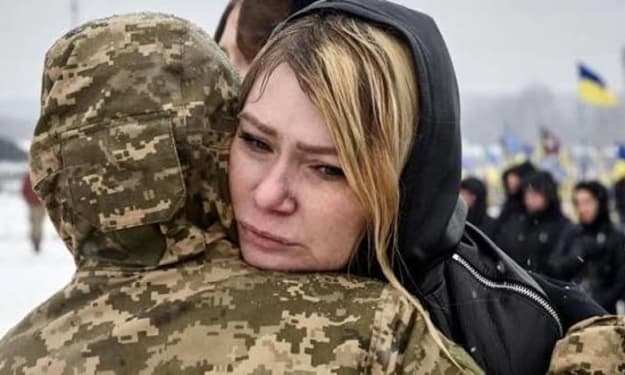
Ukraine marks four years since Russia's full invasion as Moscow says its 'goals' not yet achieved". AI-Generated.
Four years after Russia launched its full-scale invasion of Ukraine, the war continues with no clear end in sight, as both sides mark the grim anniversary amid frozen front lines, mounting casualties, and deepening geopolitical divisions. Ukrainian leaders commemorated the date with ceremonies honoring soldiers and civilians killed since February 24, 2022, while Moscow reiterated that its military objectives remain unfinished. In Kyiv, President Volodymyr Zelensky addressed the nation in a solemn speech, praising what he called the “unbreakable spirit” of Ukrainians who have resisted one of Europe’s largest military assaults since World War II. Church bells rang across several cities, and moments of silence were observed in schools and government offices. Memorials and mass graves in towns such as Bucha and Irpin served as stark reminders of the early months of the invasion, when Russian forces were pushed back from northern Ukraine after heavy losses. The anniversary comes at a time when the battlefield has largely stabilized into entrenched positions across eastern and southern regions. Russian troops still occupy significant portions of Donetsk, Luhansk, Zaporizhzhia, and Kherson, while Ukrainian forces continue to conduct limited counteroffensives and long-range strikes on logistics hubs and military infrastructure. Both armies are heavily reliant on drones, artillery, and electronic warfare, signaling a shift toward a grinding war of attrition rather than rapid maneuver warfare. Moscow used the occasion to restate its justification for the invasion. Russian officials said their “special military operation” had not yet achieved all of its goals, which include preventing Ukraine from joining NATO and securing what the Kremlin calls Russian-speaking territories. In a statement carried by state media, the defense ministry claimed that Russian forces were “steadily improving their tactical positions,” despite Western intelligence assessments suggesting high casualties and equipment losses. For Ukraine, the war has transformed nearly every aspect of national life. The economy has been reshaped around defense production and foreign assistance, while millions of citizens remain displaced inside the country or abroad. Power stations, ports, and factories have been repeatedly targeted, leaving communities to rebuild under constant threat of missile and drone attacks. Yet Ukraine has also deepened its ties with Western allies, receiving advanced weapons systems and financial aid that have allowed it to sustain resistance far longer than many analysts initially predicted. International reactions on the anniversary reflected both solidarity and fatigue. European leaders reaffirmed support for Kyiv, emphasizing that the conflict is not only about Ukraine’s sovereignty but also about the future of international law. The United States repeated its commitment to military and humanitarian assistance, though debates in Congress and among voters highlight growing concerns over the cost and duration of the war. Meanwhile, some Global South countries have continued to call for negotiations, urging both sides to seek a diplomatic path out of the conflict. Humanitarian agencies warned that the war’s toll on civilians remains severe. Tens of thousands have been killed or wounded, and millions still face shortages of electricity, heating, and medical supplies, particularly in frontline regions. Children have grown up amid air raid sirens and online schooling, and an entire generation has been shaped by conflict. Analysts say the fourth anniversary underscores a strategic stalemate. Neither side appears capable of delivering a decisive blow in the near term. Ukraine depends heavily on sustained Western backing, while Russia has expanded arms production and strengthened economic ties with countries outside the Western alliance system. Prospects for peace talks remain slim, as trust between the two governments is virtually nonexistent. As Ukraine marks four years since Russia’s invasion, the country stands as both a symbol of resistance and a warning of prolonged war in the modern era. For many Ukrainians, the anniversary is not only about remembering the past but also about enduring an uncertain future. And as Moscow insists its objectives remain unmet, the conflict continues to shape global politics, energy markets, and security calculations far beyond Eastern Europe.
By Fiaz Ahmed a day ago in The Swamp
Russia’s War on Ukraine Puts Women Off Having Children — and That Could Spell Economic Disaster. AI-Generated.
The ongoing conflict in Ukraine, now in its fourth year, is taking a profound toll not just on lives and infrastructure, but on the country’s demographic future. Recent reports indicate that the war is discouraging many women from having children, raising concerns that Ukraine may face a demographic and economic crisis long after the fighting ends. Surveys conducted in war-affected regions suggest a sharp decline in fertility intentions among women of childbearing age. Fear of violence, displacement, economic uncertainty, and the lack of access to healthcare and basic services have combined to create what experts describe as a “demographic shock.” Many young couples say they are postponing or abandoning plans to start families amid constant insecurity. A Generation Delayed Before the invasion, Ukraine’s birth rate was already among Europe’s lowest, a reflection of decades of economic challenges and emigration. Now, the war has compounded the problem. Hospitals have been damaged or destroyed, prenatal care is disrupted, and access to routine vaccinations and maternal services has been limited in conflict zones. Women fleeing conflict zones often prioritize safety and survival over family planning. Demographers warn that the impact could be long-lasting. “Even a few years of suppressed fertility can create a ripple effect for decades,” says Dr. Olena Hrytsenko, a Ukrainian population expert. “Ukraine risks losing an entire generation of children, which will affect the labor force, productivity, and social systems in the years ahead.” Economic Implications A declining population poses severe economic risks. With fewer young people entering the workforce, Ukraine could face labor shortages just as the country will need skilled workers to rebuild infrastructure and revive its economy. A shrinking population could also increase the burden on social services and pensions, potentially stifling post-war recovery. Analysts say that the war’s demographic impact could exacerbate a “brain drain” already intensified by emigration. Many highly educated Ukrainians, especially women, have left the country for safety and employment opportunities abroad. If birth rates continue to fall, the combination of low domestic labor supply and continued emigration could slow reconstruction efforts and hinder economic growth for decades. Psychological and Social Factors The decline in fertility is not just about physical safety. Psychological stress plays a major role. Constant exposure to violence, uncertainty about the future, and the trauma of displacement reduce the desire and confidence to raise children. Social support networks have been fractured by mass displacement, leaving young families without the extended family help traditionally relied upon for childcare. In addition, widespread economic instability — including job losses, inflation, and housing shortages — has made childbearing seem risky or even impossible for many. Surveys show that women often cite financial insecurity and lack of medical services as key reasons for postponing pregnancy. Policy Responses and Challenges Ukrainian authorities and international organizations have recognized the demographic impact but face significant challenges. Efforts to maintain maternal and child healthcare, provide psychological support, and deliver social assistance to displaced families are ongoing but strained. Experts argue that reversing fertility declines will require long-term strategies to restore security, economic stability, and access to healthcare. Some proposals include incentives for families to have children, such as financial support, childcare assistance, and housing programs. However, without peace and stability, experts warn that these measures may have limited effect. Looking Ahead The war’s demographic consequences are a stark reminder that conflicts reshape societies far beyond immediate casualties. Ukraine’s declining fertility could have lasting effects on its economy, social structures, and ability to recover from the war. Policymakers face the daunting task of supporting families, rebuilding infrastructure, and ensuring that the population can sustain itself in a post-war future. As women delay or forego childbirth in the shadow of war, the country’s long-term economic and social stability hangs in the balance. Without targeted interventions, Ukraine could face a generational and demographic crisis, underscoring that the costs of conflict extend far beyond the battlefield.
By Fiaz Ahmed a day ago in The Swamp
Australia Announces Acquisition of Long-Lead Items for AUKUS Nuclear Propulsion Systems. AI-Generated.
Australia has formally announced the acquisition of long-lead items necessary for the development of nuclear propulsion systems under the AUKUS agreement with the United States and the United Kingdom. The move marks a significant step forward in Canberra’s efforts to modernize its naval capabilities and enhance deterrence in the Indo-Pacific region amid rising geopolitical tensions. Long-lead items, which include critical components such as reactor vessels, propulsion modules, and specialized alloys, are essential for the early stages of building nuclear-powered submarines. These components require years to manufacture and secure, making their timely acquisition a critical milestone for Australia’s ambitious submarine program. Strategic Context The AUKUS pact, unveiled in 2021, represents a trilateral defense partnership focused on providing Australia with nuclear-powered submarines and fostering collaboration on advanced defense technologies. Nuclear propulsion offers strategic advantages over conventional diesel-electric submarines, including greater endurance, speed, and stealth capabilities. These advantages are particularly valuable in the Indo-Pacific, where China’s naval presence has grown rapidly in recent years. Australian Defense Minister Richard Marles emphasized that the acquisition of long-lead items demonstrates Canberra’s commitment to delivering on its obligations under the pact. “This milestone ensures that Australia remains on track to achieve a nuclear-powered submarine fleet that can operate in the most challenging environments,” Marles said. The program also signals Australia’s intent to enhance its domestic industrial base. By involving local shipyards, engineering firms, and research institutions, the initiative is expected to create high-skilled jobs and strengthen technological expertise in advanced nuclear systems. Technical and Industrial Challenges Developing nuclear propulsion for submarines is a complex undertaking. Long-lead items are difficult to produce and require specialized knowledge, rigorous safety standards, and extensive quality control. Australian officials have emphasized collaboration with American and British partners to ensure compliance with international nuclear regulations while protecting sensitive technology. The announcement also underscores the importance of early planning. Because nuclear-powered submarines have long construction timelines, delays in procuring long-lead components could push back the entire fleet’s delivery schedule. Defense analysts say the timely acquisition signals Canberra’s commitment to adhering to the program’s multi-decade roadmap. Regional Implications Australia’s move is likely to have significant regional ramifications. Neighboring countries and global observers have expressed both support and concern about the AUKUS program. Proponents argue that nuclear propulsion strengthens deterrence and contributes to regional security, particularly in light of increasing Chinese maritime assertiveness. Critics, however, have raised concerns about nuclear proliferation and the potential for an arms race in the Indo-Pacific. While Australia’s submarines will be nuclear-powered, they are not intended to carry nuclear weapons, officials stress, noting that propulsion technology is distinct from weapons programs. Nonetheless, the initiative is being closely monitored by other regional powers, including China and Indonesia. Political and Diplomatic Significance The announcement also highlights Canberra’s deepening strategic ties with Washington and London. By committing to AUKUS, Australia signals its willingness to align more closely with allied defense priorities while balancing domestic and regional concerns. The program represents a fusion of diplomacy, technology transfer, and industrial capacity building. Australian policymakers have consistently framed the nuclear submarine program as a defensive measure rather than an offensive strategy. “Our goal is to secure our maritime approaches and protect trade routes critical to Australia’s economy,” said Minister Marles. Looking Ahead With long-lead items now in hand, Australia moves closer to initiating the construction phase of its nuclear submarine fleet. Analysts note that the next steps will include reactor assembly, hull construction, and integration of advanced sensors and weapons systems. The full program is expected to span decades, but the current milestone provides a tangible sign of progress. In conclusion, Australia’s acquisition of long-lead items for AUKUS nuclear propulsion systems represents both a technical and strategic achievement. It underlines the country’s determination to modernize its navy, strengthen regional deterrence, and build domestic expertise in high-end defense technology. As the Indo-Pacific’s security landscape continues to evolve, Canberra’s nuclear submarine initiative will remain a focal point of international attention.
By Fiaz Ahmed a day ago in The Swamp
Warning over ‘Heart Attack’ Snow as US Sees Record Snowfall. AI-Generated.
Parts of the northeastern United States are grappling with record-breaking snowfall this week, prompting health warnings and transportation disruptions as authorities struggle to manage both the snow and its dangerous side effects. Meteorologists have described the storm as one of the most severe of the season, with some regions seeing several feet of accumulation in just 24 hours. The unusually heavy snow has sparked a so-called “heart attack snow” alert from medical professionals. The term refers to the physical strain caused by shoveling deep, dense snow, which can trigger heart attacks in people with underlying cardiovascular conditions. Hospitals in affected areas have reported an increase in patients experiencing chest pains, shortness of breath, and other warning signs after strenuous snow removal. Record Snowfall Across the Northeast States including New York, Massachusetts, and Pennsylvania have recorded snow accumulations exceeding previous winter records. The storm has caused road closures, grounded flights, and forced school districts to cancel classes. The National Weather Service issued winter storm warnings and urged residents to stay indoors unless travel is essential. Snowplow operations are running around the clock, but officials warn that the volume and intensity of snowfall are creating hazardous conditions. Sidewalks and secondary roads remain blocked in many suburban and rural areas, making it difficult for emergency services to respond quickly. Health Risks of Heavy Snow Medical experts stress that “heart attack snow” is a serious concern. Shoveling heavy, wet snow is highly strenuous and can raise blood pressure and heart rate dramatically. Individuals with pre-existing heart conditions, high blood pressure, or sedentary lifestyles are particularly at risk. The combination of cold temperatures, physical exertion, and stress can overwhelm the cardiovascular system. Dr. Karen Matthews, a cardiologist in Boston, advised residents to take precautions: “If you must shovel snow, take it slowly, use smaller amounts at a time, and consider enlisting help. Even otherwise healthy people can experience heart problems if they overexert themselves in extreme cold.” Emergency departments in the hardest-hit areas have reported seeing a notable uptick in patients complaining of chest discomfort, some of whom required immediate intervention. Transportation and Infrastructure Disruptions The storm has caused widespread travel disruptions. Major airports in New York City and Philadelphia canceled hundreds of flights, stranding thousands of passengers. Interstate highways remain treacherous, and officials advise travelers to avoid non-essential trips until snow removal operations are completed. Public transit systems have been severely affected. Train schedules are delayed due to snow on tracks, and bus routes are operating on limited schedules. Authorities have mobilized National Guard units in some states to assist with emergency response and snow clearance in critical areas. Community Response Communities are mobilizing to help vulnerable residents, particularly the elderly and those with medical conditions. Volunteers are clearing sidewalks and driveways and delivering groceries and medicines. Hospitals and emergency services have increased staffing to manage the potential surge in weather-related medical emergencies. Local governments have issued guidelines for safe snow removal, urging residents to use ergonomic shovels, dress in layers, and stay hydrated. Some municipalities are considering temporary shelters for those stranded by the storm or without power. Looking Ahead Forecasters predict that temperatures will remain below average for the next week, slowing snowmelt and prolonging hazardous conditions. Residents are urged to monitor local weather updates, follow safety advisories, and avoid unnecessary exertion. While winter storms are a familiar challenge in the northeastern U.S., experts emphasize that the combination of record snowfall and health risks makes this particular event unusually dangerous. Awareness campaigns are ongoing to prevent avoidable injuries and ensure that communities can weather the storm safely. In summary: The “heart attack” snow warning highlights the deadly intersection of extreme weather and human vulnerability. As the storm continues to impact millions, officials emphasize caution, proper preparation, and seeking help when needed to reduce the risk of serious injury or death.
By Fiaz Ahmed a day ago in The Swamp
Up to 23,000 Terrorists Operating in Afghanistan, Russian Report Says. AI-Generated.
A recent report from Russia claims that up to 23,000 militants are currently operating in Afghanistan, highlighting ongoing security concerns despite the withdrawal of U.S. and NATO forces in 2021. The assessment, released by Russian intelligence sources, emphasizes that Afghanistan remains a fertile ground for extremist activity and could continue to pose a threat to regional and global stability. The report, circulated among security analysts and government officials, identifies multiple armed groups, including the Taliban, Islamic State’s Khorasan Province (ISIS-K), and smaller affiliated cells. Russian officials claim that these groups are engaged in recruitment, training, and cross-border operations, with some receiving logistical support from local networks. Taliban Control and Security Challenges Although the Taliban holds formal political control over Afghanistan, Russian analysts argue that its governance is fragile, particularly in rural provinces. While the Taliban maintains authority in many urban centers, the report suggests that several regions remain contested. ISIS-K, in particular, continues to launch attacks against both Taliban forces and civilians, underscoring the group’s persistent threat. The Russian assessment claims that extremist networks exploit weaknesses in local governance and security infrastructure to expand their operations. According to the report, some groups maintain training camps in mountainous areas, allowing them to operate with relative impunity. Russian analysts warn that this situation could lead to the re-emergence of Afghanistan as a base for international terrorist operations if not closely monitored. Regional Implications The presence of thousands of militants in Afghanistan has drawn concern from Russia and neighboring countries, including Pakistan, Iran, and the Central Asian republics. Moscow has long expressed apprehension that instability in Afghanistan could spill over into Central Asia, threatening border security and potentially fostering cross-border insurgency. In response, Russia has increased military and intelligence engagement with regional partners, including joint border monitoring exercises and security consultations. Russian officials have also urged the Taliban to crack down on extremist elements that could target Russian or allied interests in the region. International Concerns Global security analysts note that Afghanistan remains a complex environment where terrorism, political instability, and humanitarian crises intersect. While the Russian report highlights the scale of militant activity, independent observers caution that numbers are difficult to verify. Nonetheless, the figure of 23,000 extremists aligns with other estimates suggesting that multiple armed factions continue to operate with varying degrees of influence. The resurgence of militant activity in Afghanistan has implications for counterterrorism strategies worldwide. Countries including the United States, India, and European states remain concerned about the potential for Afghanistan to serve as a launchpad for attacks beyond its borders. Monitoring, intelligence-sharing, and targeted operations are seen as critical to preventing a re-emergence of transnational terrorism. Humanitarian and Governance Issues Experts emphasize that the security threat is compounded by ongoing humanitarian challenges. Economic instability, food shortages, and displacement create conditions in which extremist groups can recruit vulnerable populations. Critics argue that addressing only the militant threat without improving governance, infrastructure, and economic opportunities will likely limit long-term stability. The Russian report suggests that Taliban cooperation is key to containing terrorist activity. However, internal divisions, limited resources, and ideological constraints may hinder the group’s ability to fully suppress rival factions. Analysts warn that a failure to address these challenges could prolong Afghanistan’s security crisis. Looking Ahead As Afghanistan marks years of continuing turmoil, the reported presence of up to 23,000 terrorists serves as a stark reminder that the country’s challenges are far from resolved. Regional powers, including Russia, appear determined to remain engaged in monitoring and mitigating risks, while the international community debates strategies to support stability without direct military intervention. In conclusion, Afghanistan’s security landscape remains precarious. The combination of militant activity, governance gaps, and socio-economic pressures underscores the need for coordinated regional and international efforts. Without sustained attention, the country risks remaining a focal point for extremism with consequences that extend far beyond its borders.
By Fiaz Ahmed a day ago in The Swamp
Why DHS Suddenly Reversed Course on Suspending TSA PreCheck. AI-Generated.
The abrupt reversal by the Department of Homeland Security (DHS) on suspending the popular TSA PreCheck program has raised questions about what changed behind the scenes. Just days after warning travelers that budget pressures could force the temporary shutdown of expedited airport screening, DHS announced that the program would remain operational after all. The episode highlights the political, economic, and public safety stakes tied to one of America’s most widely used travel initiatives. TSA PreCheck allows vetted travelers to move through airport security with lighter screening requirements, avoiding long lines and removing fewer personal items. More than 20 million Americans are enrolled, making it a critical component of the nation’s aviation security system. The Initial Announcement The controversy began when DHS officials warned that unresolved funding disputes in Congress could disrupt non-essential security programs. TSA PreCheck and related trusted traveler services, including Global Entry, were listed as vulnerable if a prolonged budget standoff forced staffing cuts. The warning triggered immediate concern among airlines, airports, and frequent travelers. With peak travel seasons approaching, suspending PreCheck would have pushed millions of passengers back into standard screening lanes, increasing congestion and wait times at major hubs. Industry groups described the prospect as “unworkable.” Airlines warned that delays would ripple across flight schedules, while airport authorities cautioned that overcrowded checkpoints could create safety risks. Public and Political Pressure The backlash was swift. Lawmakers from both parties contacted DHS leadership, arguing that suspending PreCheck would punish travelers and undermine confidence in air travel security. Several members of Congress publicly urged DHS to reconsider, emphasizing that the program is funded largely through user fees rather than general tax revenue. Behind the scenes, transportation committees reportedly pressed DHS to reclassify PreCheck as an essential security function rather than an optional service. The argument was simple: PreCheck does not weaken security—it enhances it by allowing officers to focus more attention on unknown or higher-risk passengers. Public reaction also played a role. Social media filled with complaints from travelers who had paid enrollment fees and relied on the program for work and family travel. Business groups warned that disrupting PreCheck could hurt commerce and tourism. Financial Reassessment After further review, DHS acknowledged that the financial impact of continuing PreCheck was less severe than initially projected. Because the program is supported by application and renewal fees, it does not draw heavily from the agency’s operational budget. Suspending it would have created administrative complications, including refund requests and reprocessing of background checks once the program restarted. A senior DHS official said maintaining PreCheck was “the most efficient option” under current conditions. “Shutting it down would cost more in the long run and create unnecessary disruption,” the official noted. Operational and Security Concerns Another factor in the reversal was security. Experts warned that removing PreCheck lanes would overload standard screening lines, forcing the Transportation Security Administration to stretch resources thinner. This could lead to longer wait times and potentially reduced screening effectiveness during busy travel periods. Security analysts argued that PreCheck allows TSA officers to allocate manpower more strategically. By streamlining low-risk passengers, officers can focus attention on individuals who require more thorough screening. “PreCheck is not a luxury,” said one aviation security consultant. “It’s a force multiplier. It makes the entire checkpoint system work better.” What the Reversal Means for Travelers For now, travelers can continue using PreCheck without interruption. DHS emphasized that the program remains fully operational and that enrollment and renewals will proceed as usual. However, officials cautioned that future funding disputes could still affect other services if Congress does not pass a long-term budget solution. The episode has renewed calls for Congress to provide stable funding for aviation security programs. Lawmakers from both parties are now pushing for legislation that would shield trusted traveler programs from budget uncertainty. A Lesson in Public Policy The sudden reversal underscores how quickly policy can shift under political and public pressure. It also highlights the importance of programs that blend security with convenience in a modern travel system. While DHS framed its initial warning as a contingency plan, the reaction revealed how deeply embedded PreCheck has become in American travel culture. What was once a pilot program is now viewed as essential infrastructure. In the end, the decision to keep TSA PreCheck running reflects a balance of economics, security, and public expectation. For millions of travelers, the outcome is simple: shorter lines, fewer disruptions, and a reminder that even routine airport procedures can become political flashpoints in times of uncertainty.
By Fiaz Ahmed 2 days ago in The Swamp
Kashmir, Spying, Demolitions: How Modi’s India Embraced the ‘Israel Model’. AI-Generated.
India’s security policies in India, particularly in the disputed region of Kashmir, have increasingly drawn comparisons with the approach used by Israel in the Palestinian territories. Analysts describe this shift as the adoption of an “Israel model” — a strategy that combines heavy surveillance, military dominance, and strict administrative controls to suppress dissent and reshape contested regions. Since Narendra Modi took office in 2014, India has significantly deepened defense and intelligence cooperation with Israel. Once distant partners, the two countries now share advanced surveillance technology, counterterrorism expertise, and military hardware. This relationship has influenced how New Delhi manages Kashmir, especially after the revocation of the region’s semi-autonomous status in 2019. Surveillance and Intelligence Expansion One of the most visible elements of the “Israel model” is the rapid expansion of digital surveillance. Kashmir has become one of the most heavily monitored regions in the world. Authorities have installed extensive networks of CCTV cameras, facial recognition systems, and drone patrols. Mobile phone data and internet activity are closely tracked, and communication blackouts have been imposed during periods of unrest. Israeli-made technologies, particularly advanced spyware and reconnaissance tools, have reportedly been incorporated into India’s security apparatus. Supporters argue these measures are necessary to combat militancy and prevent attacks. Critics, however, warn that such tools are increasingly used against journalists, political activists, and ordinary citizens, shrinking space for dissent and privacy. Human rights groups say this mirrors Israel’s methods in the West Bank and Gaza, where surveillance is used not only for security but also to exert constant pressure on the population. Demolitions and Collective Punishment Another controversial practice linked to this model is the demolition of homes belonging to suspected militants or protesters. In Kashmir, authorities have razed dozens of houses in recent years, claiming they were used to shelter insurgents. Officials describe demolitions as a deterrent strategy designed to discourage families from supporting militancy. This policy resembles Israel’s long-standing use of house demolitions as punishment for families of accused attackers. International legal experts argue that such actions amount to collective punishment, which is prohibited under international humanitarian law. Despite these criticisms, the tactic has gained political support within India as a visible demonstration of state power. Local residents in Kashmir describe demolitions as devastating, leaving entire families homeless without due legal process. Many see it as a tool to intimidate communities and reshape demographics through fear and displacement. Militarization of Daily Life The “Israel model” also involves the normalization of military presence in civilian spaces. Kashmir is already one of the most militarized regions on earth, with hundreds of thousands of troops stationed across towns and villages. Checkpoints, armored vehicles, and fortified bunkers have become part of everyday life. Schools, hospitals, and markets often operate under the watch of armed personnel. Curfews and movement restrictions are frequently imposed after attacks or protests. Supporters argue this level of control has reduced militant activity. Critics say it has deepened resentment and alienation among Kashmir’s Muslim majority population. The shift reflects a broader ideological change within India’s ruling establishment, which increasingly frames Kashmir not as a political dispute but as a security problem requiring permanent force. Political Messaging and Public Support Domestically, the comparison with Israel carries political weight. Israel is often portrayed by Indian nationalist media as a model of toughness and technological superiority in fighting terrorism. The Modi government’s close ties with Israel have been celebrated as proof of India’s rise as a strong global power willing to abandon past restraint. This narrative resonates with voters who support hardline policies and see Kashmir primarily through the lens of national security. The government’s actions are presented as restoring order and integrating the region fully into India. However, opposition parties and civil society groups warn that the approach risks eroding India’s democratic foundations. They argue that policies tested in an occupation context cannot be safely applied within a constitutional democracy without severe consequences for civil liberties. International Concerns International observers have increasingly voiced alarm at India’s direction. The United Nations and several human rights organizations have criticized internet shutdowns, detentions without trial, and restrictions on press freedom in Kashmir. Comparisons to Israeli practices have intensified these concerns, especially given the long-standing criticism of Israel’s policies in Palestinian territories. While India rejects the “Israel model” label, insisting its actions are internal security measures, the parallels are difficult to ignore. Both rely on surveillance, force, and administrative control rather than political reconciliation. A Risky Path Forward The embrace of this strategy marks a turning point in India’s governance of Kashmir. It may bring short-term stability, but experts warn it could fuel long-term instability by deepening grievances and mistrust. By adopting techniques associated with occupation and control, India risks redefining its democracy through the lens of permanent security. The Kashmir experiment, modeled increasingly on Israel’s methods, raises a profound question: can lasting peace be achieved through surveillance and demolitions, or does it require political dialogue and respect for rights? For now, the “Israel model” has become a defining feature of Modi’s India in Kashmir — one that continues to shape the region’s future and India’s global image.
By Fiaz Ahmed 2 days ago in The Swamp
Devastation and frozen frontlines: Ukraine marks four years of Russia’s war. AI-Generated.
Ukraine marked four years since the start of Russia’s full-scale invasion with ceremonies of mourning, defiance, and renewed appeals for international support, as fighting continues along largely frozen frontlines stretching hundreds of kilometers across the east and south of the country. What began in February 2022 as a rapid assault intended to subdue Kyiv has evolved into a grinding war of attrition that has reshaped Europe’s security order and left deep scars on Ukrainian society. In the capital and major cities, moments of silence were held for soldiers and civilians killed in the conflict. Churches rang bells, and families gathered at makeshift memorials adorned with flags and photographs. Ukrainian President Volodymyr Zelenskyy said the anniversary was not only a day of grief but also of resolve. “We remember everyone who gave their life for our freedom,” he said in a televised address. “And we continue to fight so that this sacrifice was not in vain.” The war’s physical devastation is visible across much of the country. Entire towns in the Donetsk and Luhansk regions have been reduced to rubble after months of artillery duels. Critical infrastructure, including power plants and water systems, has been repeatedly targeted, forcing millions to endure blackouts during harsh winters. According to Ukrainian officials, tens of thousands of residential buildings have been destroyed or severely damaged, and millions of people remain displaced inside the country or abroad. Despite heavy losses on both sides, the frontlines have moved little over the past year. Ukrainian forces have focused on defending key positions while launching limited counteroffensives aimed at disrupting Russian supply lines. Russia, under President Vladimir Putin, has poured additional troops and resources into the war, framing it domestically as a struggle against Western influence and NATO expansion. Military analysts describe the conflict as increasingly defined by trench warfare, drone strikes, and long-range missile attacks rather than sweeping territorial advances. The stalemate has heightened concerns about the sustainability of Ukraine’s defense effort, especially as Western aid has faced political delays and debate. European and U.S. officials reiterated their support this week, but privately acknowledged that Ukraine’s battlefield success depends heavily on continued supplies of ammunition, air defenses, and financial assistance. For ordinary Ukrainians, the anniversary underscored the emotional toll of prolonged war. In Kharkiv, close to the Russian border, residents spoke of exhaustion mixed with stubborn determination. “We have learned how to live with sirens and explosions,” said Olena, a schoolteacher whose apartment was damaged in a recent strike. “But what hurts most is not knowing when this will end.” International reactions reflected both solidarity and anxiety. Leaders from several European nations issued statements praising Ukraine’s resilience and condemning Russia’s aggression. At the United Nations, diplomats warned that the conflict’s ripple effects—from energy prices to food insecurity—continue to impact countries far beyond Eastern Europe. Human rights groups renewed calls for accountability, pointing to evidence of war crimes and the forced displacement of civilians. Four years on, the war has become a defining feature of a new geopolitical era marked by renewed great-power rivalry and the rearmament of Europe. Finland and Sweden have joined NATO, defense budgets have surged, and alliances have hardened along ideological lines. Yet on the ground in Ukraine, the struggle remains intensely personal: a daily fight for survival, sovereignty, and the hope of peace. As Ukraine marked the somber milestone, Zelenskyy emphasized that the nation’s future still rests on unity and endurance. “We did not choose this war,” he said, “but we choose to stand. And as long as we stand together, Ukraine will live.” The frozen frontlines may signal a pause in major territorial shifts, but the human cost continues to rise. For Ukrainians, the fourth anniversary was not an end point but another chapter in a war whose outcome will shape their country—and Europe—for generations to come.
By Fiaz Ahmed 2 days ago in The Swamp