Books
The World on the Brink
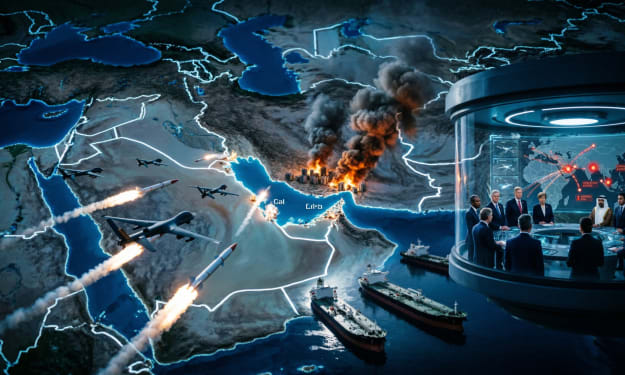
The World on the Brink: War Expands Across the Middle East The world is watching with growing concern as a major conflict spreads across the Middle East. What began as military strikes between Israel and Iran has quickly expanded into a broader regional crisis involving multiple countries and armed groups. Military actions, missile attacks, and political tensions are now affecting not only the Middle East but also global markets and international security.
By Wings of Time about 7 hours ago in History
How Can the World Prevent Another Global War?
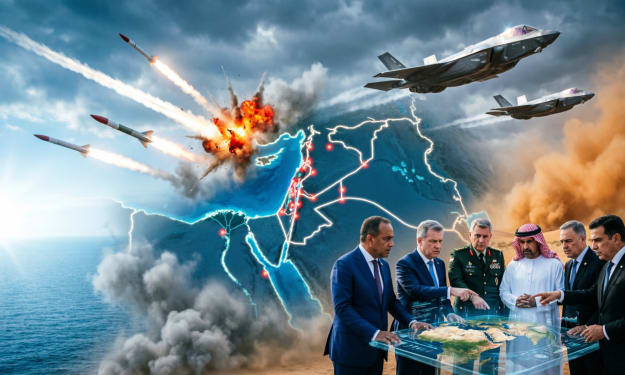
How Can the World Prevent Another Global War? In times of rising global tensions, many people ask an important question: How can the world prevent another major war? History has shown that global conflicts cause enormous human suffering, economic destruction, and long-lasting political instability. Preventing a large-scale war—especially one that could involve nuclear weapons—is one of the most important challenges facing world leaders today.
By Wings of Time about 8 hours ago in History
Could Israel Ever Collapse? Understanding the Realities of Modern Geopolitics
Could Israel Ever Collapse? Understanding the Realities of Modern Geopolitics In discussions about the Middle East, some people ask dramatic questions such as whether Israel could ever face collapse or “the end.” These questions often appear during periods of intense conflict in the region. However, understanding this issue requires looking carefully at political realities, military power, international alliances, and regional dynamics rather than focusing only on emotional reactions during crises.
By Wings of Time about 8 hours ago in History
GDP After War: How Conflicts Reshape National Economies
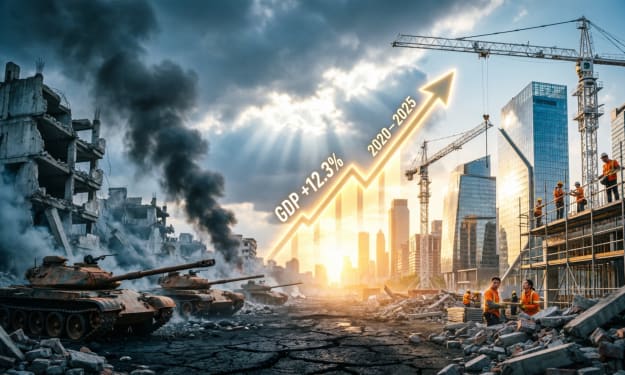
GDP After War: How Conflicts Reshape National Economies War is not only fought on battlefields; it also leaves deep scars on a country's economy. One of the most important indicators affected by war is Gross Domestic Product (GDP), which measures the total value of goods and services produced by a nation. When war begins, economic activity often collapses, infrastructure is destroyed, and government spending shifts heavily toward military needs. But the economic story does not end when the war stops. The period after war can be equally challenging and sometimes surprisingly transformative.
By Wings of Time about 8 hours ago in History
Are the Chances of World War III Increasing?
Are the Chances of World War III Increasing? In recent years, many analysts, journalists, and ordinary citizens have begun asking a serious question: Is the world moving closer to World War III? While no global war has started, several major conflicts and political rivalries are creating a tense international environment. Wars, military buildups, nuclear weapons, and technological competition are making global security more fragile than it has been in decades.
By Wings of Time about 8 hours ago in History
A 4,400-Year-Old Priestess Tomb Discovered in Egypt
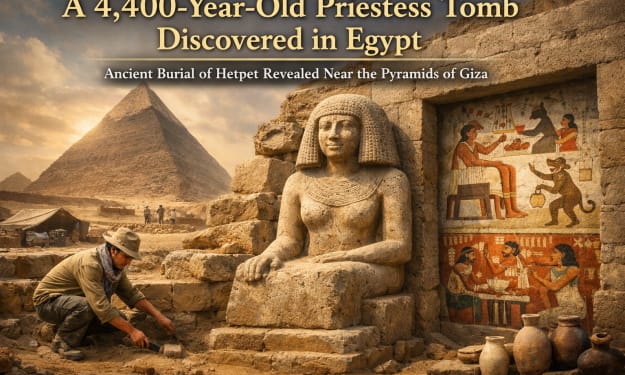
Archaeologists in Egypt have uncovered the remarkable tomb of a priestess that dates back approximately 4,400 years, offering new insight into religion, culture, and daily life during the height of the ancient Egyptian civilization. The discovery was made near the famous pyramids on the Giza Plateau, one of the most important archaeological areas in the world. Experts believe the tomb belonged to a high-ranking priestess named Hetpet, who lived during Egypt’s Fifth Dynasty, around 2400 BC. 
By Irshad Abbasi about 24 hours ago in History
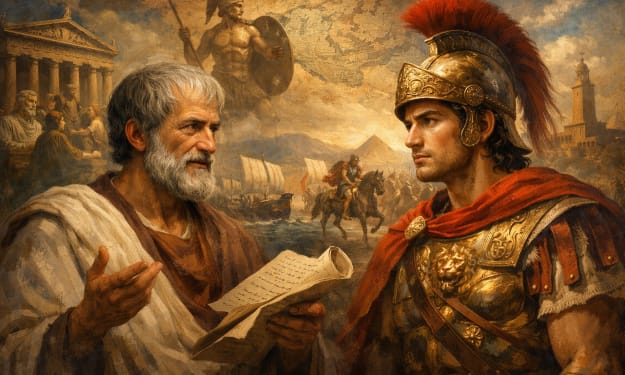
Aristotle and Alexander: How a Philosopher’s Lessons Helped Shape World History
History often remembers kings, conquerors, and great battles. Yet behind many powerful rulers stand teachers whose ideas quietly shape the future. One of the most famous examples of this relationship is the connection between Aristotle, one of the greatest philosophers in history, and his student Alexander the Great, the young Macedonian king who built one of the largest empires the world had ever seen.
By Irshad Abbasi a day ago in History
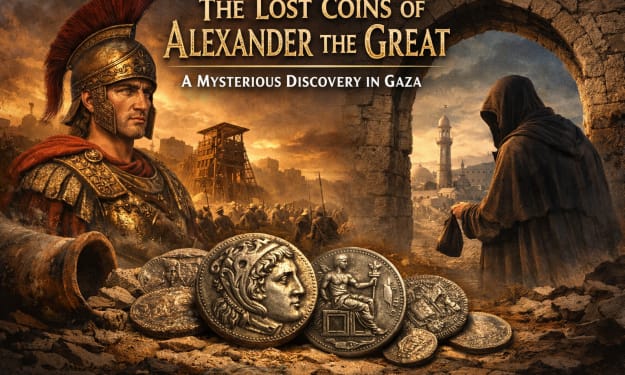
The Lost Coins of Alexander the Great: A Mysterious Discovery in Gaza
Few historical figures have captured the imagination of the world as powerfully as Alexander the Great. Known for building one of the largest empires in ancient history before the age of 32, Alexander’s campaigns stretched from Greece to Egypt and as far as India. Yet even today, more than two thousand years after his death, discoveries connected to his era continue to intrigue historians and archaeologists. One such mystery revolves around a remarkable discovery in the ancient city of Gaza—a hoard of coins believed to be linked to Alexander’s time, which later vanished under mysterious circumstances.
By Irshad Abbasi a day ago in History
Ashoka: The Emperor Who Turned Conquest into Compassion. AI-Generated.
History remembers many conquerors, emperors, and rulers who built vast empires through military strength and strategic brilliance. Names such as Alexander the Great, Julius Caesar, and Augustus often dominate the narrative of ancient political power. Yet among these figures stands a ruler whose legacy is unique not because of conquest alone, but because of a profound moral transformation that reshaped the very meaning of governance.
By Arjun. S. Gaikwada day ago in History
The War They Didn’t Expect to Fight
Imagine, for a second, you’ve just spent years in the mud and the blood of a world war. You’ve seen things that would make a person’s soul age a century in a weekend. You finally get your discharge papers, hop off the bus in your quiet hometown, and realize the local sheriff is essentially running a Mob racket-and he’s looking at your severance pay like it’s his personal Christmas bonus.
By KWAO LEARNER WINFRED3 days ago in History
From Hürrem Sultan to Kösem Sultan: The Royal Concubines Who Ruled the Ottoman Empire
In the history of the Ottoman Empire, the imperial harem is often imagined as a mysterious and secluded world filled with luxury and intrigue. Yet behind the walls of the palace lived women who were far more than companions to the sultans. Some of them rose from slavery to become the most powerful figures in the empire, shaping politics, diplomacy, and the future of the throne itself. Among the most famous of these women were Hürrem Sultan and Kösem Sultan, whose influence defined an era sometimes called the “Sultanate of Women.”
By Irshad Abbasi 4 days ago in History